Refinancing Explained: The Break-Even Math That Decides Whether It Pays
Introduction: A New Loan Wearing an Old Loan’s Clothes
Refinancing is not a discount on your mortgage. It is a brand-new loan that pays off your existing one, with its own application, underwriting, closing, and closing costs. That single fact explains everything confusing about the process: why it costs thousands of dollars to change an interest rate, why the savings are never as simple as the rate difference suggests, and why the decision reduces to one calculation. The Federal Reserve’s consumer guide to mortgage refinancings frames the question the right way: refinancing can be worthwhile, but it does not make financial sense for everyone. This guide gives you the arithmetic to decide which side of that line you are on.
What Refinancing Actually Costs
A refinance carries most of the closing costs of a purchase mortgage. Expect lender fees such as application, origination, and underwriting charges; an appraisal to confirm the home’s value; title search and title insurance; credit report, recording, and government fees; and possibly prepaid items such as taxes and insurance escrow deposits. The exact total varies with your loan size, state, and lender, which is why no honest guide can quote you a universal figure: the number that matters is the one itemized on your Loan Estimate, a standardized document every lender must give you, which separates lender charges from third-party charges so offers can be compared line by line.
Beware one piece of vocabulary. A “no-cost” refinance does not eliminate these costs; it converts them. Either the lender charges you a higher interest rate in exchange for covering the costs, or the costs are added to your loan balance so you pay them, with interest, over the life of the loan. Sometimes that trade is sensible, especially if you expect to move soon, but it is a trade, not a gift, and it changes the break-even math below: a higher rate shrinks your monthly saving, and a larger balance means you owe more than you did the day before you “saved money.”
The Break-Even Calculation
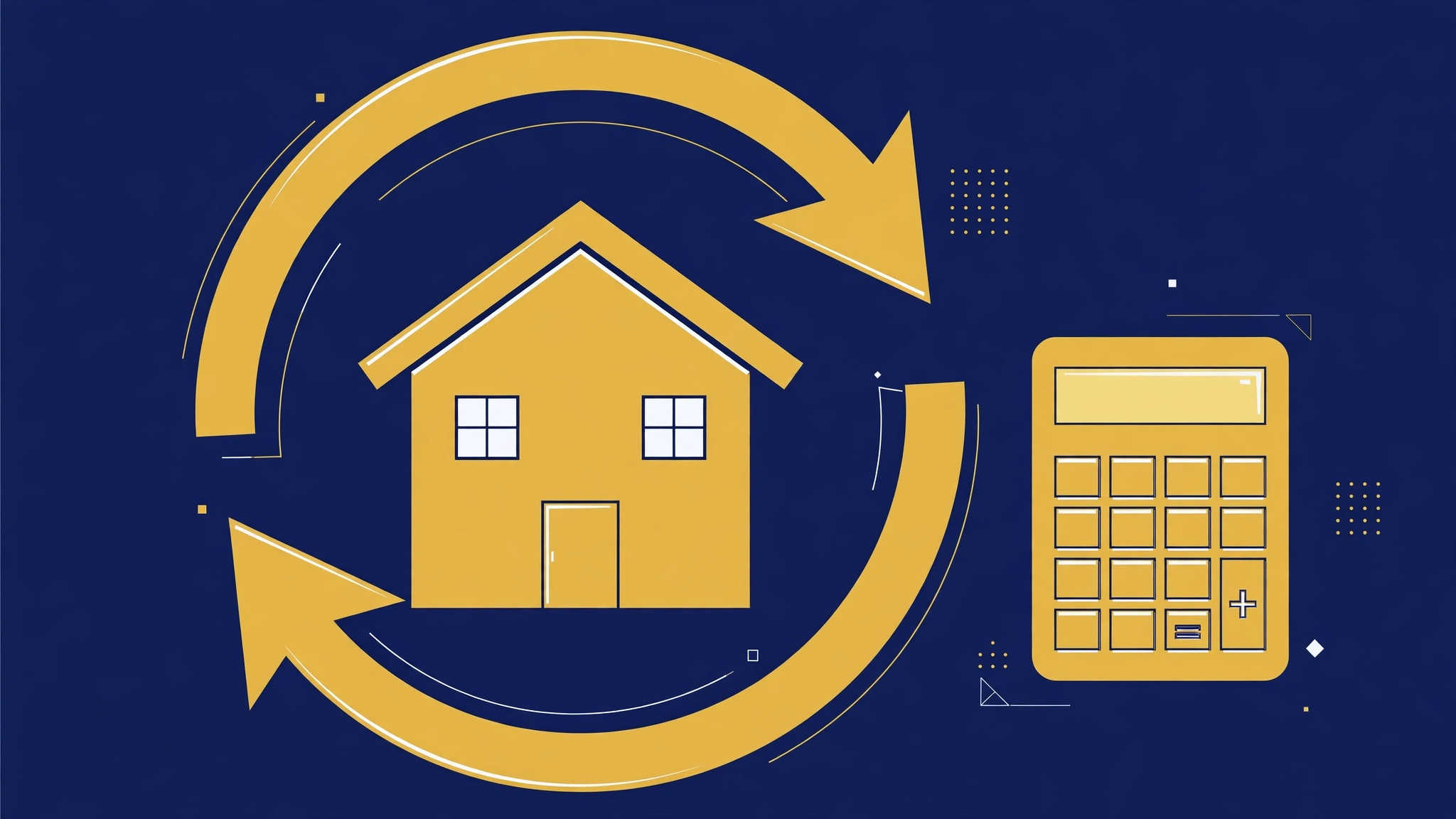
The core question of refinancing is how long it takes for the monthly savings to repay the cost of getting them. The basic version is a single division: total closing costs divided by the monthly payment reduction equals the break-even point in months. A clearly hypothetical example makes it concrete. Suppose refinancing costs you 6,000 dollars in closing costs, and suppose it lowers your monthly principal-and-interest payment from 2,400 dollars to 2,150 dollars. Your monthly saving is 250 dollars. Dividing 6,000 by 250 gives 24 months: for the first two years you are paying back the refinance, and only from month 25 onward are you actually ahead.
Everything else in the decision hangs off that number. If you are confident you will keep the loan well past month 24, the refinance pays. If you might sell, move, or refinance again before then, it does not, no matter how attractive the new rate looks in an advertisement. Two refinements sharpen the estimate. First, compare payments carefully: if the new loan restarts a 30-year clock, part of the “saving” is just your old balance stretched thinner, which the term-reset section below prices out. Second, the simple division treats a dollar saved in month 30 as equal to a dollar spent today; for decisions measured in a few years the approximation is acceptable, but the longer your horizon, the more the true comparison favors counting total interest over the whole period you will actually hold the loan, not just the monthly payment.
Rate-and-Term vs Cash-Out: Two Different Products
A rate-and-term refinance changes the rate, the term, or both, while borrowing roughly what you still owe. Its purpose is efficiency: pay less interest for the same house. A cash-out refinance borrows more than you owe and hands you the difference in cash, converting home equity into a loan balance. Lenders price cash-out loans less favorably than rate-and-term loans, because borrowers taking cash out have historically defaulted more often, and the loan-to-value limits are typically stricter.
Cash-out deserves a particular warning, because its most popular use is paying off credit cards. The arithmetic can look seductive: card balances at a high APR exchanged for mortgage debt at a lower rate. But notice what changed besides the rate. Credit card debt is unsecured; if your finances collapse, the card issuer cannot take your home. Mortgage debt is secured by the house itself. Rolling card balances into a mortgage converts an unsecured problem into a secured one, and if the spending habits that built the balances survive the refinance, the cards fill up again while the house now carries both debts. Anyone weighing that move should first understand exactly how the card side of the trade works, which our guide to credit cards, APR, and the minimum-payment trap covers in detail.
The Term-Reset Trap
The most expensive mistake in refinancing never appears in the monthly payment comparison. It appears in the calendar. Mortgages amortize unevenly: in the early years most of your payment is interest, and in the later years most is principal. When you refinance into a fresh 30-year term, you restart that clock and volunteer for another decade of interest-heavy payments. A lower rate can still leave you paying more total interest than staying put. The numbers below are a hypothetical illustration, computed from standard amortization, not a quote.
Suppose you borrowed 300,000 dollars at 6 percent for 30 years. Your payment is 1,798.65 dollars. After ten years of payments you still owe about 251,057 dollars, and if you simply keep the loan, the remaining twenty years will cost you about 180,619 dollars in interest. Now refinance that 251,057 dollar balance into a new 30-year loan at 5 percent. The payment drops to 1,347.73 dollars, a welcome 450.92 dollars less each month. But the new loan’s total interest over its thirty years is about 234,125 dollars, roughly 53,506 dollars more interest than staying, despite the lower rate, because you stretched twenty remaining years of debt across thirty. The fixes are simple to state: refinance into a term that ends when the old loan would have ended, or keep paying the old payment amount against the new loan so the principal falls on the original schedule. A lower payment is only a saving if the total cost falls too.
When Refinancing Usually Does Not Pay
Several situations reliably fail the math. If you expect to move before the break-even month, the closing costs are a pure loss. If your remaining balance is small, even a large rate cut produces monthly savings too small to recover thousands in costs in any reasonable time. If your credit profile has deteriorated since you bought, the rate you qualify for now may be no better than the one you already have; pricing follows your current file, and knowing how credit scores work tells you whether waiting and rebuilding beats applying today. If your current loan carries a prepayment penalty, that fee joins the cost side of the break-even division, so check your loan documents before falling in love with a quote. And if you are deep into your current loan, where most of each payment already goes to principal, a refinance restarts the interest-heavy years for a modest rate gain, which is the term-reset trap in its purest form.
One more pattern deserves naming: serial refinancing. A borrower who refinances every time rates dip slightly pays closing costs again and again, restarting the break-even clock with each transaction and repeatedly returning to the interest-heavy early years of a new loan. Each individual refinance can look defensible on its own monthly-payment comparison while the sequence quietly costs more than never refinancing at all. The defense is discipline: set your break-even threshold before you shop, require each new loan to clear it against the loan you actually hold today rather than the one you held originally, and keep a record of what each past refinance cost so the next decision starts from your real history, not from a sales pitch.
The Constructive Alternative: Refinance Shorter, Not Longer
The term-reset trap has a mirror image that works in your favor. If rates have fallen since you bought, refinancing into a shorter term than the one you have left, rather than a fresh thirty years, attacks the loan from both ends: the shorter term usually carries a lower rate, and every payment carries a larger share of principal from the first month. A borrower ten years into a thirty-year mortgage who refinances the remaining balance into a fifteen or twenty-year loan often finds the monthly payment rises only modestly, because the rate falls while the balance shrinks on schedule, yet the payoff date moves years closer and the total interest falls steeply. The honest constraint is cash flow: the payment is higher than the thirty-year reset payment, and it must fit the budget in bad months, not just good ones. But judged by total cost rather than monthly relief, the shorter refinance is usually the strongest version of the trade, and it is the version lenders advertise least, because the low payment of the thirty-year reset is the easier sale.
How the Process Runs, Start to Finish
Mechanically, a refinance repeats the purchase process in miniature. You apply, the lender pulls your credit and verifies income, employment, and assets, and an appraisal establishes the home’s current value, which sets your loan-to-value ratio and can make or break the pricing you were quoted. Within a few business days of applying, the lender must provide a Loan Estimate itemizing the rate, payment, and closing costs; this is the document the break-even calculation is built from, and receiving it from two or three lenders is what turns shopping from a slogan into arithmetic. Underwriting follows, then a Closing Disclosure with final figures shortly before signing. One protection is specific to refinancing a primary residence: federal law gives you a right of rescission, a short window, generally three business days after closing, during which you can cancel the transaction entirely. It exists because a loan secured by your home deserves a cooling-off period, and it is worth knowing about before you sign rather than after. From application to funding, the process commonly takes several weeks, and the rate you lock at the start is what carries you through it, which is why the lock decision and the lender’s realistic timeline belong in the same conversation.
A Decision Checklist
Work through the decision in order. First, collect Loan Estimates from more than one lender on the same day, for the same loan structure, so the comparison is honest. Second, extract from each the total closing costs and the new principal-and-interest payment, and compute the break-even month for each offer. Third, state, honestly, how long you expect to keep this loan, and reject any offer whose break-even falls after that date. Fourth, check the term: does the new loan end when the old one would have, and if not, have you priced the extra years of interest rather than just admiring the lower payment? Fifth, decide what kind of refinance this is: rate-and-term efficiency, or cash-out, with the extra caution that borrowing against your home demands. Only when an offer survives all five steps is the lower rate real.
The Bottom Line
Refinancing is a purchase, not a prize: you buy a lower rate with closing costs, and the break-even month tells you when the purchase starts paying you back. Rate-and-term refinances trade cost for efficiency; cash-out refinances trade equity for cash and deserve suspicion, especially when they absorb unsecured debts into a loan secured by your home. The monthly payment is the advertisement; the total interest over the years you will actually hold the loan is the truth. Run the division, respect the calendar, and the decision makes itself.
Disclaimer: This article is for educational purposes only and is not financial, tax, or legal advice. Mortgage terms, rates, and fees vary by lender and change over time; check the CFPB’s Owning a Home resources and your Loan Estimate for the terms that apply to your loan. Examples are hypothetical and do not represent actual offers or returns. Consider speaking with a qualified financial professional about your own situation.