Best Budgeting Apps Compared: Features, Price and Who Each Suits
Introduction: The Best App Is the One That Matches Your Job
Search for a budgeting app and you will find ranked lists, star ratings and confident declarations of a winner. Treat them all with suspicion. Budgeting apps are not one product competing on one scale – they are tools built for different jobs, and an app that is perfect for one job can be useless for another. A “best” list that does not ask what you need the app to do is ranking hammers against screwdrivers.
There is a second reason to compare types rather than brands: apps change. Prices move, free tiers shrink, features arrive and vanish, and occasionally a well-known app shuts down entirely, taking its users’ history with it. A comparison built on this month’s subscription prices is out of date before it is useful. A comparison built on the questions below stays true for years.
So this article works in three parts. First, the four jobs budgeting apps actually do, because naming your job is most of the decision. Second, the mechanics that differ underneath every app: how it connects to your money, how it charges you, and what it does with your data. Third, a decision guide that matches common situations – the beginner, the overspender, the couple, the freelancer, the privacy sceptic – to the type of app that fits each one.
By the end you will not have a brand name. You will have something better: a short checklist that lets you judge any app, including the ones that do not exist yet, in about ten minutes.
Two more tools belong in this comparison even though nobody calls them apps. The budgeting features built into your own bank’s app – spending categories, alerts, savings pots – are genuine competitors, with the advantage of needing no new connection and no new subscription. And the humble spreadsheet remains the most flexible budgeting tool ever made, at the price of doing everything yourself. The framework in this article judges all of them by the same standards, because the right answer for some readers is a tool they already have.
An app can track the numbers, but the plan itself still matters, and creating a budget that sticks using the 50/30/20 rule is the framework many of these tools are quietly built around.
One of those jobs is spotting leaks quickly, and saving money fast: 21 moves ranked by impact orders the fixes so the biggest leaks close first.
Apps only do the visible half of those jobs; automating your finances: the payday system behind the apps is the transfer schedule that moves money before you can spend it.
The Four Jobs Budgeting Apps Do
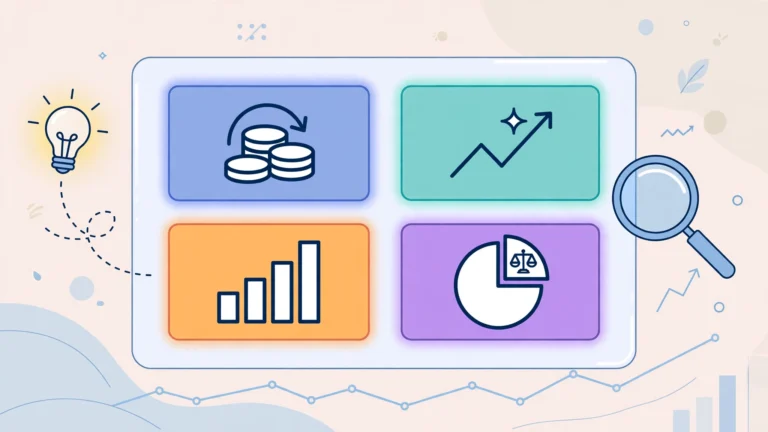
Job 1: Tracking – showing you where the money went
The most common job is backward-looking. The app imports your transactions, sorts them into categories, and shows you the month as it actually happened rather than as you imagined it. For many people this alone is transformative: the first honest picture of spending on food delivery, subscriptions or fuel is worth more than any plan built on guesses.
Job 2: Planning – giving every dollar an assignment
The second job faces forward. Envelope and zero-based apps ask you to allocate income to categories before the month begins, then track spending against those allocations, moving money between envelopes when life disagrees with the plan. This is a stricter discipline than tracking and suits people who want the budget to make decisions in advance, not merely record them afterwards.
Job 3: Watching – bills, subscriptions and price rises
The third job is surveillance of your fixed costs: due-date reminders, alerts when a subscription renews or a regular bill jumps, and a running list of everything that charges you automatically. These features attack the quiet leaks – the forgotten trial, the crept-up premium – rather than daily spending.
Job 4: Sharing – one budget for a household
The fourth job is coordination: couples and housemates seeing the same accounts, the same categories and the same goals, sometimes with separate private spending allowances inside a shared plan. An app that excels here solves arguments as much as arithmetic.
Most apps blend several jobs, and the newer generation layers analysis on top – the categorisation, pattern-spotting and nudges covered in AI for personal finance: budgeting with a brain. But every app has a centre of gravity. Your first task is deciding which job is yours: if you do not know where your money goes, you need tracking; if you know and still overspend, you need planning; if your leaks are automated, you need watching; if two people share the money, you need sharing. The app follows from the answer.
Notice, too, that the jobs can pull against each other. An app optimised for effortless tracking tends to be passive – it watches – while an app built for planning demands weekly attention and gives control in exchange. Apps that try to be everything often end up mediocre at the one job you bought them for, buried under features for the other three. So rank the jobs before you shop: name your primary job, choose the app that does that job best, and accept whatever compromise it makes on the rest. A tracker with clumsy planning tools is a fine purchase for someone who needs tracking; the same app is a poor one for someone whose problem was never information.
How They Connect, What They Cost, and What They See
The connection question
Tracking apps usually connect to your bank and cards through third-party aggregation services, which log in on your behalf and feed transactions back to the app. It is convenient and generally safe, but it is a chain of trust worth understanding: you are granting ongoing access to your financial life, so the questions to ask are whether the access is read-only, how your credentials are handled, and whether the app offers strong sign-in protection such as two-factor authentication.
The alternative is manual entry: you type or import each transaction yourself. It sounds like a chore, and it is – deliberately. Manual entry forces a moment of awareness at every purchase, which is exactly why some people budget better with it. It also keeps your bank credentials out of every third party’s hands.
The price models
Apps charge in three broad ways. Some are free, supported by advertising, referral fees or upsells to paid tiers – which means your attention, or your custom, is part of the product. Some charge a monthly or yearly subscription, which aligns the price with the service but adds one more recurring bill to the budget it is meant to fix. A few charge a one-time purchase price. Because individual prices and tier contents change constantly, compare the model and the annualised cost rather than memorising figures: multiply any monthly price by twelve and ask what the app must save you to earn it.
The data question
A budgeting app can see what you earn, where you shop, what you owe and when you are paid. Before connecting anything, read the privacy policy’s plain-English summary for three things: whether transaction data is sold or shared for marketing, whether it is used to target financial product offers at you, and how you delete your data if you leave. An app that will not answer those questions clearly has answered them.
None of these mechanics makes an app good or bad by itself. They define what you are trading – money, attention, data, effort – for the job it does. The comparison only becomes honest once the trade is visible.
Can you leave? The export question
One last mechanical check, learned the hard way by users of apps that have shut down: can you get your data out? A good app lets you export your transactions and categories in a standard format such as a spreadsheet file. That export is your insurance – it means years of categorised history, the most valuable thing the app holds, can move with you to whatever replaces it. Sync reliability belongs on the same checklist: connections to banks break from time to time on every platform, so look for an app that tells you plainly when a feed has failed rather than silently showing you stale numbers. A budget built on data that stopped updating last month is worse than no budget, because it looks like knowledge.
Choosing Yours: A Decision Guide by Situation
The total beginner
If you have never budgeted, choose full automation and forgiving categories: an app that imports everything, guesses the categories, and shows you one simple picture of the month. Your first job is awareness, and any friction in the first two weeks will end the experiment. You can graduate to stricter systems once the habit exists.
The overspender who knows exactly where it goes
Your problem is not information, it is friction – so choose the opposite: an envelope or zero-based app, ideally with manual checks, that makes you assign money before spending it and confront the envelope before each purchase. Automation would only document the overspending more beautifully.
The couple with shared bills
Prioritise genuine shared access: both partners seeing the same joint picture, with individual allowances kept private inside it. Check that both people’s accounts can connect and that the app handles “ours, yours and mine” money without forcing everything into one pot.
The freelancer with irregular income
Variable pay breaks apps built around a fixed monthly salary. Look for one that budgets from money actually received rather than money expected, handles lean and flush months without declaring each lean month a failure, and ideally separates a tax set-aside from spendable income.
The privacy-first saver
Choose manual entry, a spreadsheet, or the budgeting tools built into your own bank’s app. You give up automation and keep your transaction history to yourself – a legitimate trade, and for some people the only acceptable one.
Whichever situation is yours, pick the app that tracks the goal you actually set – the discipline behind how to set financial goals you will actually reach – and remember the point the CFPB’s guide to creating a budget and sticking with it makes from the regulator’s side: the method – honest numbers, categories you can live with, regular reviews – matters more than the software wrapped around it. The best app is the one still open on your phone in month six.
The spreadsheet person
One more situation deserves a row of its own: the person who has tried three apps and abandoned each within a month. For you, the honest recommendation may be no app at all – a simple spreadsheet reviewed once a week, or a notebook, or cash envelopes for the two categories that always break. The tool is not the discipline; it is only where the discipline lives.
How to run a fair trial
When you do choose a candidate, judge it over one full month, not one enthusiastic evening. Did you open it without being reminded? Did its categories match your actual life, or did half your spending land in “miscellaneous”? Did it survive a weird week – a car repair, a trip – without becoming useless? And if the trial is free with a paid tier waiting, set the cancellation reminder on the day you sign up. An app that watches subscriptions for a living should not become one of the subscriptions you forgot to watch.
A Hypothetical Example: What a Subscription App Must Earn
Here is a simple test to run on any paid budgeting app, using hypothetical figures – the price below is invented, and real apps charge different amounts that change over time.
Imagine an app that charges a hypothetical $10 a month. That is $120 over one year, and $360 over three years. The question the price asks is concrete: will this app prevent more than $120 a year in leaks?
For some households the answer is easily yes. One forgotten subscription the app flags at $15 a month is $180 a year – more than the fee. One avoided overdraft, one subscription price rise caught in time, one month where the envelope warning actually stopped a spending spree: any single one of these can cover a year of the subscription.
For other households the honest answer is no. An app that is opened twice and abandoned earns nothing at any price, and a household whose budget already runs well on a free tracker gains little from paying for prettier charts. The fee is not high or low in the abstract; it is high or low relative to the leaks in your own spending and the likelihood you will keep using the tool.
So run the test before subscribing: name the specific leak you expect the app to catch, estimate what that leak costs you a year, and compare. If the leak is real and the app addresses it, the subscription is a purchase. If you cannot name the leak, you are buying motivation – and motivation, unlike software, cannot be subscribed to.
The same test applies when the price is time instead of money. A free manual-entry system that takes twenty minutes a week costs roughly seventeen hours a year – twenty minutes, fifty-two times. For a household that finds those twenty minutes genuinely useful, a weekly review with a coffee, the price is well spent. For one that will skip the review by week three, the free system is the most expensive option on the table, because it delivers nothing at all. Price every tool in the currency it actually charges: dollars, data, or discipline.
The Bottom Line
Budgeting apps are tools for four different jobs – tracking what happened, planning what happens next, watching bills and subscriptions, and coordinating shared money – and the “best” one is simply the one built for the job you actually need. Judge candidates on how they connect to your accounts, what their price model really costs over a year, and how they treat your transaction data, rather than on any ranked list, including this one.
Remember the honest limit the CFPB’s budgeting guidance points at: the method matters more than the software. An expensive app you open daily beats a perfect free one you abandon in February, and no app can rescue a budget whose numbers were never realistic. Pick the tool that fits your habits, give it one honest month, and let the goal – not the app – stay in charge.
Disclaimer: This article is for educational purposes only and is not financial, tax, or legal advice. Investing involves risk, including the possible loss of principal. Examples are hypothetical and do not represent actual or future returns. Consider speaking with a qualified financial or tax professional about your own situation.