How Credit Scores Work
Introduction: A Prediction, Not a Grade
Your credit score looks like a grade, three digits that seem to summarize you as a borrower, but it is more accurate to think of it as a forecast. The Consumer Financial Protection Bureau defines a credit score as a prediction of your credit behavior, such as how likely you are to pay a loan back on time, based on information from your credit reports. That definition explains almost everything about how scores behave: why you have many of them instead of one, why they move, and why a lender can see a different number than the one you saw last week. This guide explains how credit scores are built, what information feeds them, who uses them, and what they deliberately leave out.
How a Score Is Made: Reports In, Formula Applied
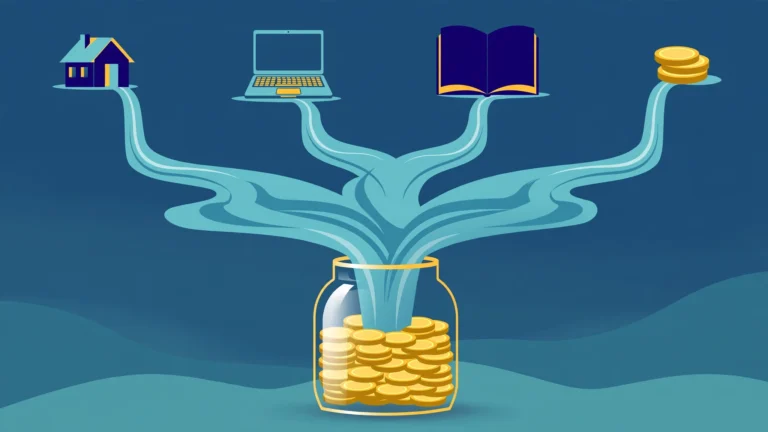
A credit score is the output of a two-step process. First, credit reporting companies assemble your credit report: a record of your credit accounts, balances, payment history, and related public events such as bankruptcies. Second, a scoring model, which the CFPB describes as a mathematical formula, processes that report data and produces a number. Change either input, the underlying report data or the model doing the math, and the number changes. Scores are recalculated from current report data, so a score is a snapshot, not a permanent record; it reflects your report as it stands on the day it is generated.
The information in your reports comes mainly from lenders themselves. Credit card issuers, banks, auto lenders, and mortgage servicers report your balances and whether you paid on time, and those reports, flowing in month after month, become the raw material of every score. This is also why errors matter so much: a payment wrongly reported as late is not a clerical curiosity, it is an input that drags the formula’s output down, which is why reviewing your reports regularly, as our guide on how to check your credit report for free explains, is the cheapest credit maintenance there is.
Why You Have Many Scores, Not One
One of the CFPB’s most useful clarifications is that you do not have just “one” credit score. Each score depends on the data used to calculate it, and it can differ depending on the scoring model, which itself may depend on the type of loan product the score will be used for, the source of the data, and even the day it was calculated. Different companies build competing scoring models, lenders use different versions tuned for mortgages, auto loans, or credit cards, and each of your credit reports may contain slightly different data.
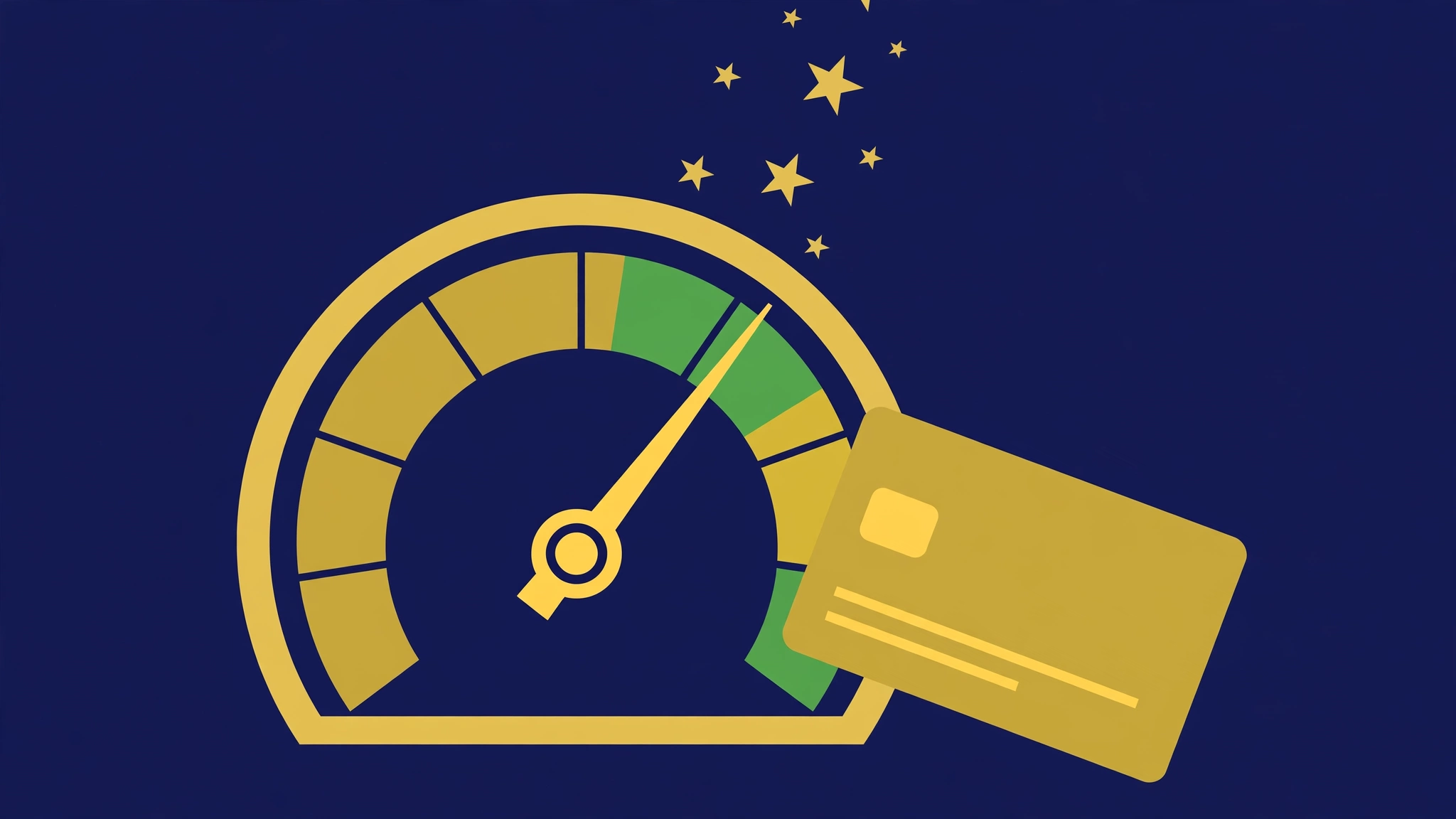
The practical consequence is that chasing a single exact number is a misunderstanding of the system. What matters is the range your scores occupy and the direction they are moving, because lenders generally make decisions in bands: broadly, a higher score makes it easier to qualify for a loan and may result in a better interest rate or loan terms, as the CFPB’s explanation of credit scores puts it. Most credit scores range from 300 to 850, so a score in the upper part of that range signals low predicted risk to any model, even if the precise digits vary between them.
Credit Reports and Credit Scores Are Not the Same Thing
The two terms are used interchangeably in everyday conversation, but they are different objects, and the distinction matters when something goes wrong. Your credit report is the underlying record: the accounts, balances, payment history, and negative events themselves. Your credit score is a number computed from that record at a moment in time. You can dispute an error in a report, because the report is data with sources that can be corrected; you cannot dispute a score directly, because the score is only arithmetic applied to the data. Fix the report and every score built on it improves the next time it is calculated.
This also explains a common frustration. A consumer checks a score from one source, applies for a loan, and is told a different number by the lender. Nothing dishonest has happened: the lender’s model may weight the same report differently, may use a report from a different reporting company whose data differs slightly, or may simply have calculated on a different day, after a new balance or payment posted. The CFPB’s point that a score depends on the model, the data source, and the day of calculation is not fine print; it is the operating manual for interpreting any score you are shown.
Who Builds the Models
Scoring models are built by companies that specialize in prediction, and lenders choose among them. The two model families American consumers encounter most often are FICO scores and VantageScore, each produced in multiple versions and each also offered in industry-specific variants tuned for particular products, such as auto lending or credit cards. An industry-specific score reads the same report as a general one but weights the ingredients differently, because the behavior that best predicts a missed car payment is not identical to what best predicts a missed mortgage payment.
For the consumer, the branding matters less than the shared logic. Every mainstream model reads the same underlying reports and rewards the same broad behaviors, paying on time, keeping balances manageable, maintaining older accounts, and applying for credit sparingly. A borrower whose habits satisfy one model almost always looks acceptable to the others, which is why advice about scores can be general even though scores themselves are specific.
The Ingredients: What the Formula Looks At
Scoring models differ in their exact recipes, but the CFPB lists the factors that are typically taken into account, and they are worth knowing one by one. Your bill-paying history comes first in the list: whether you pay on time is the most direct evidence of whether you will pay on time. Your current unpaid debt matters too, since existing obligations compete with any new one. The number and type of loan accounts you have feed the model a picture of your experience with credit, and how long you have had your accounts open matters because a longer track record gives the prediction more to work with.
Two factors are routinely misunderstood. How much of your available credit you are using, your credit utilization, is a distinct input: maxed-out cards signal strain even if every payment is on time. And new applications for credit count as well, because a sudden burst of applications can indicate a borrower stretching for money. Finally, severe events enter the formula: whether you have had a debt sent to collection, a foreclosure, or a bankruptcy, and how long ago it happened, with older events generally weighing less as time passes.
Just as important is what is not in the formula. A credit score is built from credit behavior only. It does not include your income, your job, your savings, or how much money you have in the bank, and it says nothing about your worth as a person. Lenders may consider income and employment separately when you apply, but those are the lender’s checks, not the score’s ingredients. A high earner can have a poor score after missed payments, and a modest earner can have an excellent one after years of boring, on-time bills.
Who Uses Your Score, and What For
The obvious users are lenders deciding whether to offer you a mortgage, credit card, or auto loan, but the CFPB notes the audience is wider: scores are also used for tenant screening and insurance. Wherever a company needs to predict whether you will meet a stream of future payments, rent, premiums, loan installments, a score offers a standardized shortcut.
The score does two jobs in those decisions. It acts as a gate, qualify or not, and as a pricing dial, because companies also use scores to determine the interest rate and credit limit you receive. That second job is where the money is. Two borrowers can both be approved for the same loan and pay strikingly different amounts for it over its life, purely because their scores priced their risk differently. This is why the score is best understood not as a judgment but as a price tag on your predicted reliability, one that follows you into every negotiation where payments stretch into the future.
How Scores Change, and What Moves Them
Because a score is recalculated from live report data, it moves as the data moves. Paying down card balances lowers utilization. A run of on-time payments thickens the positive history. Old negative events age, and their weight fades, while new ones, a fresh missed payment or a new collection, pull the other way immediately. Nothing about the system requires the score to move slowly in both directions: it can fall quickly after a serious delinquency and rebuilds gradually as clean months accumulate, an asymmetry that reflects the prediction being made, since recent behavior is the freshest evidence.
It is also worth knowing what does not move your score. Checking your own credit reports and scores is not an application for credit and does not damage them; the inquiries that can matter are the ones generated when you actually apply for new credit. And since every score is drawn from report data, the highest-leverage maintenance is boring: pay on time, keep balances well below limits, avoid unnecessary applications, and correct report errors when you find them. Those habits, applied consistently, are the entire substance behind our guide on how to improve your credit score.
A sudden, unexplained drop is worth investigating rather than merely regretting, because the score is only a messenger for the report underneath it. A drop usually means something in the data changed: a balance spiked, a payment was reported late, an old account closed, or, occasionally, an error or someone else’s account landed in your file. Reading the report to find which ingredient moved turns an alarming number into a specific, fixable fact. Consumers who check their reports on a routine schedule catch these changes while they are still small, which is the closest thing the credit system has to an early-warning service, and it costs nothing but attention.
When There Is No Score at All
A person who has never borrowed, or who stopped using credit years ago, may have reports too thin for a model to score. This “credit invisible” situation is not the same as a bad score: there is no negative prediction, just an absence of evidence, and lenders respond to it differently, some declining automatically, others reviewing income and other documentation manually. It is one reason financial guidance so often recommends establishing a modest credit footprint early, a card used lightly and paid in full, for example, since a thin file is a problem that only time and a small amount of recorded, responsible borrowing can solve. The goal is not to borrow more; it is to make your existing reliability visible to the formula.
The Bottom Line
A credit score is a formula’s prediction of your future payment behavior, built from your credit reports, expressed on a 300-to-850 scale, and recalculated constantly. You have many scores because many models read your data for many purposes, and lenders, landlords, and insurers use them both to admit you and to price you. Knowing what the formula sees, payment history, debts, account age and mix, utilization, new applications, and serious negative events, turns the number from a mysterious verdict into a dashboard: every input is something your own behavior controls. Treat the score as feedback on habits rather than a judgment of character, and it becomes what it should have been all along, a tool you manage instead of a grade you fear. Managed that way, it quietly lowers the price of every major purchase financed over a lifetime.
Disclaimer: This article is for educational purposes only and is not financial, tax, or legal advice. Credit scoring models vary by provider, and your individual results will differ. Consider speaking with a qualified financial professional about your own situation.