Credit Cards Explained: APR, the Grace Period, and the Minimum-Payment Trap
Introduction: A Loan That Resets Every Month
A credit card is a revolving loan dressed up as a payment tool. The issuer gives you a credit limit, you spend against it during the month, and at the end of each billing cycle you choose how much of the loan to repay: all of it, some of it, or the minimum the contract allows. That choice, repeated monthly, is the entire economics of the product. The Consumer Financial Protection Bureau collects the definitions that govern the system on its page of credit cards key terms, and this guide follows them: how the APR prices the loan, how the grace period can make the loan free, how the minimum payment can make it last for years, and how transfers, fees, and penalty rates change the deal.
Revolving Credit and the Billing Cycle
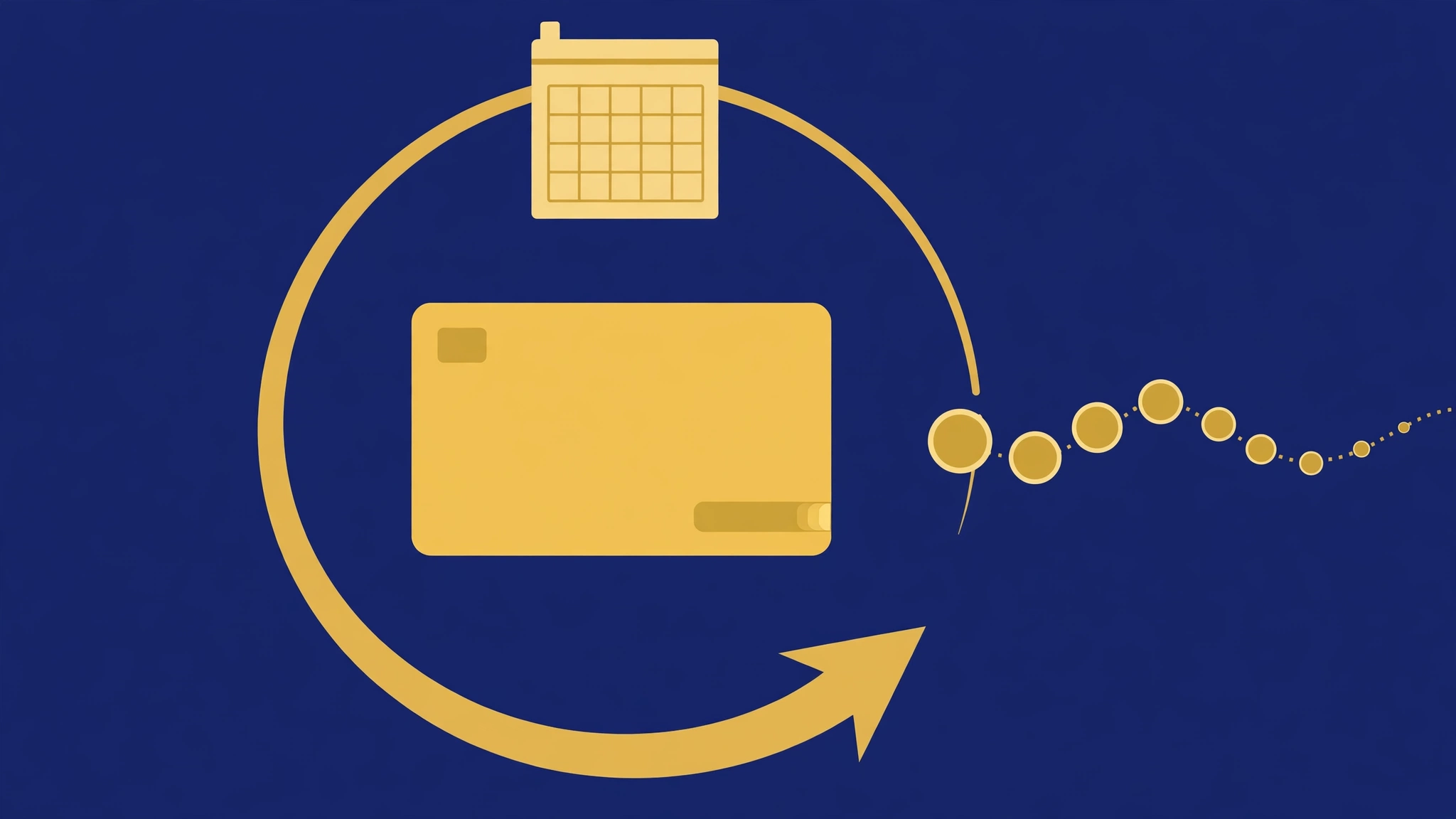
Unlike an installment loan, which is borrowed once and repaid on a fixed schedule, a credit card balance revolves: pay it down and the available credit reopens for new spending, up to the limit. Your account runs on a billing cycle of roughly a month. At the end of the cycle the issuer issues a statement showing the balance, the transactions, the minimum payment due, and the due date. Everything that follows, interest, grace periods, late fees, is triggered by what you do between that statement and the due date.
The contract behind the card is the cardholder agreement. Per the CFPB, it states the terms and conditions that apply to the card, including applicable fees, your liability for unauthorized transactions, and the APR. If you lose yours, the issuer must provide it, and many agreements are also listed in the CFPB’s Credit Card Agreement Database. The statement tells you what happened this month; the agreement tells you the rules it happened under.
The APR and the Daily Periodic Rate
The APR, or annual percentage rate, is the standard way to compare how much loans cost. The CFPB explains that it lets you compare loan products on an apples-to-apples basis, because interest and fees are measured against the amount borrowed over a one-year period, and that your card company must disclose the APR before you agree to use the card. For credit cards, the interest rate is the price you pay for borrowing money, typically stated as that yearly APR.
What surprises many cardholders is how the APR is applied. Some issuers calculate interest using a daily periodic rate: the APR divided across the days of the year, multiplied by the amount owed at the end of each day. That daily interest is added to the balance, which means interest compounds daily, and carrying a balance costs a little more every day it sits there. It also means the timing of payments matters: a payment made in the middle of the cycle reduces the daily balances that interest is computed on for the rest of that cycle.
The Grace Period: The Free Loan Hidden in Most Cards
A grace period is the period between the end of a billing cycle and the date your payment is due. During this time, the CFPB explains, you may not be charged interest as long as you pay your balance in full by the due date. Credit card companies are not required to give a grace period, but most credit cards provide one on purchases. This is the feature that separates people who use cards as a free payment tool from people who rent money at card rates: pay the full statement balance every month and purchases cost you no interest at all.
The grace period has conditions, and they are strict. If you do not pay your balance in full by the due date, you lose the grace period and are charged interest on the unpaid portion; new purchases can then start accruing interest immediately as well. Federal rules also set the calendar: card companies must establish procedures to assure that bills are mailed or delivered at least 21 days before the payment is due. And the grace period typically applies only to purchases. If you use your card for a cash advance, interest generally starts accruing as of the date of the transaction, with no free window at all, which is why cash advances are among the most expensive ways to use a card.
Losing the grace period is not permanent, but regaining it takes discipline. The CFPB’s advice is blunt: to keep your grace period, pay your bill in full each month and on time. Once you have carried a balance, interest continues on the unpaid portion until the balance is fully repaid, and only a return to paying in full restores the interest-free treatment of new purchases. This is why a single month of partial payment can echo for several statements: the balance you failed to clear keeps generating daily interest, and new spending joins it without the protection you had before. Cardholders digging out of a balance should therefore treat the first full payoff as the finish line, not a milestone along the way, because that is the moment the card becomes a free payment tool again.
The Minimum Payment Trap, in Arithmetic
Every statement offers a minimum payment, the smallest amount that keeps the account current. Paying it avoids a late fee, but it is designed to retire the debt slowly, because in the early months much of the payment is consumed by interest. A clearly hypothetical example shows the mechanics. Assume a 3,000 dollar balance and a hypothetical APR of 24 percent, so the interest in the first month is roughly 3,000 times 24 percent divided by 12, which is about 60 dollars. If you pay a fixed 75 dollars a month, only about 15 dollars reduces the principal in month one. At that fixed 75 dollar pace, with interest shrinking as the balance falls, the debt takes roughly 82 months, nearly seven years, to clear, and the total interest paid comes to roughly 3,100 dollars, more than the original purchase price of everything bought.
Now change only the payment. Pay a fixed 200 dollars a month on the same hypothetical balance and rate, and the debt is gone in about 19 months with roughly 600 dollars of interest. Same card, same spending, same rate; the only variable was the payment, and it changed the cost of the borrowing by about 2,500 dollars. Real minimum payments are often recalculated as a percentage of the shrinking balance, which stretches the payoff even longer than the fixed-payment illustration. The lesson is mechanical, not moral: on a revolving balance, the payment size is the price.
Balance Transfers and Promotional Rates
A balance transfer lets you move an outstanding balance from one credit card to another, sometimes for a fee. The CFPB notes that the fee is usually a certain percentage of the amount transferred or a fixed amount, whichever is more, so a transfer is never quite free even when its interest rate is. Many issuers offer zero-percent or low-interest transfers to attract balances, but the promotional rate lasts for a limited time; after it expires, the rate on the new card may rise, increasing the payment amount, and any balance still sitting there starts costing at the regular rate.
Transfers also carry a discipline clause. If you are more than 60 days late on a payment, the card company can increase your interest rate on all balances, including the transferred balance. A transfer works as a debt-payoff tool only when the promo window is treated as a deadline: divide the transferred balance by the number of promotional months, pay that amount monthly, and let the transfer finish the job before the rate resets.
Reading an Offer Before You Accept It
Many cards arrive as invitations. A prescreened credit card offer, per the CFPB, is what happens when card companies use information from credit reporting companies to make firm offers of credit to people whose credit history meets the criteria the company selected. Prescreened does not mean best available; it means you matched a marketing filter. The comparison that matters is the one the APR was designed for: line up the purchase APR, the fee schedule, and the grace period terms of competing offers side by side, on the apples-to-apples basis the CFPB describes, and ignore the rewards headline until the borrowing terms are understood.
One more term from the statement is worth knowing. A credit balance is an amount the card issuer owes you, shown when the credits on your account exceed what you owe. Credits arrive each time you make a payment, and also when you return something bought with the card, when rewards are applied, or when a billing mistake is corrected. A credit balance is a small thing, but noticing it teaches the right habit: the statement is a two-way ledger, and every line on it, in both directions, deserves a glance before you pay.
Fees, Penalty Rates, and Unauthorized Use
Beyond interest, the cardholder agreement lists the fees that apply to the account, and they are part of the product’s real price: annual fees on some cards, late fees when the minimum is missed, and fees attached to transactions such as cash advances and balance transfers. Read the fee schedule before applying, not after the first statement, because the agreement, not the advertising, is what you accepted.
Two protections deserve a place in every cardholder’s memory. First, the agreement outlines your liability for unauthorized transactions; unauthorized use means use by a person who does not have the right to use the card, such as someone who finds your lost card and spends with it, and reporting a lost or stolen card promptly is what keeps that protection strong. Second, penalty pricing has rules: as the transfer discussion showed, serious lateness, more than 60 days, can let the issuer raise the rate on existing balances, which turns a cash-flow problem into a more expensive debt at the worst possible moment.
Your Card and Your Credit Profile
How you run the card feeds directly into your credit record. Issuers report your balance and payment history, and the share of your limit you are using matters: keeping your credit utilization low signals that the card is a tool you control rather than a lifeline you depend on. Those reports build the history behind how credit scores work, which is why a card paid in full and on time for years is one of the cheapest credit-building devices available, while the same card carried at its limit quietly taxes every future loan you apply for.
Using a Card Like a Tool
The habits that make a card cheap are boring and mechanical. Pay the full statement balance by the due date, every month, so the grace period keeps purchases interest-free. Treat cash advances as emergencies only, because their interest starts immediately. If you carry a balance, pay a fixed amount you choose, sized from the payoff math, rather than the minimum the statement suggests. Read the cardholder agreement’s fee table once, carefully. And keep utilization low even in months when you pay in full, since the balance reported mid-cycle is what the scoring models see.
The Bottom Line
A credit card is two products sharing one piece of plastic: a free, convenient payment method for people who pay in full inside the grace period, and an expensive revolving loan for people who do not. The APR and the daily periodic rate set the loan’s price, the minimum payment sets its duration, and transfers and penalty rates reward discipline and punish lateness. Understand those four levers, all of them defined in the agreement you accepted, and the card works for you instead of the other way around.
Disclaimer: This article is for educational purposes only and is not financial, tax, or legal advice. Credit card terms, rates, and fees vary by issuer and change over time; check the CFPB and your cardholder agreement for the terms that apply to your card. Examples are hypothetical and do not represent actual offers or returns. Consider speaking with a qualified financial professional about your own situation.