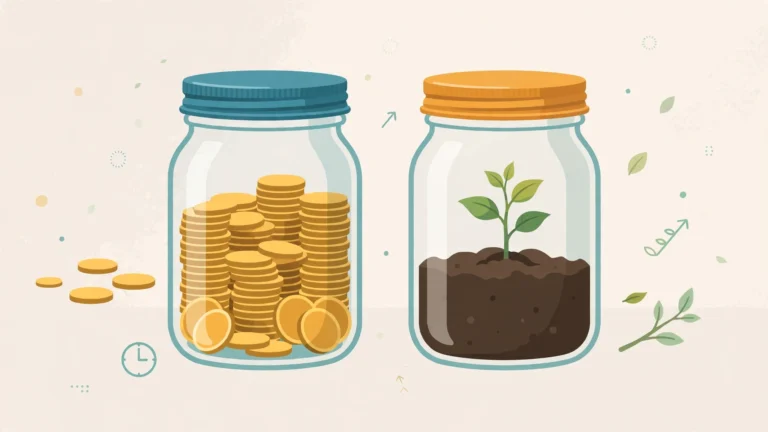
Dividend Yield vs Dividend Growth: Two Income Strategies Compared
Introduction: Income Now, or Income That Grows?
Any investment strategy that provides a steady income stream is often a tempting option for those looking to supplement their retirement savings or generate passive income. However, there are two distinct approaches to consider: the dividend yield strategy and the dividend growth strategy.
The Yield Strategy: A Quick Fix?
The yield strategy focuses on buying shares of established companies with a high dividend payment relative to their price. The idea is that you can invest in these companies and receive a sizable dividend payment right away, providing a regular income stream. What counts as “high” is measured by the yield – the annual dividend divided by the share price – and the biggest yields on any screen deserve the hardest questions, for reasons this article will show.
However, this approach can be misleading. Many dividend-paying companies may be struggling financially, which can lead to a decline in dividend payments, or even worse, bankruptcy. This is often referred to as the “trap of income.” So, the initial high dividend yield may not be sustained over time, leaving investors with no income at all.
The Growth Strategy: A Long-Term Play
The dividend growth strategy, on the other hand, involves investing in companies that have a history of consistently increasing their dividend payments over time. The idea is that, by investing in these companies, you benefit if their payments keep rising, building a larger income stream over the years. The starting yield is usually modest; the bet is on the raises, not on today’s payout – and a history of raises is a habit, never a promise.
This strategy requires patience and a long-term perspective. It’s essential to conduct thorough research and due diligence on any potential investment, because a history of raises does not guarantee the next one. What the strategy offers is a mechanism – payouts that have risen over time – not a promised result.
In this article, we’ll delve deeper into the differences between these two strategies, exploring the potential risks and rewards of each, as well as how to choose the right approach for your individual circumstances.
Chasing yield is safer inside a diversified wrapper, and monthly dividend ETFs: building a monthly income rhythm shows how the payment schedule is actually constructed.
The High-Yield Strategy: Cash Now, With a Warning Label
The high-yield strategy focuses on maximizing immediate income. At its simplest, dividend yield is calculated by taking the total annual dividend payments per share and dividing that figure by the current share price. For example, if a hypothetical company pays $5.00 in annual dividends and its stock trades at $100, the yield is 5%. Investors pursuing this strategy often seek out stocks with yields significantly higher than the broader market average, hoping to generate a substantial stream of cash flow to supplement their lifestyle or reinvest elsewhere.
However, this strategy carries a significant “warning label” that every investor must understand. An unusually high yield is often not a sign of a hidden gem, but rather a symptom of a company in distress. Because yield and share price move in opposite directions, a plummeting stock price—often triggered by poor earnings, rising debt, or a loss of market share—will mathematically inflate the yield percentage. If the market expects a company’s profits to decline, investors may sell off the stock, driving the price down and creating an artificially high yield.
The greatest danger here is the “yield trap.” If a company’s earnings cannot support its dividend payments, the board of directors may eventually decide to cut or suspend the payout to preserve cash. When that happens, the stock price often falls further, and the income stream the investor was relying on vanishes. Identifying whether a yield is sustainable requires careful analysis of a company’s payout ratio and cash flow. To learn more about how to evaluate these metrics, you can read our guide to dividend investing for beginners.
Who is this strategy for? It is generally intended for investors who need immediate income and have the time and expertise to conduct deep fundamental research. Success in this area is not about chasing the highest percentage on a screen; it is about finding companies that are temporarily misunderstood by the market but still possess the financial strength to keep paying their shareholders.
Key Considerations for High-Yield Investors:
- Analyze the Payout Ratio: Determine what percentage of the company’s earnings is being paid out as dividends. If the company is paying out more than it earns, the dividend is likely at risk.
- Review the Balance Sheet: High debt levels can make it difficult for a company to maintain dividend payments during an economic downturn.
- Look for Consistency: A company with a long history of maintaining or increasing its dividend through various economic cycles is generally a more stable choice than a company with a volatile payment history.
- Diversification is Essential: Never rely on a single high-yield stock for your entire income stream, as the risk of a dividend cut is always present.
The Dividend-Growth Strategy: A Rising Paycheck From Your Portfolio
The dividend-growth strategy focuses less on the immediate cash payout and more on the trajectory of a company’s future payments. Investors who favor this approach often look for businesses that prioritize reinvesting their profits into expansion, innovation, or debt reduction. These companies may begin with a modest starting yield, but they frequently raise their dividend payments annually as their underlying earnings expand.
This strategy is built on the concept of compounding, which is a cornerstone of long-term investment strategies that actually work. By focusing on firms with a history of consistent payout increases, investors aim to build a portfolio that produces a growing stream of income over several decades.
Understanding Yield on Cost
One of the most compelling aspects of this strategy is the concept of “yield on cost.” This is a simple mathematical calculation: you take the current annual dividend amount and divide it by the original price you paid per share. It is not a measure of the current market yield, but rather a personal metric that shows how your initial investment is performing relative to your entry point.
Consider this hypothetical example: Imagine you purchase shares of a company for $100, and the company pays an annual dividend of $2. At the time of purchase, your yield is 2%. Now, assume that over the next ten years, the company grows its business and increases that annual payout to $6 per share. While a new investor buying the stock today at a higher market price might still only see a 2% or 3% yield, your personal yield on cost has climbed to 6%. Because you held the shares while the company increased its payout, you are effectively earning a much higher return on your original capital than someone entering the market today.
The Price of Admission
While the prospect of a rising paycheck is attractive, this strategy requires a specific mindset. The “price” an investor pays for these results is time. It demands a long horizon and the discipline to hold through market fluctuations. Because these companies often have lower initial yields, the immediate cash flow may feel underwhelming to those seeking quick income. The strategy relies on the assumption that the company will remain profitable and continue its commitment to shareholders over many years.
Investors adopting this approach generally prioritize companies with the following characteristics:
- Consistent Earnings Growth: Dividends are typically paid out of profits, so rising earnings are the fuel for future payout increases.
- Sustainable Payout Ratios: Companies that pay out a reasonable portion of their earnings—rather than nearly all of them—have more flexibility to maintain and raise dividends during leaner times.
- Commitment to Shareholders: Many investors look for a long track record of annual dividend increases as a sign of management’s long-term philosophy.
Choosing a strategy still leaves the vehicle open, and dividend stocks vs dividend ETFs: single names or the basket decides whether you hold the payers directly or buy them by the fund.
Choosing, Blending and the Total-Return Lens
Deciding between a dividend-yield approach and a dividend-growth approach often comes down to your personal situation rather than any single “best” strategy. Three questions tend to shape the choice.
What actually drives the decision
- How soon you need the money. If you rely on regular income today, a higher current yield can feel attractive. If retirement is decades away, you may prefer companies that plow cash back into the business and raise payouts over time.
- How much homework you enjoy. Growth-focused investing usually asks you to read financial statements, follow earnings, and judge whether management can keep raising the dividend. Yield-focused screening can be simpler, though it still deserves review.
- Your stage of life. Someone early in their career may lean toward growth, while someone closer to drawing income may lean toward yield. Neither choice is permanent; circumstances change.
Many investors do not pick one side. They blend the two, pairing a core of steady, higher-yielding holdings with a smaller sleeve of dividend growers. This mix can balance near-term cash flow with the potential for rising payouts later. Blending is not a compromise so much as a way to match different goals to different parts of your portfolio.
Judge by total return, not income alone
Whichever path you follow, the clearer measure is total return, which combines the income you receive with any change in the share price. A stock with a modest yield and a rising price can outpace one with a large yield and a falling price. Focusing only on the yield figure can hide what the whole position is actually doing.
It also helps to remember what a dividend really is. A dividend is simply one way a company returns cash to its owners. A business might instead reinvest that cash, buy back shares, or pay down debt. A payout is not a free bonus layered on top of your investment; it comes out of the company’s own resources. For example, in a hypothetical illustration, a company worth $100 per share that pays a $5 dividend is handing back part of its own value, not adding to it.
Taxes are worth keeping in mind as well. Dividends and the gains from selling can be taxed, and the treatment may differ depending on the account and the type of income. Rules around these taxes are set by authorities and can change over time, so it is wise to check current guidance rather than assume last year’s treatment still applies. If you want a plain-language foundation, Investor.gov, the SEC’s introduction to investing covers many of these basics.
In the end, the “right” strategy is the one that fits your timeline, your appetite for research, and your stage of life, measured by the total return it helps you pursue rather than by the yield alone.
A Hypothetical Example: Two Invented Stocks
To see how the two main ways a dividend yield can change, we create two fictitious companies and walk through the math. The numbers are round and invented so the mechanics stay clear.
Stock A – High Current Yield
Imagine a fictional company called Alpha Corp whose shares trade at $25 and pay an annual dividend of $2.00. The current dividend yield is 8.0 % ($2.00 ÷ $25). Now suppose the same company once traded at $50 while still paying $2.00. At that price the yield was only 4.0 % ($2.00 ÷ $50). The yield doubled not because the business improved, but because the share price fell by half.
Stock B – Growing Dividend
Consider another invented firm, Beta Inc., with a share price of $40 and a dividend of $1.20. Its starting yield is 3.0 % ($1.20 ÷ $40). If management raises the payout to $1.80 while the purchase price stays at $40, the yield on the original cost becomes 4.5 % ($1.80 ÷ $40). The increase comes from dividend growth, not from a price decline.
Notice that Stock A’s yield rose because the market priced the shares lower, while Stock B’s yield on cost rose because the company chose to distribute more cash. Both paths affect the income an investor receives, but they arise from very different forces.
What the Numbers Show
- Both companies are purely hypothetical; they do not exist and are not recommendations.
- The arithmetic illustrates how a falling price can inflate a yield and how a rising payout can boost the yield on cost.
- Real investments involve many other factors—business quality, payout sustainability, tax treatment, and market risk—that this simple math does not capture.
Remember that a high current yield can signal a falling share price rather than a healthier business, and a growing dividend does not guarantee the share price will stay steady. Use these calculations as a starting point for deeper research, not as a forecast of future income.
The Bottom Line
Yield and dividend growth are two answers to two different questions. A high yield answers “how much cash does this pay today?” – and deserves suspicion whenever the number looks too generous, because it often means the price has already fallen on trouble. Dividend growth answers “how much could this pay in ten years?” – and demands the patience to start smaller.
Many investors end up blending the two, and either way the discipline is the same: check that earnings actually cover the payout, judge the holding on total return rather than income alone, and confirm the current dividend and price on the day you buy. Income that survives is worth more than income that merely shines.
Disclaimer: This article is for educational purposes only and is not financial, tax, or legal advice. Investing involves risk, including the possible loss of principal. Examples are hypothetical and do not represent actual or future returns. Consider speaking with a qualified financial or tax professional about your own situation.