Every year, investors are promised a shortcut: the hot stock, the secret timing signal, the strategy that supposedly beats the market with ease. Almost none of them survive contact with reality. The approaches that build real wealth are less exciting and far more reliable, and they have worked across decades, crashes, and recoveries. This guide walks through the long term investment strategies with genuine evidence behind them, explains why they work, and shows how to combine them into a plan an ordinary person can actually follow for twenty or thirty years.
Why “Long Term” Changes Everything
Time is not just one ingredient in investing; it is the ingredient that makes the others work. In the short run, stock prices are driven by news, fear, and speculation, and they can fall sharply for reasons that have nothing to do with the underlying businesses. Over long periods, prices increasingly follow the growth of company profits. Historically, broad stock markets have produced positive returns over most ten-year periods and nearly all twenty-year periods, even though many individual years were negative. A long horizon converts market volatility from a threat into background noise.
A long horizon also unlocks compounding. Returns earn returns, and the curve bends upward with time: growth in year twenty dwarfs growth in year two, even at the same percentage rate. This is why the best strategies are all, at their core, machines for staying invested, adding regularly, and keeping costs low for as long as possible.
Strategy 1: Buy-and-Hold Index Investing
The cornerstone strategy is disarmingly simple: buy a low-cost index fund that holds the whole market (or a large slice of it), and hold it for decades. Instead of trying to pick winning stocks, you own all of them — the winners and the losers — and let the overall growth of the economy carry you. Fees on broad index funds can be a tiny fraction of a percent per year, and because the fund rarely trades, it is also tax-efficient in many systems.
Why does something so simple beat most professionals? Three reasons. First, costs: every dollar paid in fees and trading is a dollar that cannot compound, and active funds charge far more. Second, behavior: stock pickers and fund managers are human, prone to the same fear and greed as everyone else. Third, arithmetic: before costs, the average active investor earns roughly the market return; after costs, the average necessarily falls behind. A beginner who wants the full foundation first can start with our guide to investing for beginners and then return here for the strategy layer.
Strategy 2: Dollar-Cost Averaging
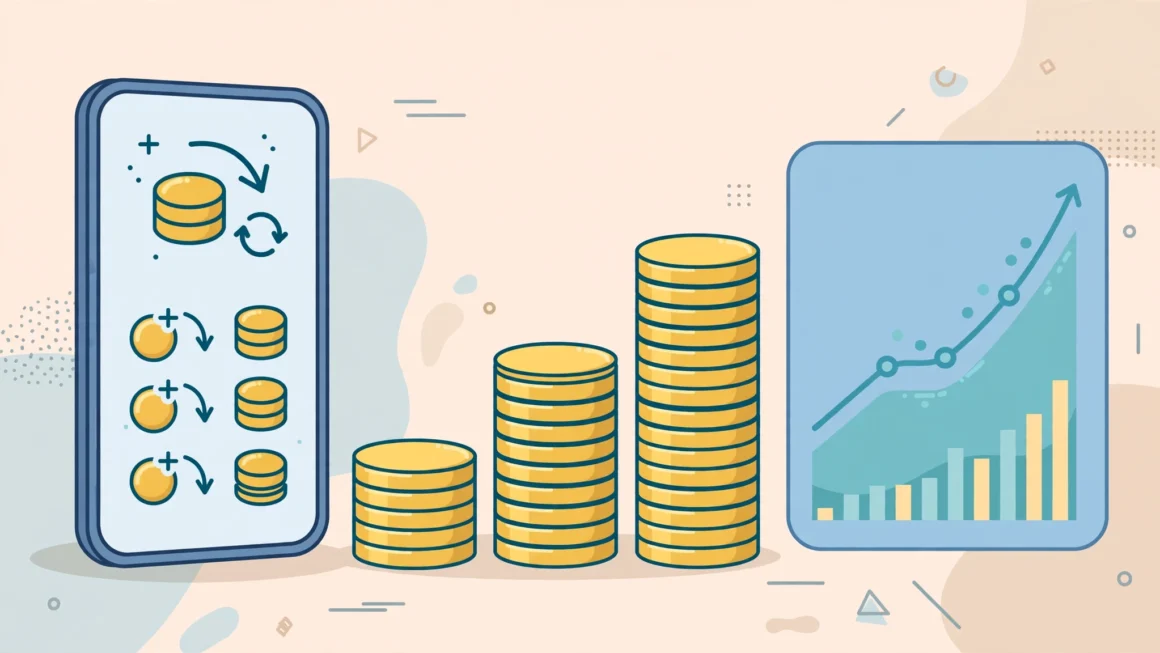
Dollar-cost averaging means investing a fixed amount on a fixed schedule — say, every payday — regardless of whether markets are up or down. When prices are high, your fixed amount buys fewer shares; when prices fall, it buys more. The result is an average purchase price that leans toward the cheaper periods, achieved without any forecasting at all.
Its deeper value is behavioral. Market timing requires two perfect decisions — when to get out and when to get back in — and missing even a handful of the market’s best days, which often arrive right after the worst ones, can devastate long-term returns. A schedule removes the decisions. For people investing from a salary, dollar-cost averaging is also simply practical: you invest money as it arrives, automatically, for decades.
Strategy 3: Diversification and Asset Allocation
Diversification — spreading money across many companies, industries, and countries — reduces the damage any single failure can do. Asset allocation goes one level up: deciding your mix between growth assets like stocks and steadier assets like bonds and cash. That mix is the biggest driver of both your returns and your stress level. Younger investors with decades ahead often hold mostly stocks, accepting bigger swings for higher long-term growth. As a goal approaches — retirement, a house purchase — gradually adding steadier assets protects money you will soon need.
The Role of Bonds in a Long-Term Plan
Bonds rarely excite anyone, but they earn their place. They typically fluctuate far less than stocks, pay regular interest, and often hold up better during stock market crashes, giving you something stable to rebalance from and income that does not depend on selling shares. The right bond share depends on your timeline and temperament: the test is whether you can watch your portfolio fall during a crash without panic-selling. If a given stock allocation would break your nerve, it is too aggressive, whatever the textbooks say.
Rebalancing: The Discipline That Maintains the Plan
Over time, strong performance makes one asset class swell beyond its target share, quietly changing your risk. Rebalancing — once a year, or when an allocation drifts several points from target — trims what has grown and tops up what has lagged. It feels wrong in the moment, because it means selling winners and buying losers, but it enforces buy-low, sell-high automatically and keeps your risk where you chose it.
Strategy 4: Keep Costs and Taxes Low
Costs compound just like returns, in reverse. The difference between paying 0.1 percent and 1 percent a year in fees sounds trivial; over thirty years, the expensive option can quietly consume a quarter or more of your final wealth. Prefer low-cost funds, avoid frequent trading, and be suspicious of any product whose fees you cannot clearly state.
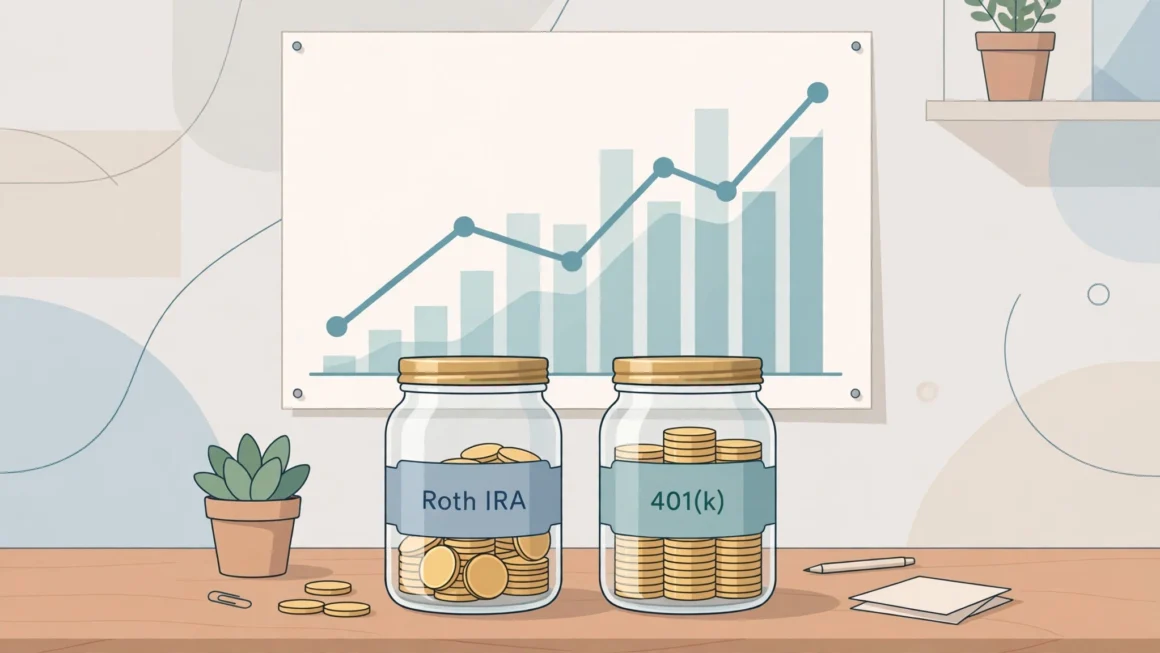
Taxes deserve the same attention. Use tax-advantaged accounts where your country offers them — retirement accounts and similar wrappers can shelter growth from annual taxes, which is like earning a bonus return for paperwork. Hold investments long enough to qualify for any favorable long-term tax treatment, and avoid unnecessary selling that triggers taxable gains. You cannot control markets, but costs and taxes are two levers entirely in your hands.
Strategy 5: A Written Plan and an Emergency Buffer
The strategy that protects all the others is not an investment at all. A cash emergency fund means a job loss or a broken car never forces you to sell investments during a downturn. And a short written plan — what you own, why, how much you add each month, and when you review — acts as a contract with your future self. In a crash, when headlines scream and instinct says sell, the plan speaks in the calm voice of the person who wrote it: you, on a clear-headed day. Investors who survive crashes are rarely the smartest; they are the ones whose circumstances and preparation let them do nothing.
Putting It Together: A Sample Long-Term Blueprint
- Foundation: Build an emergency fund of three to six months of essential expenses in a savings account.
- Core holding: Choose one or two broad, low-cost index funds or ETFs covering domestic and international stocks.
- Stabilizer: Add a bond fund share matched to your timeline and risk tolerance.
- Automation: Invest a fixed amount every payday; reinvest dividends automatically.
- Maintenance: Rebalance once a year; raise contributions when income rises; review the plan, not the headlines.
Notice what is absent: no stock tips, no timing signals, no leverage, no complexity. That absence is the point. A strategy you understand completely is one you can hold through a crisis, and holding through crises is where long-term returns are actually earned.
Strategy 6: Automate Everything and Raise Contributions Over Time
The final strategy is about engineering your environment so the plan runs itself. Automatic transfers on payday mean investing happens before spending can claim the money. Automatic dividend reinvestment keeps every payout working. An annual calendar reminder handles rebalancing. With the machinery in place, your ongoing job shrinks to one task: raising the contribution when life allows. A useful rule is to send at least half of every pay rise to your investments before your lifestyle absorbs it. A saver who starts at 200 a month and raises contributions steadily with income will typically end far ahead of a saver who invests a flat 300 forever — and the increases barely register, because they arrive alongside higher pay.
Automation also protects you from yourself. Every manual decision is an opportunity for fear or excitement to interfere. The fewer decisions a strategy requires, the more faithfully it gets followed for thirty years — and faithful execution, more than cleverness, is what separates investors who capture long-term returns from those who merely watch them happen to other people.
Traps That Derail Long-Term Plans
- Performance chasing. Buying last year’s winning fund or sector usually means arriving just as its run ends. Yesterday’s leaderboard is a poor map of tomorrow’s returns.
- Checking constantly and trading on emotion. Daily price noise is meaningless over a thirty-year horizon, but it reliably provokes bad decisions. Review on a schedule, not on impulse.
- Letting a crash stop contributions. The months investors most want to stop buying are, in hindsight, usually the best months to buy. Your schedule does not know fear; let it keep working.
- Overcomplicating the portfolio. A dozen overlapping funds feel sophisticated but usually just add cost and confusion. If you cannot explain each holding’s job in one sentence, you own too many.
- Comparing yourself to others. Someone always has a cousin who doubled money on a single stock. You never hear about the cousins who lost. Measure progress against your own plan and goals.
How These Strategies Survive a Crash
Every long-term plan eventually meets a severe downturn, so it is worth rehearsing in advance. When markets fall 30 percent, the index investor still owns the same diversified collection of real businesses — bought more cheaply by each automatic contribution. The dollar-cost averager’s schedule keeps buying through the fear, which is exactly when future returns are being set. The rebalancer, following the calendar rather than the news, shifts a little from steadier assets into beaten-down stocks at low prices. And the investor with an emergency fund feels no pressure to sell, because rent and groceries are covered for months. None of these actions requires courage in the moment, because each was decided in advance. That is the deepest sense in which these strategies “work”: they are designed for human beings, not for robots, and they keep functioning on the days when willpower does not.
Frequently Asked Questions
What is the single most reliable long-term strategy?
For most people, regular contributions to a diversified, low-cost index portfolio, held for decades with periodic rebalancing. It is simple, cheap, and does not depend on predicting anything.
How long is “long term” in investing?
Generally at least five years, and ideally ten or more. Money needed sooner belongs in savings or very conservative holdings, because even good strategies can be negative over short periods.
Should I ever change my strategy?
Yes — when your life changes, not when markets do. A shorter timeline, a new goal, or a change in income can justify adjusting your allocation. Headlines, predictions, and hot tips cannot.
The Bottom Line
The strategies that actually work share a common DNA: diversify broadly, invest on a schedule, keep fees and taxes low, rebalance calmly, and let compounding have the decades it needs. None of them will make you rich quickly, and all of them can make you wealthy slowly — which, in practice, is how most investment wealth is really built. Choose the simple plan you can follow for thirty years, write it down, and let time do the heavy lifting. This article is educational and is not personalized financial advice; consider your own circumstances and consult a qualified professional for guidance specific to your situation.