Best Dividend ETFs for Monthly Income: What Actually Pays Monthly
Introduction: Dividend ETFs and the Monthly-Income Question
A dividend ETF is a single fund that holds a basket of dividend-paying companies and collects the cash those companies send out. Instead of you buying twenty, fifty, or several hundred stocks one at a time, you buy one ticker. When the dividends land in the fund, the fund passes them along to shareholders as distributions, usually in cash, though you can often choose to reinvest them instead.
Here is the honest headline before we go any further: many of the best-known dividend ETFs pay quarterly, not monthly. A fund may declare a distribution in January, April, July, and October, leaving you with three-month gaps. If your goal is money arriving every month, that rhythm takes a plan, not just a lucky fund pick.
How the Payments Actually Work
Two dates matter most. The ex-dividend date is the cutoff for being on the fund’s books as a shareholder; the pay date is when the cash actually shows up in your account. Funds declare amounts, and those amounts move up and down with the holdings and the season. Nothing about a distribution is fixed in advance.
Monthly or Quarterly: Picking Your Rhythm
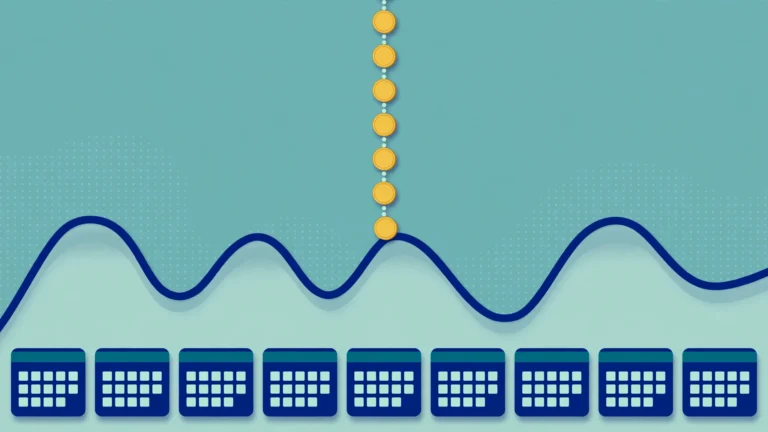
Some funds are built to distribute every month, often by holding a mix of underlying payers whose schedules are staggered. Others pay quarterly and are perfectly good funds anyway. A common approach among income seekers is to own two or three quarterly payers with offset schedules, so that something lands most months. A hypothetical illustration: three funds paying in different months could, in theory, cover nine of twelve months, leaving a gap to plan around. That is a structure to think about, not a forecast.
A Picking Checklist
- Payment schedule: confirm whether the fund pays monthly, quarterly, or on some other cycle.
- Cost: check the expense ratio, since fees come off the top of what the fund earns; the fund documents this and it changes over time.
- What it holds: read the holdings list to see whether you are getting broad coverage or heavy concentration in one sector.
- Distribution history: look at how the payout has behaved across past years, including downturns.
- Taxes: distributions are generally taxable in a regular brokerage account, and the rules are set by tax authorities and change over time.
- Your own cash flow: decide whether you need the cash monthly or are content to reinvest and let it accumulate.
Dividends are one stream in a much bigger catalogue, and passive income ideas: 20 ways to build income streams that last groups the options by capital, effort and time to first dollar.
How Dividend ETFs Actually Pay You
A dividend ETF is a fund that holds a basket of stocks or other income-producing investments. When those holdings pay dividends, the fund collects the cash and later sends distributions to shareholders. The fund’s own documents explain the payment schedule, which may be monthly, quarterly, or another interval. That schedule is not the same as a paycheck, because the amount can change from one distribution to the next.
The yield shown for a dividend ETF is a percentage, not a fixed salary. It usually reflects recent distributions relative to the fund’s share price. Because both prices and payouts can move, the yield can rise or fall over time. A higher yield does not automatically mean a better ETF, since it may reflect a falling share price, different holdings, or a fund-specific distribution policy.
One mechanic that often surprises beginners is what happens around the distribution date. In general, a fund’s share price tends to adjust lower by roughly the amount of the distribution, similar to how an individual stock may trade lower after paying a dividend. This means a distribution is not free money added on top of your investment. Instead, it is part of your total return, which includes both price changes and cash distributions.
For example, a hypothetical investor owns one share of an ETF priced at $100. If the fund distributes $1 per share, the share price may adjust to about $99, while the investor receives $1 in cash. The investor’s total economic position is roughly unchanged at the moment of payment, ignoring taxes, fees, and market movements. Over time, the investor’s result depends on how the fund’s holdings perform, how distributions are reinvested or spent, and changes in the fund’s price.
What monthly does and does not mean
A monthly ETF may make twelve scheduled payments in a year, but that does not mean each payment is identical. Some funds may hold bonds, preferred shares, real estate investment trusts, or dividend-paying stocks, and each type can behave differently. The fund may also keep cash or use a managed distribution policy, which can affect the timing and size of payments. Investors should read the prospectus or summary prospectus to understand how the fund declares distributions and whether it seeks to maintain a stable payout.
If you are still learning how dividends work, our guide to dividend investing for beginners can help explain the basics before you compare funds. For monthly-income planning, it also helps to review a fund’s distribution history, holdings, costs, and documents rather than focusing only on a headline yield. Distributions can vary, and a fund’s schedule does not ensure a particular payment amount.
Because ETF shares trade throughout the day, their market price can differ from the value of the underlying holdings. That price movement can affect your experience of income, especially if you sell shares to create cash flow. A distribution is simply one piece of the fund’s overall return.
The rhythm question hides a strategy question underneath it, and dividend yield vs dividend growth: two income strategies compared separates payers chosen for today’s cheque from those chosen for a rising one.
Monthly Payers vs Quarterly Payers: Two Ways to Get a Monthly Rhythm
If you want income to arrive every month, it is tempting to search for funds that pay monthly. They exist, and the schedule can feel convenient. But before you chase that calendar, it helps to understand how those funds often generate their payouts. Many monthly distributions do not come from straightforward dividends. Instead, they can rely on option-premium strategies, or they can lean heavily on bonds or real estate holdings. Each of those approaches carries its own costs and added complexity, and a beginner should understand the tradeoffs before assuming a monthly label means a better deal.
Option-premium strategies, for example, may cap your upside in exchange for income now. Bond-heavy funds can be sensitive to changes in interest rates. REIT-heavy funds bring their own tax and structural quirks. None of this makes monthly funds bad, but the extra machinery behind the payout is something you should be able to explain to yourself before you buy.
The simpler route most people actually use
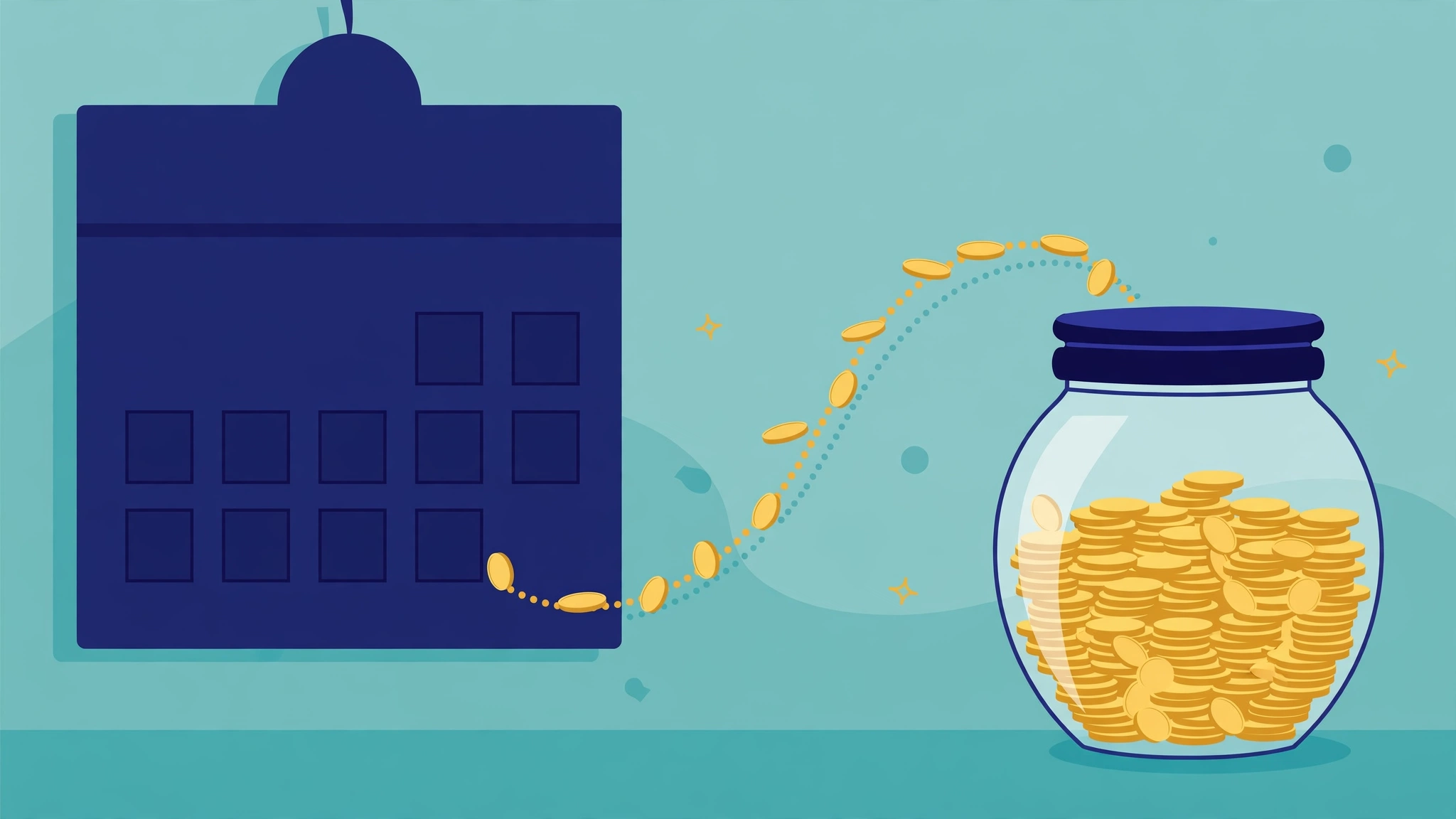
Here is an approach that sidesteps a lot of that complexity. Instead of hunting for monthly payers, you hold funds that distribute quarterly, and you let those distributions collect in a savings account. Then you draw a steady amount from that account each month. The underlying funds stay simple, and you still get a monthly rhythm in your own cash flow.
Think of it as smoothing the timing rather than changing the investment. A hypothetical illustration: suppose you hold a few broad quarterly payers and, in a given quarter, they drop three payments into your savings account. You could then transfer the same amount out on the first of each month. The money you take out is your choice, and it is not tied to any single fund’s schedule. (This is a hypothetical example with round numbers, not a projection of what any fund will do.)
There is a practical wrinkle worth naming. If you are drawing from an account like this, keep a buffer so a light distribution month does not leave you short. Building that cushion takes time and discipline, and it is easier when your holdings are easy to understand. If you are still weighing the vehicle you will hold these funds in, our comparison of index funds vs ETFs walks through the wrapper basics that affect how simply you can manage the account.
- Monthly payers can be convenient, but the strategies behind them often add cost and complexity.
- Quarterly payers plus a savings buffer let you set your own monthly draw while keeping your holdings simpler.
- Know the source of any distribution before you rely on it, since not every payout comes from plain dividends.
Neither path changes the fact that fund values and distributions can rise and fall. The goal here is not to promise a specific income, but to help you pick a setup you can actually understand and manage over time.
Schedule is only one axis of that choice; dividend stocks vs dividend ETFs: which structure fits your portfolio weighs the same decision on risk, effort and control.
How to Choose: Schedule, Cost, Holdings and Taxes
Dividend ETFs look similar at a glance, but they behave differently once you own them. Before adding one to a portfolio built for monthly income, work through four checks.
Confirm the schedule
Not every fund that pays dividends pays monthly. Some distribute quarterly, semiannually, or annually, and a fund holding monthly payers may still bundle them into one quarterly payment. Open the provider’s official fund page and confirm the distribution frequency there. The same page lists the current yield and the expense ratio, and both move as prices, payouts, and fund policy change, so treat what you see as a snapshot to re-check rather than a fixed feature. Yields shown on screener sites are often calculated differently from one another, which is another reason to go to the source.
Look inside
A headline yield tells you the size of the payout, not where it comes from. Open the holdings list and ask what is actually generating the income. A very high yield built on one narrow sector, or on a handful of positions, is a different risk from a broad list of established payers spread across many industries. Concentration cuts both ways: while the theme is working, the yield looks generous, and when it turns, the distribution itself can be reduced. The fund’s prospectus describes the strategy in the manager’s own words, and the number of holdings tells you how diversified the fund really is.
Keep costs low
Fees are among the few things you can know about a fund in advance, and they are deducted whether the year turns out well or poorly. Among funds with similar strategies and similar schedules, a lower expense ratio leaves more of each distribution with you. Costs also show up outside the expense ratio, in the spread you pay when trading and in the tax drag of a fund that turns over its portfolio heavily.
Understand the tax treatment
Where you hold a fund matters as much as which fund you choose. Dividends paid in a taxable brokerage account are generally taxed in the year you receive them, under rules the IRS sets and revises over time; the rate depends on the type of dividend and your own circumstances. Retirement accounts such as IRAs and 401(k)s shelter distributions from tax in the year received, though that generally postpones the tax rather than eliminating it. As a hypothetical illustration only, if a fund paid out $500 over a year, a taxable account would report that $500 for the year, while the same $500 held inside an IRA would not be taxed as received. For a plain-language overview of how these products are structured, the SEC Investor.gov guide to mutual funds and ETFs is a useful starting point.
Run the same questions against every candidate and the differences become easier to see.
- Schedule: confirmed on the provider’s page, not a third-party screener.
- Yield and cost: current figures read yourself, then re-checked periodically.
- Holdings: a broad payer list, or a concentrated bet on one theme?
- Account type: taxable or tax-advantaged, based on your own situation.
A Hypothetical Example: Same Year of Distributions, Two Rhythms
Here is a purely hypothetical illustration. Every dollar amount below is invented, uses round numbers, and exists only to show timing. It is not a forecast, a quote, or a description of any actual fund.
Imagine a holding that distributes an invented $96 over one year. How that $96 arrives depends on the schedule the fund chooses, and a fund can change its schedule over time.
If it pays quarterly
- Four payments of $24
- Roughly one every three months
- Total for the year: $96
If it pays monthly
- Twelve payments of $8
- Roughly one every month
- Total for the year: $96
The yearly total is the same $96 in both cases. Only the rhythm changes: four larger deposits versus twelve smaller ones. For budgeting, that difference can matter more than the total. Some people prefer a monthly schedule because it lines up with monthly bills; others find quarterly deposits easier to track. Neither schedule is inherently better, and the choice says nothing about quality or safety.
What this example cannot show you is just as important. Real distributions vary from one period to the next. A fund can raise, lower, suspend, or eliminate a distribution, and none of it is guaranteed. Payments depend on what the fund earns, what its holdings pay out, market conditions, and decisions made by the people who manage it. A distribution is also not the same thing as a profit: part of a payment can be a return of your own capital, and the tax treatment of each payment depends on your situation and on rules that tax authorities set and revise over time.
So treat schedules like the example above as a way to picture cash flow, not as a promise. The rhythm is a feature to understand, not a result to count on. Read a fund’s own documents for how it describes its distribution policy.
The Bottom Line
A dividend ETF turns dozens of company payouts into a single distribution, but it does not turn them into a salary. Many of the strongest dividend funds pay quarterly, and the honest ways to a monthly rhythm are either a fund that genuinely distributes monthly – with the different strategy that usually powers it – or a quarterly payer whose distributions you smooth yourself through a savings account.
Choose on the evidence in the fund’s own documents: the distribution schedule, the current yield, the fee, and what the fund actually holds. Keep total return, not the payout alone, as your scorecard, and remember that distributions can shrink in bad years. An income portfolio you understand will serve you better than a monthly payment you never questioned.
Disclaimer: This article is for educational purposes only and is not financial, tax, or legal advice. Investing involves risk, including the possible loss of principal. Examples are hypothetical and do not represent actual or future returns. Consider speaking with a qualified financial or tax professional about your own situation.