Podcasting for Money: Sponsorships, Affiliates and Realistic Timelines
Introduction: A Podcast Is an Audience Business With a Microphone Attached
It’s crucial to approach podcasting not as a creative endeavor with a microphone attached, but as a small business waiting to be built. The economics of podcasting are straightforward, though often misunderstood: a podcast doesn’t earn money just because it exists. It earns money when the host has cultivated a reliable audience that trusts them enough for sponsors, affiliate partners, or the host’s own offerings to be relevant and valuable to that listener base.
The real truth, the numbers-free truth up front, is that the vast majority of podcasts have small audiences and, consequently, earn nothing. This is perfectly fine if you are listening purely as a hobby. However, if you are treating it as a business plan that needs to cover monthly expenses, you must be honest about the timeline.
Building a monetizable podcast is less about the initial launch buzz and more about the sustained commitment. Success in this space is measured not in the frantic energy of the first few weeks, but in the steady, quiet accumulation of loyal listeners over months and even years of consistent, high-quality publishing.
Before diving into the mechanics of making money, we need to get the foundational work right. This section will walk you through the necessary stages: first, how to build a show that is inherently attractive to potential partners; second, the long, necessary middle phase of audience growth; and finally, we will outline the different revenue streams – sponsorships, affiliates, and product sales – in the realistic order they tend to become viable.
Think of it like this: you don’t start with the revenue streams; you build the audience first, and the revenue streams follow the audience’s proven value.
Building the Show: Format, Production and the Rights You Must Own
Before a single sponsor ever looks your way, you need a solid foundation. Think of building your podcast like building a house: you must pour a strong foundation first. The market buys consistency, and consistency starts with a defined concept.
Your first step is defining your format. A sponsor isn’t buying “a conversation”; they are buying access to a specific, predictable audience. Therefore, your show needs one clear niche, one central promise, and a repeatable structure. If a brand new listener hears a description of your show, they should immediately know exactly what they are getting and why they should stick around. This definability is what makes you attractive to advertisers.
Next comes production. Listeners are forgiving of a bumpy journey, but not of poor audio quality. Intelligible audio captured in a quiet space will always outperform expensive microphones used in a highly echoey room. Equally important is editing. A raw recording is just a conversation; editing transforms it into a listenable piece. As you streamline your workflow – creating transcripts, detailed show notes, and clips – you can leverage tools that help automate parts of this process, following a structure similar to what we outline in our practical workflow for AI in content marketing. This consistent pipeline of content creation is key.
Furthermore, you must commit to a publishing cadence that you can realistically maintain. A weekly show that lasts two years is far more valuable to advertisers than a daily show that burns out in a month. Sustainability is the bedrock of early growth.
Finally, secure your ownership from day one. This sounds technical, but it’s critical. The show’s name, the artwork, and the RSS feed belong to you, the host. If you work with co-hosts or guests, ensure all collaborations are documented in written agreements. Never build your entire presence on a platform account that you do not ultimately control. Ownership grants you the power to evolve, pivot, and monetize on your own terms.
One more foundation is easy to postpone and expensive to fix later: keep your own copies of everything – the master files of every episode, the artwork, the agreements – stored somewhere you control. Platforms change their terms and hosting companies change hands; the show that owns its archive can move house in an afternoon, and the show that does not, cannot.
The slow middle gets safer when the audience is yours, and a paid newsletter: the owned list behind the audience is how a show’s listeners become subscribers — a free tier that earns trust, a paid tier that earns rent, and no algorithm in between.
Growing an Audience Worth Money: The Slow Middle
The “slow middle” is the phase where most podcasters quit, yet it is where the actual asset is built. There are no shortcuts to building a loyal listenership, only the quiet, repetitive work of showing up. This process is essentially small business marketing on a tiny budget; it relies on consistency, strategic partnerships, and repurposing content rather than expensive advertising, which a new show rarely justifies.
Growth happens through three primary, non-flashy channels:
- Search and Discovery: Podcast apps are search engines. If you want a stranger to find you, your titles and episode descriptions must use the exact language they type when searching for a solution to their problem. If a listener is struggling with time management, they aren’t searching for “My Morning Thoughts #42”; they are searching for “how to prioritize tasks.”
- Guest Distribution: Bringing on guests who have their own established audiences is a powerful way to reach new ears. Equally important is being a high-quality guest on other podcasts. Being interviewed on shows with similar audiences remains the most reliable discovery route in the medium, as it puts you directly in front of people already conditioned to consume audio content.
- Content Repurposing: Your podcast episode shouldn’t live only in a podcast player. Short video clips for social media and written blog versions of your episodes act as ambassadors, carrying your message to people who might never open a podcast app.
While reach feels like the goal, advertisers are actually buying your retention. A show with 500 listeners who finish every episode and return weekly is significantly more valuable to a sponsor than a show with 5,000 downloads from a single viral episode where listeners dropped off after two minutes. Focus your metrics on completion rates and the number of returning listeners rather than vanity spikes in total downloads.
You must measure this middle phase in seasons, not weeks. If you are a host who needs income this quarter, do not rely on your podcast to provide it. Instead, use your expertise to sell services to businesses while the show grows. A host who provides consulting services, for instance, can let client work that arrives through the show’s authority carry the income while the audience is still small. This takes the financial pressure off the podcast, allowing it to become a long-term brand builder rather than a source of immediate stress.
Building an audience worth money is a marathon. It requires you to treat your show like a professional business venture, focusing on the quality of the listener relationship rather than the speed of the subscriber count. If you can maintain the discipline to produce high-value content consistently, you will build an asset that eventually speaks for itself.
Every route on this list has a video twin, and a YouTube channel run as the same kind of business follows the identical order — audience first, then sponsorships, affiliates and products — with the camera simply replacing the microphone.
The Money Routes: Sponsorships, Affiliates and Your Own Products
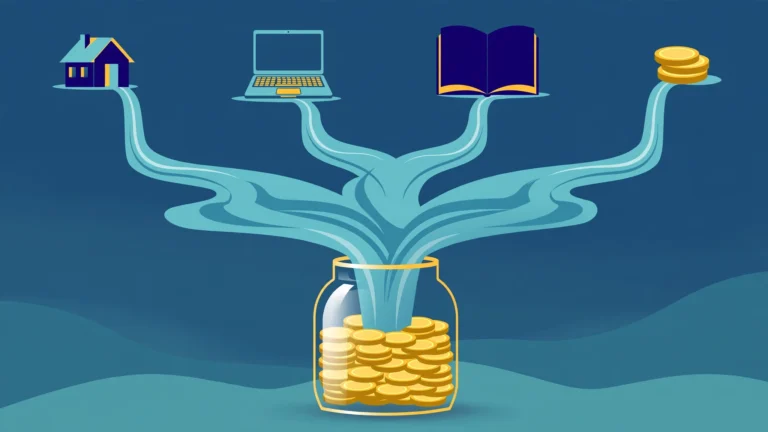
When building a podcast with the goal of monetization, it helps to understand the typical progression of revenue streams. These methods don’t happen in a set order for every show, but generally, the paths open up in a sequence that matches the trust level you’ve built with your listeners.
The earliest and most direct path is leveraging your own expertise. If you are a consultant, coach, or freelancer, your podcast can serve as a powerful marketing tool for services you already offer. Because the show is advertising for work that already has a set price, you can potentially generate income from the very first episode, provided your audience trusts your authority.
Once you establish that credibility, affiliate income is a natural next step. This involves recommending tools, software, or books that are genuinely useful to your listeners. You partner with the program, and if a listener uses your unique link, you earn a commission. It is crucial to disclose these relationships clearly in both the episode and the show notes. Keep in mind that the percentage you earn is determined by the affiliate program, not a fixed market rate.
Sponsorships represent the largest potential revenue stream, but they usually come later. This is when a business pays you directly to have their message integrated into your content. They are paying because they trust your voice and the specific niche of your audience. The pricing for these deals is entirely a negotiation, shaped by the size of your audience, the value of your niche, and any exclusivity clauses you agree to; there is no universal rate card.
Finally, listener support – such as offering premium feeds or exclusive bonus content – is an option for shows that have built a highly engaged community that requests it. Regardless of the revenue stream, there is a critical legal thread running through all of this. Any music, sound clips, or artwork you use must either be your original creation or properly licensed. For a solid grounding in this, we recommend looking at the US Copyright Office’s explanation of what copyright is. An audience built on unlicensed music, for example, is one that could potentially face a content takedown.
One practical step makes all three routes easier when they open: keep a simple media page ready – who the audience is, what the show covers, how episodes perform in plain terms, and what a sponsor, partner or client actually receives. Update it as the show grows. Sponsors and partners rarely chase hosts; they answer the ones who can describe their audience in a paragraph and prove it in a page, and a host with that page ready is taken seriously long before the show is large. It also disciplines the host: a media page has to be rewritten whenever the audience changes, so keeping one means watching the honest metrics – completion and returning listeners – as a habit rather than as a surprise.
A Hypothetical Example: Forty Episodes and a Small Affiliate Trickle
To ground these concepts, let’s look at a purely hypothetical scenario. Imagine you’ve been consistently publishing a weekly podcast for a full year, meaning you’ve reached episode forty. Your audience is small, dedicated, and loyal – the kind that listens because they connect with the content, not just for the potential payout. Over these forty episodes, listeners decide to purchase tools or books through links you’ve placed in your show notes. The affiliate commissions generated, in this invented calculation, add up to an average of twenty-five dollars per episode. This brings the total to a hypothetical one thousand dollars across the entire forty-episode run, before we even factor in taxes or any production time.
It is crucial to stress that this figure is entirely invented. Real-world outcomes vary wildly; many podcasts earn significantly less, while a select few earn substantially more. The key takeaway from this small example isn’t the dollar amount, but the shape of the earning curve. Podcast income, when it materializes, rarely arrives as a sudden flood. Instead, it generally trickles in, slowly widening as your audience base grows and trust deepens.
This slow, grinding accumulation is why the hosts who successfully build a sustainable income stream are often those who sized their initial costs and expectations for this slow, steady middle ground, rather than expecting a quick windfall on episode one.
The Bottom Line
A money-making podcast is an audience business that happens to use a microphone: a defined show, published on a survivable cadence, growing through search, guests and clips for seasons before the money routes open in their natural order – your own services first, affiliates second, sponsorships when the audience is worth a sponsor’s name.
Keep the foundations owned and licensed – your feed, your name, your music rights – and size your costs and expectations for the slow middle, because that is where podcasts are actually built. The hosts who earn are rarely the loudest; they are the ones still publishing, with clean rights and honest metrics, when the audience finally compounds.
Disclaimer: This article is for educational purposes only and is not financial, tax, or legal advice. Investing involves risk, including the possible loss of principal. Examples are hypothetical and do not represent actual or future returns. Consider speaking with a qualified financial or tax professional about your own situation.