Big companies buy attention with big budgets. Small businesses earn it with creativity, consistency, and closeness to their customers — and that is often more powerful. If money is tight, you do not need more ads; you need the right small business marketing ideas, applied steadily. This guide collects the channels that cost little or nothing, explains how to use each one well, and shows you how to build a simple weekly rhythm that keeps new customers coming without draining your bank account.
Start With the Foundations (All Free)
Before chasing new tactics, make sure the basics are in place. Most small businesses lose more customers through missing foundations than through missing advertising.
Claim Your Google Business Profile
For any business serving a local area, this free listing is your highest-value marketing asset. It puts you on Google Maps and in local search results when people look for what you offer nearby. Complete every field: accurate hours, photos of your work and premises, your services with prices where possible, and a description written in your customer’s language. Then keep it alive — add a photo or update weekly.
Make Reviews a System, Not Luck
Reviews are free advertising written by your happiest customers. Ask at the moment of satisfaction — right after a great result, a delivery, or a compliment. Make it effortless: a short link or a printed card with a QR code. Reply to every review, good or bad, politely and briefly. A steady stream of recent, answered reviews outranks a dusty pile of old five-star ratings.
Fix Your One Online Home
Whether it is a simple website or a single strong social profile, you need one place that answers three questions in ten seconds: what you offer, who it is for, and how to buy or book. Confusion is the most expensive marketing problem of all, and fixing it costs nothing but honesty.
Social Media Without the Burnout
You do not need to be everywhere. Pick the one platform where your customers actually spend time, and show up there consistently.
- Show the work. Before-and-after photos, short process videos, packing an order, a tricky problem solved — real work outperforms polished ads for small brands.
- Teach tiny things. One useful tip per post builds authority fast. A baker explains why bread splits; a mechanic shows a thirty-second check anyone can do.
- Be a person. Introduce yourself, share milestones, thank customers by name (with permission). People buy from people, especially locally.
- Reuse everything. One good idea becomes a photo post, a short video, a story, and an answer to a common question. Small tools, including AI automation for small businesses, can help you schedule and repurpose posts so a single hour of creation covers a whole week.
Aim for three solid posts a week rather than a burst of ten followed by silence. Consistency is what algorithms — and humans — reward.
Content Marketing: Your Slow, Free Salesperson
Every question customers ask you is a piece of content waiting to happen. Answer those questions publicly — on your website, your profiles, or a simple blog — and search engines will send you buyers for years at no cost per click.
Start with the five questions you hear most. Write clear, helpful answers in plain language, each ending with a gentle invitation to buy, book, or ask more. A plumber’s article on “Why is my water pressure low?” quietly sells plumbing services every single week. This is the slowest channel in this guide and the most durable: content you write once keeps working while you sleep.
Email and Messaging: The Channel You Own
Social platforms can change their rules overnight; your customer list is yours. Collect email addresses or phone numbers (with permission) at every sale, using free tiers of email tools. Then send something useful once or twice a month: a tip, a new product, a seasonal reminder, a small offer for subscribers only.
Keep it human. One short, warm message from the owner beats a glossy newsletter nobody reads. And respect the list — people who trust you with their inbox are your most valuable audience.
Referrals and Partnerships
Turn Happy Customers Into Marketers
Referrals convert better than any advertisement because they arrive pre-trusted. Encourage them deliberately: do great work, ask directly (“If you know someone who needs this, I’d love an introduction”), and consider a simple thank-you — a discount on the next purchase for both the referrer and the new customer. Track where new customers hear about you so you know what is working.
Partner With Neighboring Businesses
Find businesses that serve your customers without competing with you, and promote each other. A gym and a smoothie bar, a wedding venue and a florist, an accountant and a business coach. Swap leaflets, share each other’s posts, create a small joint offer. Partnerships cost nothing but a conversation and can put you in front of a perfectly matched audience this week.
Low-Cost Offline Ideas That Still Work
- Community presence — sponsor a small local event with your time or a prize rather than cash; join local groups and be visibly helpful.
- Flyers done right — one clear offer, one audience, placed exactly where that audience goes. A vague flyer is litter; a specific one is a salesperson.
- Your vehicle and packaging — a clean logo and phone number on a van, a sticker or card in every package. You already paid for the space; use it.
- Local press and podcasts — small outlets always need stories. A genuine milestone, a charity effort, or an unusual specialty can earn free coverage.
A Simple Weekly Marketing Rhythm
Systems beat motivation. Here is a rhythm that takes about three hours a week:
- Monday (30 min): Plan and create this week’s three social posts.
- Wednesday (30 min): Add a photo or update to your Google profile; reply to any new reviews.
- Friday (1 hour): Write or record one helpful answer to a customer question.
- Throughout the week: Ask every happy customer for a review and, when natural, a referral.
- Monthly (1 hour): Send one email to your list and check which channel brought the most customers.
Measure What Matters
You do not need fancy analytics. Ask every new customer, “How did you hear about us?” and jot the answer down. After a month, patterns appear: double down on the top two channels and drop the rest without guilt. Marketing on a tiny budget is not about doing everything — it is about finding the few things that work for your business and doing them relentlessly.
Ideas Tailored to Your Type of Business
Local Services (Cleaners, Trades, Salons, Repair)
Your market is a map, not the internet. Prioritize the Google profile, reviews, and partnerships with nearby businesses that meet your customers before you do — estate agents for cleaners, property managers for tradespeople. A simple referral card left after every job, plus a follow-up message a week later asking how things are going, generates a quiet stream of repeat and referred work. Seasonal reminders (“It’s boiler-check season”) sent to past customers are nearly free and remarkably effective.
Online Sellers and Makers
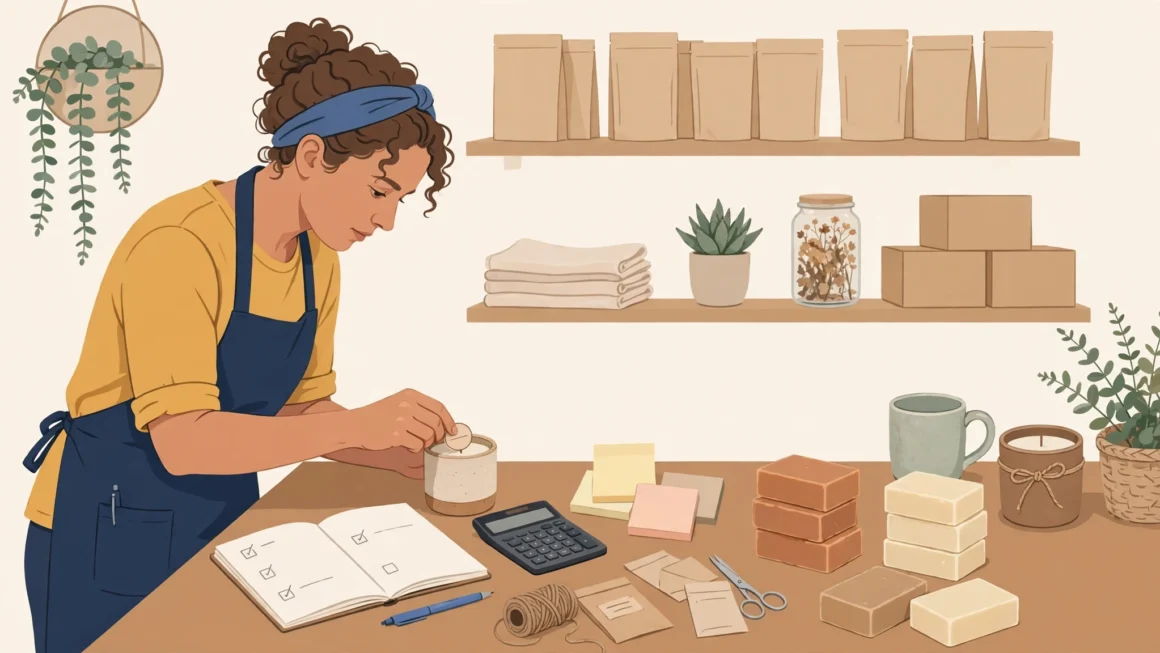
Your product pages are your storefront: photograph products in use, answer objections in the description, and show real customers whenever possible. Short videos of making, packing, and shipping build the trust that ads try to buy. One active social channel, an email list with a small welcome offer, and listings optimized with the words buyers actually search will take you far before any ad spend makes sense.
Freelancers and Consultants
Your marketing is proof of thinking. Publish short, useful insights where your clients gather — a professional network, an industry group, a simple blog. Speak on free webinars or local meetups, guest on small podcasts, and turn every finished project into a case study with the client’s permission. Referrals from past clients and adjacent professionals (designers referring developers, accountants referring bookkeepers) are typically the highest-quality leads a freelancer ever gets.
Free Tools That Multiply Your Time
A tiny budget goes further with the right free toolkit. Design tools with generous free tiers let you produce professional graphics without a designer. Scheduling tools let you prepare a week of posts in one sitting instead of posting in a panic daily. Free email platforms handle your first few hundred subscribers comfortably. A simple spreadsheet or free CRM keeps track of leads, follow-ups, and where customers came from — the data that tells you which of your efforts deserve more time. The rule is simple: adopt a tool when it saves you an hour a week, ignore it when it merely looks impressive. Your scarcest resource is not money; it is your attention, and every tool should protect it.
When a Small Budget Is Worth Spending
“Tiny budget” does not have to mean zero forever. Once your free channels are working, small, careful spending can amplify what already succeeds. The smart sequence: first spend on assets you keep — a proper domain name, decent product photos, a fast website. Then spend on amplifying proven content: boosting the social post that already earned genuine engagement costs little and reaches lookalike audiences. Only later consider search or social advertising, and only with a specific offer and a way to measure results.
Set one rule before spending anything: every paid experiment gets a small fixed budget and a deadline, after which you judge it by customers gained, not impressions or likes. A fifty-dollar test that you measure honestly teaches more than a five-hundred-dollar campaign you never analyze. Money should follow evidence in a small business — spend behind what is working, never ahead of what you merely hope will work. Handled this way, your first paid marketing is not a gamble; it is a reward your free marketing earned. Keep a simple record of every experiment — what you spent, what you did, and what happened — so next year’s decisions start from evidence instead of memory.
Frequently Asked Questions
What is the best free marketing channel for a small business?
For local businesses, a complete Google Business Profile combined with steady customer reviews usually delivers the fastest free results. For online businesses, consistent content answering customer questions tends to win over time.
How much should a small business spend on marketing?
Many small businesses spend between 2 and 10 percent of revenue, but a tiny budget is no barrier at the start. Time and consistency can substitute for money: three hours a week applied to the right channels will outperform occasional expensive ads.
How long does free marketing take to work?
Reviews and partnerships can bring customers within days. Social media usually needs a few months of consistency, and search content can take several months to build — which is exactly why starting now matters.
The Bottom Line
You do not have a budget problem; you have a focus opportunity. Claim your free listings, turn reviews and referrals into systems, show up consistently where your customers already are, and answer their questions in public. Do those simple things every week and your marketing will quietly compound — no big budget required, just steady, deliberate effort.
Begin today with the single highest-value action for your situation: claim and complete your Google profile if you serve local customers, or write your first helpful post if you sell online. Then put the weekly rhythm in your calendar before motivation has a chance to fade. Marketing rewards the business that shows up every week far more than the one that occasionally shouts. On a tiny budget, that steady showing up is not a compromise — it is the whole advantage.