High-Yield Savings Accounts: How They Work and How to Pick One
Introduction: The Savings Account That Actually Pays You
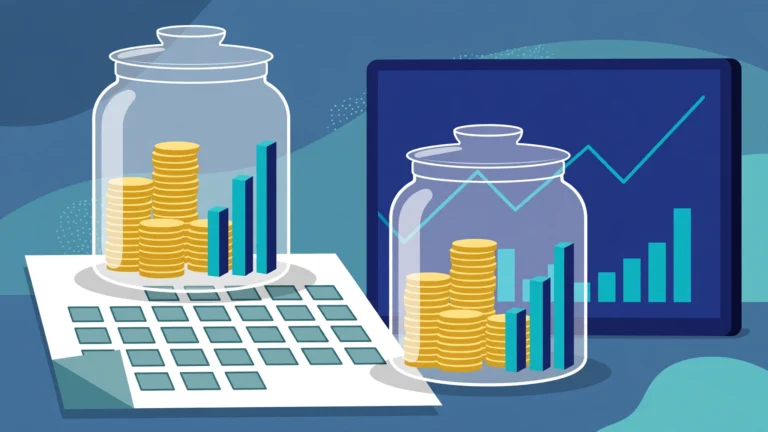
A high-yield savings account is a type of savings account that offers a significantly higher interest rate than what’s typically found at big bank branches. These accounts are usually offered by online banks, which can afford to pay more because they have much lower overhead costs compared to the brick-and-mortar institutions. By cutting out the need for a large network of physical branches, online banks save on expenses and can pass those savings along to customers in the form of higher yields.
In this article, we’ll delve into how high-yield savings accounts work, why their interest rates fluctuate, and how they compare to traditional savings and money market accounts. We’ll also provide a checklist to help you pick the right one for your needs. While these accounts are designed to provide a safe and liquid place for your money, the primary goal is not long-term growth, but rather to earn a bit of extra income while keeping your funds readily accessible. As with any savings account, the interest rates are variable, so you shouldn’t expect a fixed return. Nonetheless, high-yield savings accounts can be a great way to make your emergency fund or short-term savings work a little harder for you, without taking on significant risk.
Whether you’re new to high-yield savings or looking to switch from a low-paying account, understanding the basics and how to navigate the options can help you make the most of your money. In the following sections, we’ll break down the key aspects of high-yield savings accounts and provide guidance on selecting the best fit for your financial goals.
So if you’re ready to earn a higher return on your savings without compromising on safety and accessibility, keep reading to learn more about high-yield savings accounts and how to pick one that’s right for you.
The rate moves because banks are chasing the same force that erodes idle cash, and how inflation quietly taxes your savings and investments traces what rising prices do to every corner of a portfolio.
When the moving rate is the worry, the Treasury sells the mirror image: I bonds: the savings bond whose rate resets with inflation locks in a formula that follows prices instead of bank competition.
How a High-Yield Savings Account Works – and Why the Rate Moves
A high-yield savings account is a type of savings account that offers a higher interest rate compared to a traditional savings account. This higher rate, known as the annual percentage yield (APY), is the total interest paid on your deposits over a year, taking into account the compounding of interest. In other words, it’s the interest earned on both the principal and any accrued interest.
Variable Interest Rates
Unlike fixed-rate instruments, high-yield savings accounts have variable APYs that can change over time. These rates are influenced by the Federal Reserve’s benchmark interest rate, often referred to as the federal funds rate. When the Fed raises its rate, banks may increase their savings account rates to keep up with the rising cost of capital. Conversely, when the Fed lowers its rate, banks may decrease their savings account rates.
Therefore, it’s essential to check the institution’s current APY when opening a high-yield savings account. Rates can fluctuate frequently, and you’ll want to ensure you’re getting the best return possible for your money.
FDIC Insurance: Safe and Secure
When you deposit funds into a high-yield savings account, rest assured that your money is insured up to $250,000 per depositor, per insured bank, per ownership category. This means that even if the bank were to fail, you would still be eligible to recover your deposits, up to that amount. The Federal Deposit Insurance Corporation (FDIC) provides this coverage to protect consumers’ bank deposits.
To verify your bank’s FDIC status and learn more about the insurance process, visit the FDIC’s consumer resources on deposit insurance at fdic.gov/consumers. Understanding the FDIC’s role in safeguarding your savings can help you feel more confident in managing your money.
Compounding and Withdrawals
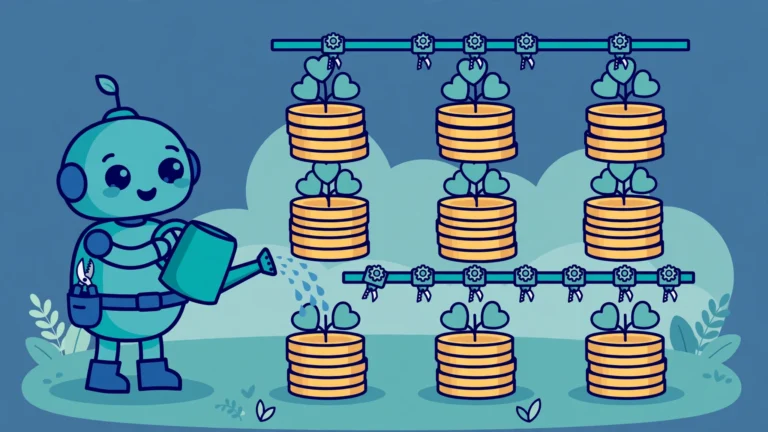
High-yield savings accounts typically compound interest daily, allowing your earnings to grow more rapidly over time. Compound interest means that the interest earned in one period becomes the base for calculating interest in the next period, accelerating the growth of your savings.
However, it’s crucial to understand that high-yield savings accounts often come with some restrictions on withdrawals. Exceeding the allowed number of withdrawals per month may result in fees or even account closure. Be sure to review the terms and conditions before opening an account to avoid any potential penalties.
By understanding how high-yield savings accounts work, including their variable rates and FDIC insurance, you can make an informed decision when shopping for this type of account. Remember to always check the current APY and terms before depositing your funds, and consider your individual financial needs and goals when selecting the right account for you.
The comparison has a third corner worth pricing, and T-bills vs savings accounts: safety, taxes and access compared puts Treasury bills head-to-head with the accounts in this table.
That comparison section raises the follow-up question directly, and high-yield savings vs money market accounts: which parks cash better settles it on access, rates and deposit rules.
Once cash outgrows a single savings account, the next step up in structure is staggering maturities instead, and bond ladders explained: staggering maturities instead of one big bet explains how savers spread money across rungs of bonds.
HYSA vs Regular Savings vs Money Market Accounts
When considering where to park your cash, you’ll encounter three main account types: traditional savings, high-yield savings, and money market accounts. Each has its own pros and cons in terms of accessibility, interest rates, and features.
Traditional savings accounts at large branch banks offer the most convenient in-person access. However, they generally pay the lowest interest rates by a significant margin compared to the other two options. So, while you can easily walk into a bank branch to deposit a check or withdraw cash, your money will earn a pittance in the process.
High-yield savings accounts, often offered by online banks, provide a notable boost in interest. You’ll typically need to manage your account digitally, but the higher returns are well worth the slight inconvenience for many. Transfers to an external bank account usually take one to a few business days, so plan ahead if you need quick access to your funds. Some banks may impose their own rules on withdrawals, so always review the terms before opening an account.
Money market accounts sit in a similar interest rate neighborhood to high-yield savings. They sometimes come with debit cards for spending or checks for writing, which can be appealing for those who frequently need to access cash. However, some money market accounts require you to maintain a minimum balance to avoid fees, which could eat into your returns.
When choosing an account, think about your habits and priorities:
- Branch access: If you frequently visit a bank to conduct transactions, a traditional savings or money market account might be a better fit. High-yield savings, being typically online-only, offer less in-person convenience.
- Interest: If maximizing your returns on idle cash is your top concern, a high-yield savings account or money market account will generally provide a higher return than a traditional savings account.
- Spending access: If you need to regularly withdraw or write checks, a money market account could be the best choice, as it often offers debit cards or checks. High-yield savings might not be ideal for frequent withdrawals, as some banks may penalize you for excessive transactions.
Before making a decision, consider whether your short-term cash is better off in a high-yield savings account or invested for long-term growth. To learn more about that trade-off, read our article on saving vs investing: when each one makes sense.
Where you keep the buffer matters, but so does the order of operations, and the case for building your cash buffer before you invest explains why the cushion usually comes first.
How to Pick One: The Checklist That Matters
When selecting a high-yield savings account, there are a few key factors to consider. Here’s a checklist to help guide your decision:
The Rate That Really Matters: APY
- APY (Annual Percentage Yield): This is the interest rate that’s actually paid out on your deposited money each year, taking compounding into account. Some accounts may offer a “teaser” rate that’s only good for a short time before dropping down. Make sure you’re looking at the ongoing APY.
- Compare the APY to others on the market, and weigh it against fees: a slightly lower APY with no fees can leave you ahead of a higher APY that comes with monthly charges.
Insured and Safe
- FDIC or NCUA insurance: Both the Federal Deposit Insurance Corporation (FDIC) and the National Credit Union Administration (NCUA) protect your deposits up to $250,000 per account owner, per insured bank or credit union. Make sure your chosen institution is insured.
Minimums and Fees
- Minimum balance requirements: Some accounts may demand a minimum balance to avoid fees or to earn the full APY. Others may not have a minimum at all. Consider how often you plan to deposit and whether you can meet the threshold.
- Fees: Look for accounts with no monthly maintenance fees, no overdraft fees, and no early withdrawal penalties. If fees are unavoidable, calculate whether they’ll eat into your earnings.
Speed and Convenience
- Transfer speeds: If you need quick access to your cash, ensure the account allows for fast transfers in and out, often via online banking, mobile apps, or phone banking.
App Quality and Support
- Mobile app: A user-friendly app with bill pay, transfer tools, and account management is crucial for easy use on-the-go. Read reviews to gauge the app’s quality.
- Customer support: If you have questions or issues, good customer support can make all the difference. Look for 24/7 phone, online chat, or email access.
Emergency Fund and Goal Alignment
- Emergency fund: A high-yield savings account can be an excellent choice for your emergency fund, as it offers liquidity and a slightly higher return than a traditional savings account. For guidance on how much you need in an emergency fund and where to keep it, read our guide to how much you need in an emergency fund and where to keep it.
- Short-term goals: If you have a specific short-term savings need, like a down payment on a house or a big purchase, a high-yield savings account can help you grow your funds over time.
By considering these key factors, you can find a high-yield savings account that meets your needs and helps your money grow while still being easily accessible when you need it. Remember to regularly review your options and switch if a better deal comes along.
A Hypothetical Example: What the Rate Gap Is Worth on $10,000
To illustrate the potential impact of a high-yield savings account, consider a hypothetical scenario:
Suppose you deposit $10,000 into a savings account. At an annual percentage yield (APY) of 4.00%, you would earn approximately $400 in interest over the course of a year, assuming simple interest and no compounding. That’s a 4% return on your initial investment.
Now, let’s compare that to a lower APY of 0.40%. In this case, your $10,000 would generate around $40 in interest during the same 12-month period. That’s a significant difference: $360 more over the year, a gap of 3.6 percentage points.
Here are the key differences in earnings:
- $10,000 at 4.00% APY earns approximately $400 in interest over one year.
- $10,000 at 0.40% APY earns approximately $40 in interest over one year.
Keep in mind that these rates are purely hypothetical and meant to illustrate the potential impact of a high-yield savings account. Real APYs are variable and can change over time, so these figures are not representative of current account offers.
Whether a rate like 4.00% is available when you shop depends on the wider interest-rate environment at that moment, which is why the comparison habit matters more than any single number.
The takeaway is that choosing the right high-yield savings account can make a meaningful difference in the interest you earn over time, especially when you’re working with larger sums of money. By shopping around and considering factors like minimum balance requirements, fees, and access to your funds, you can keep more of the interest on offer and make the most of your savings.
The Bottom Line
A high-yield savings account is the simplest upgrade in personal finance: the same insured savings account you already understand, paying a meaningfully higher – but variable – rate, usually from an online bank. Use it for your emergency fund and near-term goals, where the job of the money is to be there, not to grow aggressively.
When you shop, compare the APY, confirm FDIC or NCUA insurance, and read the fine print on minimums, fees and transfer times. Rates move with the wider economy, so the account you open today will not pay today’s rate forever – that is normal, and it is why the checklist matters more than chasing the single highest headline number. Keep the cash separate, keep it insured, and let your investments do the long-term growing elsewhere.
Disclaimer: This article is for educational purposes only and is not financial, tax, or legal advice. Investing involves risk, including the possible loss of principal. Examples are hypothetical and do not represent actual or future returns. Consider speaking with a qualified financial or tax professional about your own situation.