Inflation is the quiet force that makes a cup of coffee cost more this year than it did last year. It rarely makes headlines the way a stock market crash does, yet it touches every pound, dollar, and euro you earn, save, and invest. Understanding how inflation affects investments is one of the most important lessons a beginner can learn, because it changes how you think about cash, savings accounts, and long-term planning. This guide explains what inflation is, why it happens, how it erodes your money, and what different investments have historically done when prices rise.
What Inflation Actually Is
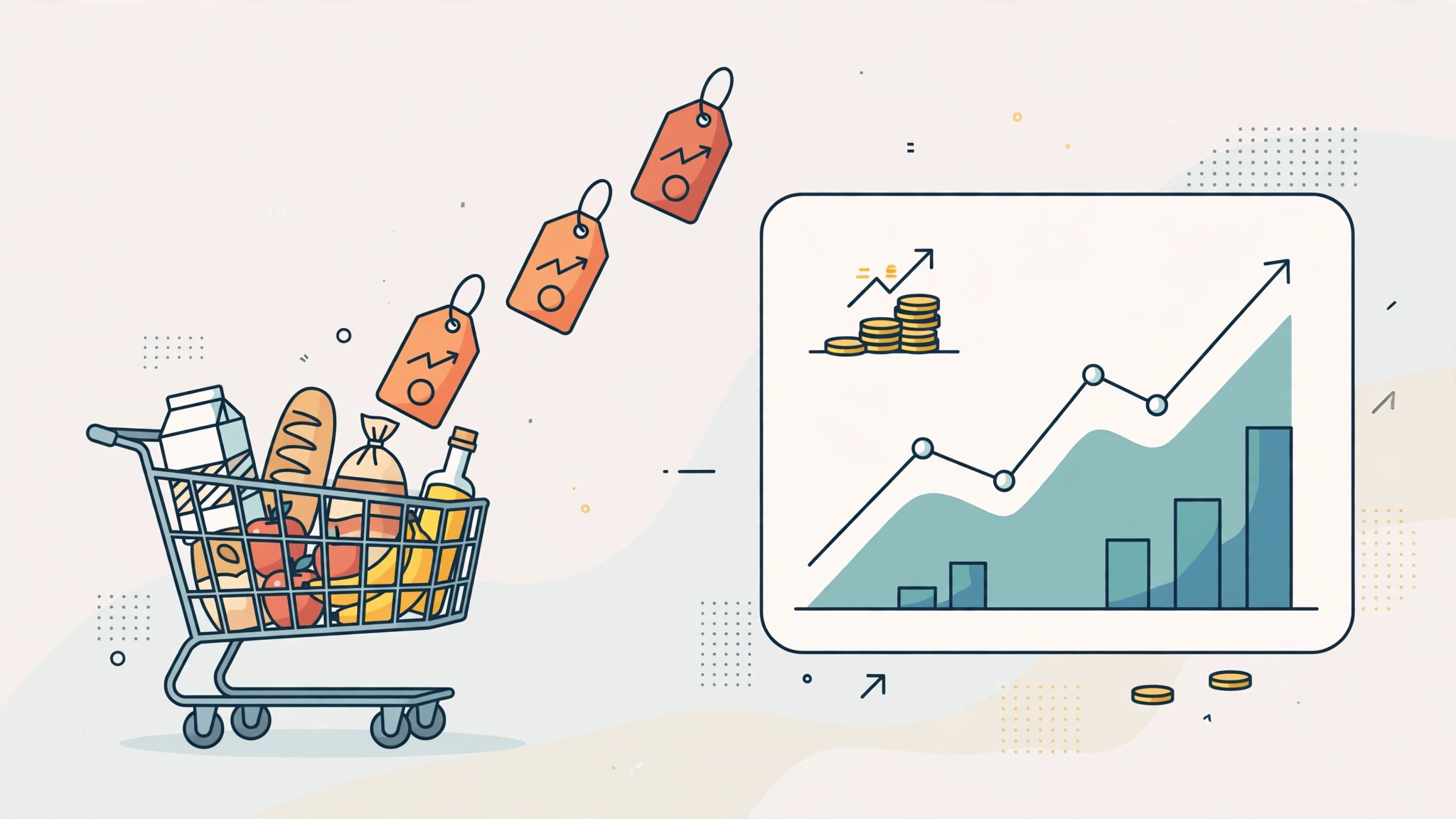
Inflation is the general rise in prices across an economy over time. When inflation runs at 3 percent per year, something that costs 100 today will cost about 103 next year and roughly 134 in ten years. Your money has not changed in number, but what it can buy has shrunk. Economists measure inflation with indexes such as the Consumer Price Index, which tracks the price of a typical basket of goods and services: food, housing, transport, healthcare, and more.
Why Prices Rise
Several forces can push prices up. When demand for goods grows faster than supply, sellers raise prices. When the cost of raw materials, energy, or wages increases, businesses pass those costs on. Central banks also play a role: when money is cheap and plentiful, spending rises, and prices often follow. No single cause explains every period of inflation, which is why it can be stubborn and unpredictable.
Inflation Is Not Always Bad
A small, steady rate of inflation, around 2 percent, is generally considered healthy. It encourages people to spend and invest rather than hoard cash, and it gives central banks room to manage the economy. Problems start when inflation climbs too high or swings unpredictably, because planning becomes difficult for households and businesses alike.
The Silent Damage to Cash and Savings
The most important thing to understand is that inflation punishes money that stands still. Cash in a drawer earns nothing, so its buying power falls by roughly the rate of inflation every year. At 4 percent inflation, money under the mattress loses about a third of its purchasing power in a decade.
Savings accounts are only slightly better. If your account pays 1 percent interest while inflation runs at 4 percent, your real return is negative 3 percent. Your balance grows on paper, but each year it buys less. This gap between the interest rate and the inflation rate is called the real return, and it is the number that actually matters for your future.
- Nominal return: the growth you see on your statement, before inflation.
- Real return: nominal return minus inflation, the growth in actual buying power.
- Cash: almost always a negative real return over long periods.
Keeping an emergency fund in an accessible account is still wise, because safety and availability matter more than growth for money you might need next month. The mistake is treating cash as a long-term plan. If you are new to this balance, our guide to investing for beginners explains how to separate emergency money from money that should be working for you.
How Inflation Affects Different Investments
Not all assets respond to inflation in the same way. Some struggle when prices rise quickly, while others have historically held up well. Knowing the difference helps you build a portfolio that does not depend on one outcome.
Stocks
Over long periods, shares in companies have generally outpaced inflation, because businesses can raise their prices and grow their earnings as the economy expands. In the short term, however, high inflation can hurt stock prices. Rising prices push central banks to raise interest rates, which makes borrowing more expensive and can reduce company profits. Sectors differ too: companies selling essentials often cope better than those relying on discretionary spending.
Bonds
Traditional bonds are among the most exposed to inflation. A bond pays a fixed amount of interest, so if inflation rises above that rate, the bondholder loses buying power every year. Bond prices also tend to fall when interest rates rise. Inflation-linked bonds exist specifically to address this: their payments adjust with an inflation index, offering more predictable real returns, though usually with lower starting yields.
Real Estate
Property has often acted as a partial hedge against inflation. Rents can rise with prices, and the value of land and buildings tends to increase over time. Real estate investment trusts offer a way to access this without buying a building, though they still carry market risk and can fall in value like any traded asset.
Commodities and Gold
Raw materials often rise in price during inflationary periods, since they are part of what is getting more expensive. Gold is traditionally viewed as a store of value, but its price can be flat or falling for long stretches, and it produces no income. Most long-term investors who hold gold treat it as a small diversifier rather than a core holding.
Cryptocurrency
Digital assets are sometimes promoted as inflation hedges, but their short history and extreme price swings make that claim unproven. They behave more like speculative assets than stable stores of value, and any allocation should be money you can afford to lose.
Why Interest Rates Matter So Much
Central banks fight inflation mainly by raising interest rates. Higher rates make saving more rewarding and borrowing more expensive, which cools spending. For investors, rate rises ripple everywhere: mortgage costs climb, bond prices fall, and stock valuations often compress because future earnings are worth less in today’s money. This is why inflation reports move markets within minutes. When inflation surprises on the high side, investors expect tighter policy, and prices adjust immediately. Understanding this chain, from prices to rates to markets, helps you stay calm when headlines turn dramatic.
Practical Ways to Protect Your Buying Power
You cannot control inflation, but you can control how exposed you are to it. The following steps are educational starting points, not a personal plan.
- Keep only true emergency money in cash. Three to six months of essentials is a common guideline; beyond that, idle cash steadily loses ground.
- Invest for the long term. Diversified portfolios of productive assets have historically beaten inflation over decades, though never in a straight line and never guaranteed.
- Diversify across asset types. Mixing shares, bonds, and possibly property exposure means no single inflation scenario decides your outcome.
- Consider inflation-linked options where available. Inflation-linked bonds or savings products can anchor part of a portfolio.
- Grow your income. Skills, qualifications, and career progression are a personal hedge: earnings that rise with or faster than prices protect your standard of living directly.
- Review, do not react. Check your plan once or twice a year. Panic moves during inflation scares usually lock in losses.
A Simple Example of Inflation at Work
Imagine you keep 10,000 in cash for ten years while inflation averages 3.5 percent. At the end, you still have 10,000, but it buys what about 7,090 would buy today. Now imagine the same sum in a savings account paying 1 percent: it grows to roughly 11,046, which sounds fine until you adjust for prices, when its real value is only about 7,830 in today’s terms. Finally, imagine a diversified investment growing at an average of 6 percent a year before inflation: it becomes about 17,908, or roughly 12,690 in today’s buying power. These figures are illustrations, not predictions; markets do not deliver smooth average returns. They simply show why the race against inflation is won by assets that grow, not by money that waits.
Inflation Across Decades: Why Context Matters
Inflation is not a constant. Many developed economies experienced double-digit inflation in the 1970s, a long period of low and stable prices from the 1990s through the 2010s, and a sharp spike in the early 2020s when energy prices, supply shortages, and strong demand collided. Each era rewarded different behavior. In the 1970s, cash and bonds lost ground relentlessly, while tangible assets performed strongly. During the low-inflation decades, bonds delivered comfortable returns and long-term share investing flourished. The lesson is not to predict the next era, which nobody does reliably, but to avoid building a plan that only works in one of them.
Wages: The Other Side of the Equation
Prices are only half the story; incomes are the other half. Inflation hurts most when wages stand still while prices climb, squeezing households from both sides. When pay rises roughly in line with prices, the pain is mostly felt by savings rather than daily life. This is why investing in your own earning power, through skills, qualifications, and career moves, is a genuine inflation strategy. A salary that grows 5 percent a year while inflation runs at 3 percent improves your position every single year, whatever markets do, and larger earnings also mean larger amounts you can save and invest.
Deflation and Stagflation in Brief
Two related terms are worth knowing. Deflation is falling prices, which sounds pleasant but can stall an economy, because people delay purchases expecting lower prices tomorrow, and debts grow heavier in real terms. Stagflation is the uncomfortable mix of high inflation with weak economic growth, difficult for policymakers because the usual cure for one problem worsens the other. A diversified portfolio cannot be optimized for every scenario at once, and it does not need to be: its job is to be reasonably robust across all of them rather than perfect in one.
Inflation and Your Everyday Decisions
Inflation also shapes decisions that do not look like investing at all. A fixed-rate mortgage, for example, becomes easier to carry over time if your income rises with prices, because the payment stays the same while its real weight shrinks; inflation effectively transfers value from the lender to the borrower. The opposite applies to anyone lending money at fixed rates, including bondholders and, in a small way, anyone with a low-interest savings account. Even the timing of large purchases is affected: when prices are rising steadily, delaying a necessary purchase usually means paying more later, while in stable times there is no such pressure. Seeing these everyday effects clearly is often what finally makes the investment side click: inflation is not an abstract statistic, it is a constant negotiation between your money, your debts, and time itself.
Frequently Asked Questions
Is inflation always bad for investors?
No. Moderate inflation is normal in growing economies, and many assets, especially shares in healthy companies, have historically grown faster than prices over long periods. The danger is mainly to cash and fixed payments that do not adjust, and to portfolios built for only one scenario.
What is the safest way to beat inflation?
There is no risk-free way. Government inflation-linked bonds come closest to guaranteeing a small real return in some countries, but availability and terms vary. For most people, the practical answer is a diversified, long-term approach matched to their goals and comfort with ups and downs.
Should I change my investments every time inflation data is released?
Almost certainly not. Monthly figures are noisy, and trading on them adds cost and stress without reliable benefit. A plan built around your time horizon, reviewed occasionally, is usually far more effective than reacting to each report.
The Bottom Line
Inflation is a slow, certain headwind: money that does nothing loses buying power every year. Cash and low-interest savings are useful for emergencies and short-term needs, but they cannot protect long-term goals on their own. Historically, diversified investments in productive assets have given savers their best chance of staying ahead of rising prices, at the cost of accepting market ups and downs along the way. Understand the real return, diversify sensibly, keep your horizon long, and let time do the heavy lifting.
This article is educational content only and is not personalized financial advice. Consider your own circumstances and, if needed, speak with a qualified financial adviser before making investment decisions.