Education has always worked best when a teacher understands what each student knows, where they are stuck, and what should come next. The challenge is scale: one teacher may support thirty students in a classroom or thousands in an online course. That is where ai in education is starting to make a practical difference. Used well, it does not replace teachers. It helps them notice patterns sooner, prepare better materials, and give learners more timely guidance.
The most useful education tools are not the flashiest ones. They are the systems that quietly adjust practice questions after a quiz, suggest a simpler explanation when a student repeats the same mistake, or summarize progress so a teacher can plan the next lesson with confidence. For students, the benefit is simple: learning feels less like being dragged along at someone else’s speed and more like following a path that responds to their actual needs.
What AI in Education Actually Means
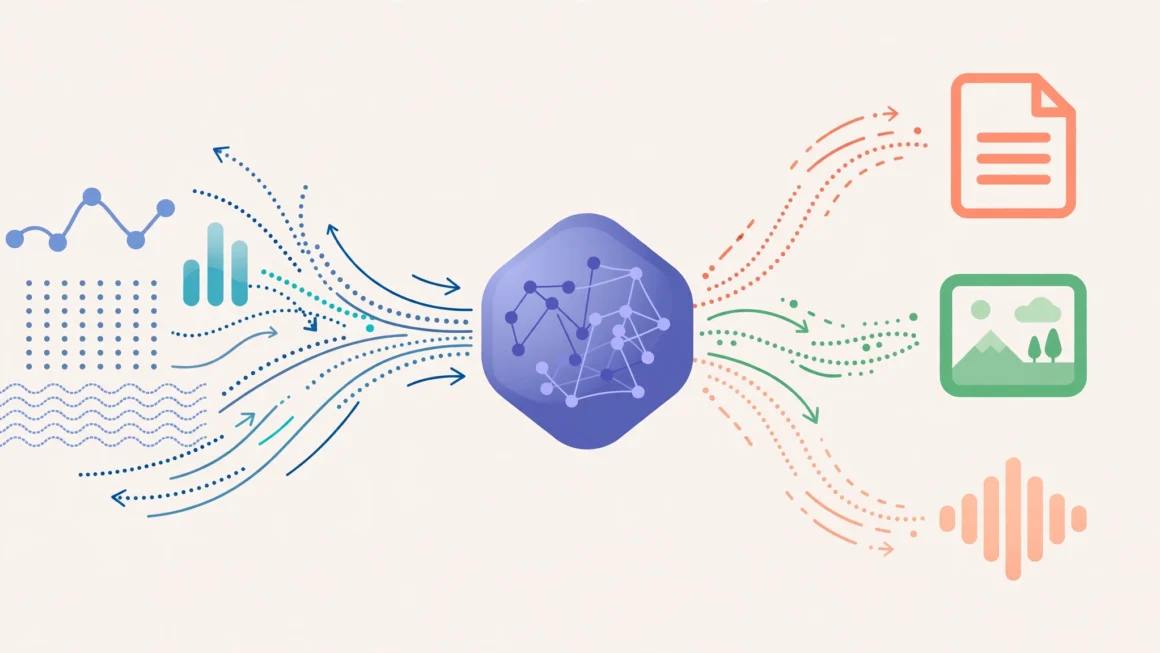
AI in education is a broad term for software that learns from data and helps make instructional decisions. Some tools predict which learners may need support. Others generate practice activities, grade routine work, translate content, read text aloud, or recommend the next resource in a sequence. The common thread is feedback: the system observes performance and adjusts what happens next.
It is more than chatbots
Many people first meet educational AI through a chatbot that answers questions. That is only one piece. Behind the scenes, learning platforms may use recommendation models similar to those that suggest videos or books, except the goal is mastery rather than clicks. A maths platform, for example, can infer that a learner understands fractions but struggles with word problems, then offer targeted practice instead of repeating the whole unit.
Data becomes useful when it changes teaching
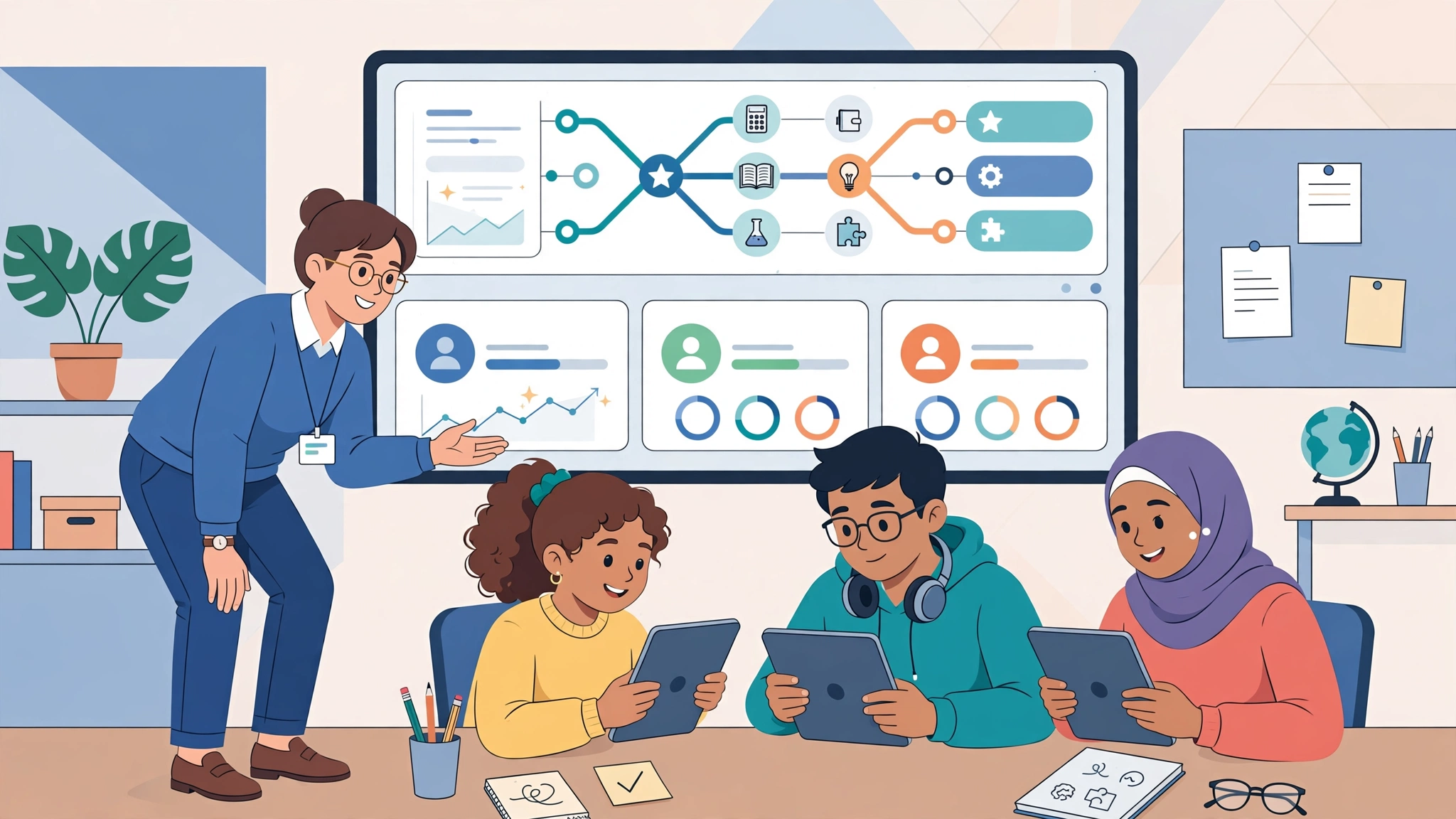
Data by itself does not improve learning. A dashboard full of charts is helpful only if it leads to a better decision: reteach a concept, form a small group, contact a parent, change an assignment, or let advanced learners move ahead. Good AI tools reduce the distance between information and action. They highlight the few things a busy teacher should look at first, instead of burying them under reports.
Personalized Learning Paths
Personalization is the promise most often attached to AI in education. In a traditional class, everyone may receive the same worksheet on the same day, even though their readiness differs widely. Adaptive systems can vary the order, difficulty, and format of activities. A student who masters a skill quickly can move to richer problems. A student who needs more time can receive hints, examples, and spaced review before being tested again.
Meeting learners where they are
Personalized paths are especially valuable in subjects with strong building blocks, such as mathematics, languages, coding, and science. If a learner misses a foundation, later topics become confusing. AI can detect those gaps earlier than an end-of-term exam. It can also revisit older material at smart intervals, using retrieval practice to strengthen memory without making review feel like punishment.
Choice still matters
Personalization should not become a narrow tunnel. Students still need curiosity, projects, discussion, and the chance to choose topics that interest them. The best systems offer guided flexibility: a recommended next step, plus options. A history learner might read a short article, watch a timeline activity, or write a response. The goal is not to let software decide everything; it is to make the next helpful step easier to find.
How AI Supports Teachers
Teachers spend many hours on tasks that matter but are repetitive: drafting quiz questions, marking routine homework, writing feedback comments, preparing differentiated worksheets, and summarizing assessment results. AI can assist with first drafts and pattern spotting so teachers can spend more time on explanation, mentoring, and classroom relationships.
Faster feedback, better conversations
Feedback is most powerful when it arrives while the work is still fresh. AI can flag common errors in writing, code, or problem solving and suggest comments that a teacher can approve or edit. That speed matters. Instead of returning a paper two weeks later, a teacher can start the next lesson by addressing the exact misconception many students shared. The technology handles sorting; the teacher handles meaning.
Planning and differentiation
Preparing three versions of the same lesson is time-consuming. AI can help produce a core explanation, a supported version with vocabulary help, and an extension task for fast finishers. It can also turn a topic into discussion prompts, flashcards, or a short formative quiz. Teachers remain responsible for accuracy and appropriateness, but they no longer have to start from a blank page every time. In the same way that AI automation for small businesses removes repetitive office work, classroom AI can remove some repetitive preparation while keeping professional judgment in charge.
Benefits for Students Beyond the Classroom
Learning does not stop at the school gate. AI tutors and study assistants can help students practise at home, prepare for exams, and understand homework without simply copying answers. The difference between a helpful tutor and a shortcut machine is design. Good tools ask questions, give hints, and require the learner to try before revealing a solution.
Accessibility and inclusion
AI can make learning materials easier to access. Speech-to-text helps students who struggle with writing. Text-to-speech supports readers with dyslexia or visual impairments. Instant translation can help multilingual learners follow a lesson while building vocabulary in a new language. Captioning, summarization, and adjustable reading levels can open content to students who might otherwise be left behind. These features are not luxuries; for many learners, they are the difference between participation and frustration.
Confidence and self-direction
Some students hesitate to ask questions in front of peers. A private practice tool can feel safer. Learners can repeat a pronunciation, test an idea, or review a concept without embarrassment. Over time, clear progress indicators can build confidence: you missed this yesterday, practised it today, and solved it independently this morning. That visible growth encourages self-direction, which is one of the most valuable habits education can teach.
Risks, Limits, and Responsibilities
AI in education also brings real risks. Systems can be wrong, biased, or too confident. They may misread a student’s ability because the data is incomplete. They may encourage overreliance if learners use them to avoid thinking. Schools therefore need clear rules about accuracy, privacy, academic integrity, and human oversight.
Privacy must come first
Student data is sensitive. Schools should know what information a tool collects, where it is stored, who can access it, and whether it is used to train models. Parents and students deserve plain-language explanations. The safest approach is data minimization: collect only what is needed for learning, keep it secure, and delete it when it is no longer required. Convenience should never outrun consent.
Bias and quality control
If training data reflects unequal access or stereotypes, an AI tool can repeat those patterns. A writing assistant might unfairly judge dialect. A recommendation engine might steer some learners toward easier content too quickly. Educators should test tools with diverse students, review outputs, and keep appeal routes open. When AI contributes to grading or placement, a human should be able to question and override the result.
How Schools and Learners Can Start Wisely
The smartest way to adopt AI is to begin with a specific problem. Do students need faster feedback in writing? Are teachers spending too long creating practice sets? Are beginners in a language course dropping out because lessons move too fast? A focused pilot makes success measurable and limits disruption.
A practical rollout checklist
- Define the learning goal: name the skill, behaviour, or time saving you want to improve.
- Choose one tool for one job: avoid buying a platform that promises everything and proves nothing.
- Train the humans: teachers and students need guidance on prompts, limits, privacy, and integrity.
- Measure outcomes: compare mastery, engagement, workload, and student confidence before and after.
- Review regularly: check errors, bias complaints, accessibility, and whether the tool still earns its place.
For individual learners and parents, the same logic applies. Pick tools that explain their reasoning, encourage practice, protect privacy, and let you control the pace. Avoid products that only promise instant answers. Learning is not mainly about getting an answer quickly; it is about becoming able to produce, evaluate, and use answers yourself.
What Good Implementation Looks Like in Practice
In a strong classroom example, AI is almost boring in the best sense. A teacher starts a unit with a short diagnostic activity. The platform groups students by misconception rather than by a vague score: some need place-value review, some are ready for multi-step problems, and some understand the method but make careless errors. The teacher teaches the whole class the core idea, then uses the groups for targeted practice while moving between tables to coach.
Small signals, timely action
During the week, the system notices that several learners keep choosing answers that reveal the same misunderstanding. Instead of waiting for the unit test, it alerts the teacher and suggests a five-minute reteach with a visual model. Students who already understand the concept receive an extension problem connected to a real-world scenario. At the end of the week, the teacher reviews the evidence, overrides one recommendation that does not fit a student’s circumstances, and plans the next step. The AI contributed speed and pattern recognition. The teacher contributed context, encouragement, and professional responsibility.
At home, the same learner uses a study assistant that does not simply provide answers. It asks the student to explain the first step, offers a hint when they stall, and creates three similar questions after they succeed. A parent can see effort and topics practised without turning the home into a surveillance zone. This balance is important: visibility should support trust and conversation, not pressure or punishment.
For school leaders, the lesson is that implementation quality matters more than the number of tools purchased. A single well-integrated platform with training, support, privacy review, and clear success measures will usually beat a shelf of disconnected apps. Teachers need time to learn the workflow, students need explicit instruction in responsible use, and families need to know what the system does. When those pieces are present, AI becomes part of good teaching rather than a distraction layered on top of it.
Frequently Asked Questions
Will AI replace teachers?
No credible classroom future removes teachers. AI can grade routine items, recommend resources, and draft materials, but teachers build trust, read emotions, manage groups, set values, and make complex judgments. The strongest model is partnership: software handles pattern work at scale, while educators guide, motivate, and decide.
Is AI tutoring as good as human tutoring?
AI tutoring can be excellent for practice, hints, review, and immediate feedback, especially when a human tutor is unavailable or unaffordable. It is weaker at understanding motivation, family context, and subtle confusion. For high-stakes help or persistent difficulty, human tutoring remains valuable. Many learners benefit from a blend of both.
How can students use AI without cheating?
Students should use AI to explain, quiz, outline, and give feedback rather than to submit generated work as their own. A good rule is: if you could not explain the final answer in your own words, you have not learned it yet. Schools should state clearly which uses are allowed for each assignment.
The Bottom Line
AI in education is most promising when it makes learning more personal without making it less human. It can spot gaps earlier, give faster feedback, support accessibility, and free teachers from some repetitive work. It can also create privacy, bias, and integrity problems if adopted carelessly. The path forward is neither hype nor fear. Start with real learning problems, keep educators in control, protect student data, and judge every tool by one question: does it help learners understand more deeply than they did before?