Your watch counts your steps and talks to your phone. Your thermostat learns when you come home. A factory sensor warns engineers before a machine breaks down. These are all part of one idea, and if you have wondered what is iot — short for the Internet of Things — this guide is for you. Below, we explain what IoT means, how it works, where it is used, and the benefits and risks that come with a world full of connected devices.
A Simple Definition of the Internet of Things
The Internet of Things describes the network of physical objects — “things” — that are fitted with sensors, software, and connectivity so they can collect and exchange data over the internet. A thing can be almost anything: a light bulb, a heart monitor, a delivery truck, or a soil sensor in a field. What makes it part of the IoT is not the object itself, but the fact that it can sense something, communicate it, and often act on instructions, all with little or no human involvement.
How Is IoT Different From Ordinary Internet Use?
When you browse the web, a human is generating and consuming the data. In the IoT, machines talk to machines: a sensor reports a temperature, a system analyses it, and another device adjusts itself automatically. Humans set the goals and read the summaries, but the conversation itself is automated and continuous.
How IoT Works: The Four Building Blocks
1. Sensors and Devices
Everything starts with hardware that can measure the physical world — temperature, motion, location, humidity, pressure, images, and hundreds of other signals — or act on it, by switching, unlocking, or adjusting something.
2. Connectivity
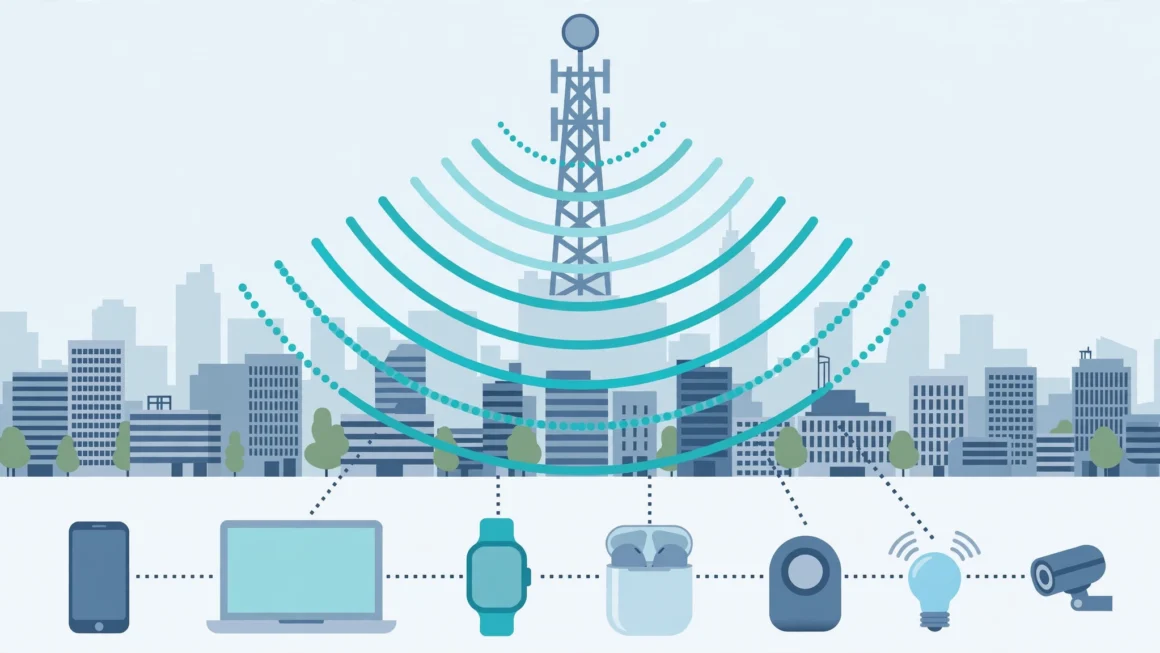
Devices send their data using whatever connection fits the job: Wi-Fi and Bluetooth at home, mobile networks (increasingly 5G) outdoors, and low-power long-range technologies such as LoRaWAN for sensors that must run for years on a small battery.
3. Data Processing
Collected data is processed either in the cloud or increasingly “at the edge,” on or near the device itself. Edge processing matters when decisions must be instant — a self-driving car cannot wait for a distant server to tell it to brake.
4. The User Interface
Finally, people interact through apps, dashboards, and alerts. You see your home’s temperature, a farmer sees which fields need water, and a city sees which bins need emptying — information delivered only when it is useful.
Everyday IoT Examples in Your Life
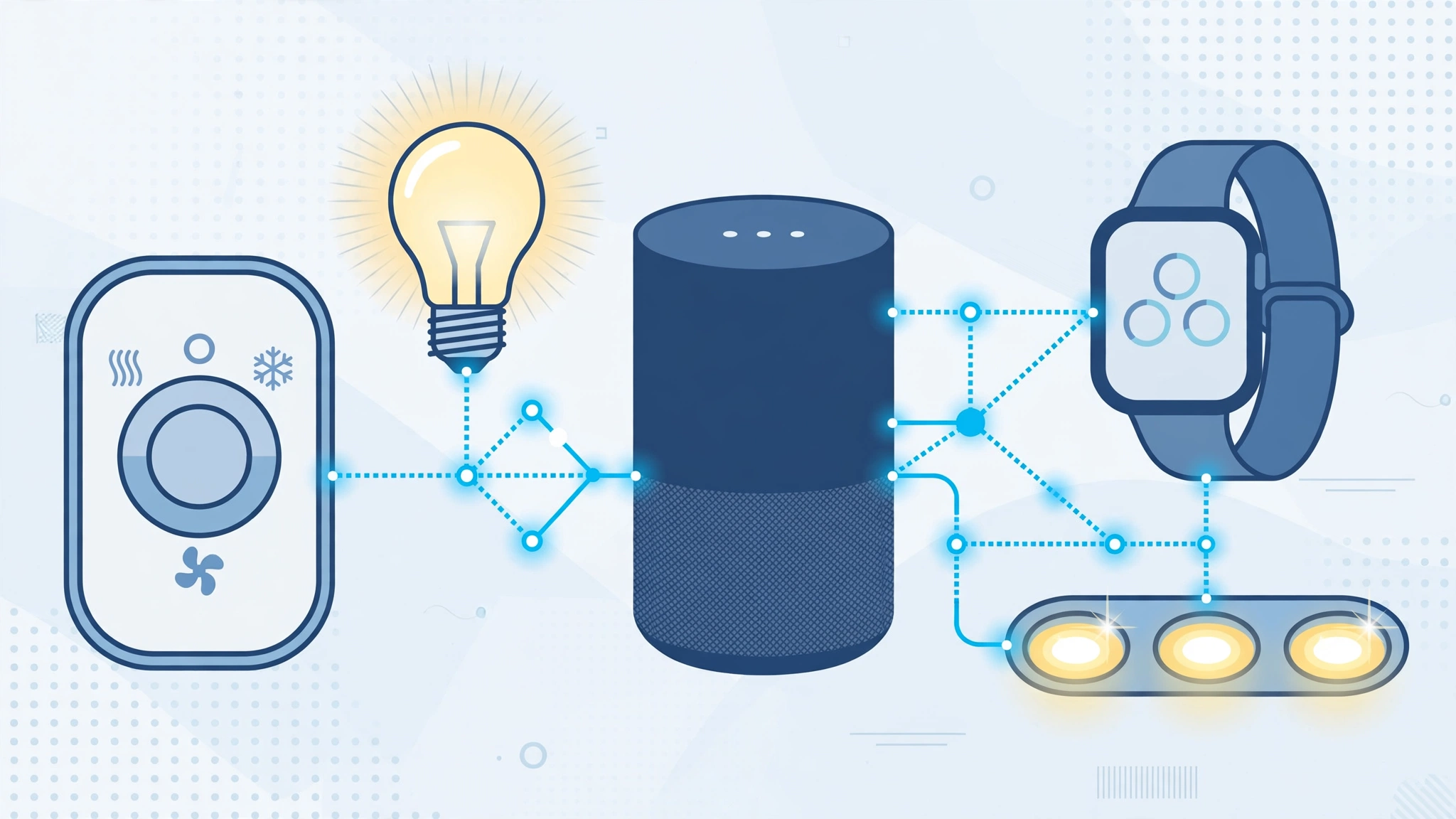
- Smart homes: thermostats, video doorbells, smart speakers, connected lights, plugs, and robot vacuums.
- Wearables: fitness trackers and smartwatches that monitor activity, sleep, and heart rate.
- Connected cars: vehicles that report their location, health, and maintenance needs, and receive software updates over the air.
- Health care: remote monitors that let doctors follow patients’ vital signs at home.
- Retail and logistics: shelf sensors, asset trackers, and delivery fleets that report their position in real time.
IoT at Work: Industry, Cities, and Farms
Scale is worth pausing on: a single modern warehouse or port can host more connected devices than an entire town’s smart homes, all reporting continuously and coordinating with one another. That density is exactly why industrial networks are engineered so carefully — and why the lessons learned there about reliability and security gradually filter down into the consumer gadgets the rest of us buy.
The largest IoT deployments are not in living rooms but in industry. Factories fit machines with vibration and temperature sensors to predict failures before they stop production — a practice called predictive maintenance. Cities use connected streetlights that dim when streets are empty, parking sensors that guide drivers to free spaces, and water systems that detect leaks early. On farms, soil-moisture sensors and weather stations help growers irrigate precisely, saving water and improving yields. In each case the pattern is identical: sense, connect, analyse, act. Businesses increasingly combine these device networks with AI automation, so the data devices collect triggers decisions and workflows automatically instead of waiting for a person to read a report.
The Benefits of IoT
Done well, IoT saves money, time, and resources. It turns guesswork into measurement: energy bills fall when buildings adjust heating to actual occupancy; maintenance becomes cheaper when it is based on a machine’s real condition rather than a fixed schedule; and entirely new services appear, from pay-per-use equipment to insurance priced on actual driving. For consumers, the benefits are convenience and insight — a home that prepares itself, a watch that spots an irregular heartbeat.
The Risks: Security and Privacy
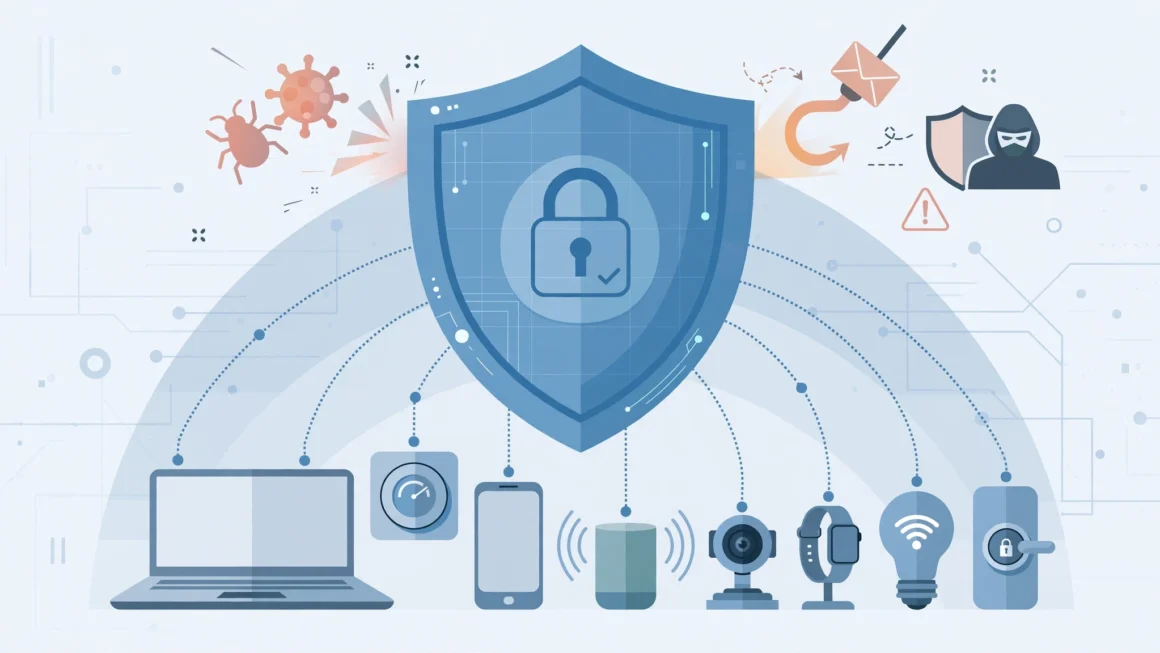
Every connected device is also a small computer, and small computers can be attacked. Cheap devices with default passwords and no updates have been hijacked into botnets used to knock websites offline. Privacy is the second concern: devices that listen, watch, and track generate intimate data, and buyers rarely know exactly what is collected or shared. Practical defences mirror general online safety: change default passwords, keep device software updated, buy from reputable brands, put smart gadgets on a separate home Wi-Fi network if your router allows it, and switch off features — especially always-on microphones — that you do not use.
The Future of IoT
Several trends will shape the next decade. Faster, cheaper connectivity from 5G and new low-power networks will connect things that are currently offline. Artificial intelligence will move into devices themselves, letting them interpret images and sounds locally instead of streaming everything to the cloud. Common standards are finally emerging so devices from different brands cooperate instead of trapping users in separate apps. The result will be an IoT that is less visible but more capable: fewer gadgets to manage, more environments that quietly adapt to the people in them.
IoT in Healthcare and Daily Wellbeing
Healthcare shows IoT at its most human. Wearable heart and glucose monitors let people manage long-term conditions from home, sending readings to clinicians who can spot worrying trends early. In hospitals, connected equipment tracks everything from infusion pumps to hand-hygiene stations, while asset tags end the daily hunt for wheelchairs and monitors. For older adults living alone, fall detectors and simple activity sensors offer a safety net that preserves independence: the system notices if the kettle has not been used by midday or if a door opens at an unusual hour, and alerts family members. These uses succeed because the technology fades into the background — no apps to master, no data to enter — while quietly providing reassurance.
How IoT Devices Talk: Protocols in Plain English
Behind the scenes, devices use lightweight languages designed for small messages and low power. Protocols with names like MQTT and CoAP let a sensor whisper a tiny reading — “temperature 21.5 degrees” — without the overhead of a full web connection, which is why a soil sensor can run for years on one battery. At home, newer standards such as Matter and Thread aim to fix IoT’s most annoying flaw: devices from different brands refusing to work together. As these standards spread, buying a smart device should become less about checking compatibility logos and more like buying a light bulb — it simply fits. Understanding this layer is not essential for using IoT, but it explains both its efficiency and its growing pains.
Choosing and Setting Up IoT Devices Sensibly
A few buying and setup habits separate a helpful smart home from a frustrating, insecure one:
- Buy from brands that publish update policies: a device that stops receiving security updates becomes a liability.
- Change every default password during setup, and enable two-factor authentication on the companion app.
- Start with one problem: heating costs, home security, or lighting — expand only when the first device proves its worth.
- Prefer local control where possible: devices that still work when the internet or a company’s servers go down are more reliable long-term.
- Review data settings in the app: many devices let you limit what is recorded, stored, or shared — the defaults are rarely the most private option.
- Retire devices properly: factory-reset gadgets before selling or recycling them, and remove them from your accounts.
The Hidden Costs: Energy, Waste, and Attention
Billions of devices have a physical footprint. Each sensor contains metals and a battery, each cloud message consumes a little energy, and short-lived gadgets become electronic waste quickly. The picture is not one-sided — IoT also saves far more energy than it uses when it optimises heating, lighting, logistics, and water — but it argues for buying fewer, better devices and keeping them longer. There is an attention cost too: a home full of notifications is not smarter, just noisier. The best IoT setups are nearly silent, surfacing only what genuinely needs a human decision.
A Brief History: How We Got Here
The idea is older than the name. Engineers connected a drinks machine to a university network as early as 1982 so they could check whether a cold drink was available before walking to it. The term “Internet of Things” was coined in 1999 by technology pioneer Kevin Ashton, who was promoting radio-frequency tags for tracking goods through supply chains. What turned a niche idea into a flood was economics: sensors, processors, and wireless chips became so cheap and small in the 2010s that adding them to ordinary products cost pennies, while smartphones gave every owner a ready-made control screen in their pocket. The result is the landscape we see now — a technology that grew not from one breakthrough, but from everything it needed becoming inexpensive at the same time.
Why Businesses Adopted IoT First
Companies moved early because the returns were measurable: a sensor that prevents one factory shutdown or one spoiled shipment pays for a thousand others. Consumer gadgets followed once prices fell, which is why industrial IoT still quietly accounts for the majority of connected devices even though smart speakers get the attention.
Frequently Asked Questions
How many IoT devices are there?
Estimates vary by definition, but analysts consistently count well over fifteen billion connected devices worldwide — more than two for every person on Earth — and the number grows every year as sensors become cheaper.
Is a smartphone an IoT device?
Usually it is classed separately, because it is a general-purpose computer used directly by a person. In practice, though, phones act as the hub and remote control for IoT devices, and their own sensors feed many IoT services.
Do IoT devices work without the internet?
Some functions do — many devices communicate locally over Bluetooth or your home network, and edge processing lets them react without a cloud connection. But remote access, updates, and most smart features require an internet connection.
The Bottom Line
The Internet of Things is simply the extension of the internet beyond computers and phones into the physical world: objects that sense, connect, and act. It already runs quietly through homes, hospitals, factories, farms, and cities, saving energy and effort while raising real questions about security and privacy. Understanding the basic pattern — sensors, connectivity, processing, and an interface — lets you judge any new “smart” product sensibly: what it measures, where the data goes, and whether the convenience is worth it. That judgement matters more every year, because the number of connected things around us keeps climbing whether we notice them or not. The people who get the most from the IoT are not those who connect everything they own, but those who connect things deliberately — choosing devices that solve real problems, securing them properly, and keeping the data they generate under their own control. Chosen that way, the Internet of Things quietly does what the best technology always does: it saves effort, prevents problems, and then gets out of the way.