Before you can buy your first coin, you need a place to trade, and for most beginners that place is a crypto exchange. An exchange is an online platform that matches buyers and sellers of digital assets, a little like a stock market combined with a currency bureau. You deposit money from your bank, choose a coin, place an order, and the exchange records the trade and holds the resulting balance in your account. Simple as that sounds, exchanges vary enormously in safety, cost, ease of use and legal standing. Choosing well matters, because history shows that picking a careless or dishonest platform is one of the fastest ways beginners lose money in crypto, sometimes without the market moving at all. This guide explains how exchanges work, what types exist, which features genuinely matter, and how to compare platforms step by step before you trust one with a single pound, dollar or euro.
How a Crypto Exchange Works
At the centre of most exchanges is an order book: a live list of buy orders and sell orders at different prices. When your buy order matches someone else’s sell order, a trade happens. The price you see quoted is simply the price of the most recent match. Exchanges earn money mainly from trading fees, usually a small percentage of each trade, plus charges for withdrawals, card deposits and currency conversion.
Behind the scenes, a typical beginners’ journey looks like this. You create an account, verify your identity, deposit funds by bank transfer or card, buy a coin, and see it appear in your account balance. What many people miss is that, at this point, the coins sit in the exchange’s own wallets, controlled by the exchange’s private keys. Your balance is essentially an IOU from the platform. That is convenient, and fine for small amounts and short periods, but it is why experienced users often move larger holdings to personal wallets they control themselves.
Market Orders and Limit Orders
Most apps offer a simple instant buy button, which executes a market order: you get whatever price is available right now, plus a spread that quietly widens your cost. A limit order lets you name the price you are willing to pay, and the trade only happens if the market reaches it. Beginners often start with the simple button for their first tiny purchase, which is fine, but understanding the difference saves real money as amounts grow.
The Main Types of Exchange
Centralised Exchanges
Centralised exchanges are run by companies. They hold customer funds, verify identities, offer customer support and usually provide the easiest route from bank money into crypto. Well-known international examples include large platforms that process billions in daily volume. Their strengths are simplicity, liquidity and consumer-style apps. Their weaknesses are custody risk, account freezes, and the fact that you must trust the company’s solvency and honesty. The collapse of FTX in 2022, once one of the largest exchanges in the world, is the permanent reminder that big and famous does not mean safe.
Decentralised Exchanges
Decentralised exchanges, or DEXs, are smart contract platforms, mostly on Ethereum and similar networks, that let you swap tokens directly from your own wallet. No account, no identity check, and no company holding your funds. In exchange, you take full responsibility: there is no password reset, no support desk, and scams or fake token listings are common. DEXs are powerful tools, but they are generally a second step for beginners, not the front door.
Brokers and Fintech Apps
Some stock brokers and payment apps let you buy crypto exposure alongside shares. These are extremely convenient, but read the fine print: on some apps you cannot withdraw the actual coins to your own wallet, meaning you own a price exposure rather than the asset itself, and spreads can be wide. That may be acceptable for some people, but you should know which arrangement you are getting.
What to Check Before You Sign Up
Regulation and Legal Status
Check whether the exchange is registered or authorised in your country, or at minimum operates legally where you live. Regulators in many jurisdictions now require crypto firms to register for anti-money-laundering supervision, and some publish public warning lists of unauthorised firms. If a platform is on a warning list, or refuses to say where it is based, walk away. Regulation does not guarantee safety, but an unregulated offshore platform with anonymous owners stacks every risk against you.
Security Track Record
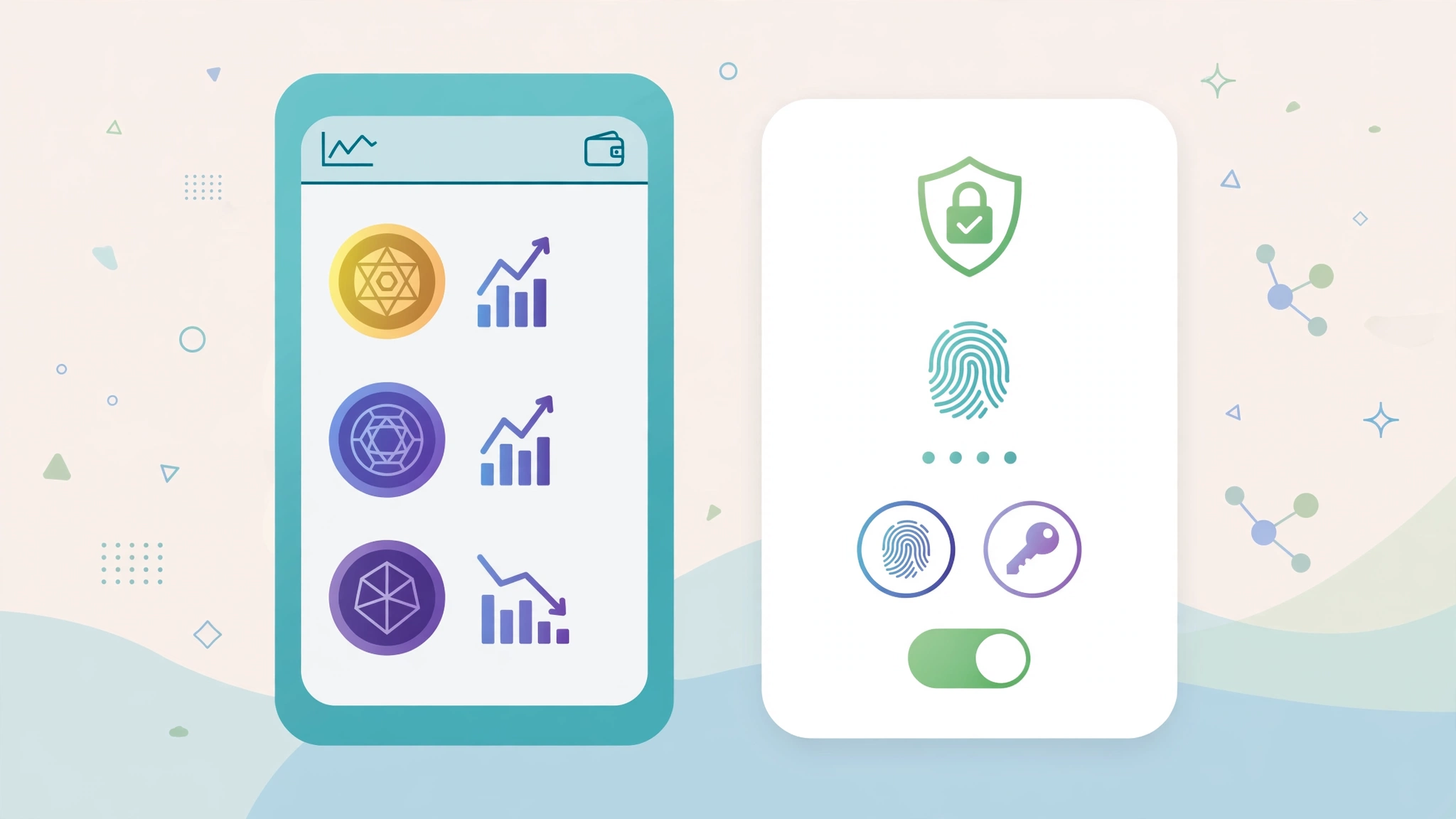
Look for a history free of major hacks, or, if the exchange was hacked in the past, whether customers were fully reimbursed. Strong platforms store most funds in cold storage offline, offer two-factor authentication, allow address allow-listing for withdrawals, and publish some form of proof of reserves. No measure is perfect, but together they signal a serious security culture. Also check whether the company communicates transparently during incidents; silence during a crisis is a bad sign.
Fees, All of Them
Compare the full cost, not the headline. Trading fees typically range from about 0.1 percent to over 1.5 percent per trade depending on the platform and your volume. Card deposits often cost several percent, while bank transfers are usually cheaper or free. Add withdrawal fees, which for some coins are flat charges that hurt small balances, plus the spread on instant-buy features. A platform advertising zero commission may simply bake its profit into a worse price. For a small test purchase these differences are trivial; for regular buying they compound.
Coins, Liquidity and Limits
Make sure the exchange lists the mainstream assets you actually want, with healthy trading volume so your orders fill at fair prices. Obscure coins with thin markets can move violently and be hard to sell. Also check deposit and withdrawal limits, supported payment methods in your country, and minimum trade sizes, so the platform fits how you realistically plan to use it.
Usability and Support
A clear app, readable statements and downloadable tax reports are worth more than flashy features. Test the help centre before you deposit: can you find a human support channel, and does the company publish status updates? When something goes wrong with money involved, responsive support stops being a luxury.
A Safe Way to Make Your First Purchase
Once you have chosen a platform, move carefully. Create the account with a unique password stored in a password manager, and switch on app-based two-factor authentication immediately. Complete identity verification, which reputable exchanges require by law. Deposit a small amount by bank transfer and make a tiny first purchase to learn the interface. Then practise a withdrawal of a small amount to your own wallet, so the process is familiar before larger sums are involved. Many people pair this cautious start with the broader principles in our guide to investing for beginners: start small, understand each step, and never rush because of price excitement. Finally, record every transaction for tax purposes from day one; reconstructing records later is miserable.
Red Flags That Should Make You Leave
- Guaranteed returns: any platform or promoter promising fixed profits is lying; legitimate exchanges never do this.
- Pressure to deposit quickly: countdown timers, bonus threats and pushy account managers are manipulation tactics.
- No verifiable company information: no address, no named team, no regulatory registration anywhere.
- Withdrawal problems reported widely: search for recent user complaints about frozen funds before depositing.
- Being recruited through social media or messaging apps: a classic route into fraudulent fake exchanges that show profits but never release money.
Keeping Money on an Exchange: A Balanced View
You will hear the slogan “not your keys, not your coins,” and it captures a real risk: if the exchange fails or is hacked, account holders can lose everything, as several collapses have proved. At the same time, self-custody has its own dangers, including lost recovery phrases and irreversible mistakes. A pragmatic approach many people use is to keep only working amounts on a reputable exchange, move long-term holdings to a personal wallet once confident, and split nothing across so many places that it becomes unmanageable. There is no risk-free option, only a choice of which risks you understand and accept.
A Step-by-Step Checklist for Comparing Two Exchanges
When you are torn between two platforms, work through the same comparison in the same order, and write the answers down rather than relying on impressions from marketing pages. First, legal standing: is each exchange registered or authorised in your country, and has either appeared on a regulator’s warning list? Second, the assets: does it list the specific coins you want, with deep, active markets rather than thin order books? Third, total cost: simulate your realistic usage, for example depositing by bank transfer, making one purchase per month, and withdrawing once, and calculate what each platform would actually charge across a year, including spreads. Fourth, security practice: look for cold storage of most funds, app-based two-factor authentication, withdrawal address allow-listing, and a clean or honestly handled incident history.
Fifth, the exit test, which many people skip: search for recent, independent reports about withdrawals on each platform. An exchange earns trust at the exit, not the entrance, because that is the moment your interests and a struggling company’s interests collide. Sixth, support and records: can you reach a human, and can you export a complete transaction history for tax purposes without a fight? Finally, consider boring corporate signals: how long the company has operated, whether its leadership is publicly identifiable, and whether it communicates plainly during market stress. No single factor decides the question, but an exchange that wins on legal standing, withdrawal reliability and transparent fees while losing on, say, app design is almost always the better choice for real money.
Frequently Asked Questions
What is the difference between a crypto exchange and a wallet?
An exchange is a marketplace where you trade; a wallet is a tool that holds the keys controlling your coins. When you buy on an exchange, the coins sit in the exchange’s wallet under its control until you withdraw them to a wallet of your own. Many beginners use both: the exchange to buy and sell, the wallet to store.
How much does it cost to use a crypto exchange?
Expect a combination of trading fees, often between roughly 0.1 and 1.5 percent, deposit costs that vary by method, and withdrawal fees that depend on the coin and network. Instant-buy features usually hide an additional spread. The cheapest route is normally a bank transfer plus a standard limit or market order on a competitive platform.
Can a crypto exchange go bankrupt and take my money?
Yes, it has happened repeatedly, most famously with FTX in 2022. Customer balances on an exchange are generally claims against the company, not insured deposits like bank savings in many countries. This is why choosing a well-run, transparent platform matters, and why many holders withdraw significant balances to wallets they control.
The Bottom Line
A crypto exchange is your gateway between ordinary money and digital assets, and the choice of gateway deserves real care. Favour platforms that are legally established in your market, transparent about fees, serious about security and known for honouring withdrawals. Start with a small amount, learn the mechanics, keep records, and remember that the cheapest or most advertised platform is rarely the safest. In crypto, the platform you choose can matter as much as the coin you pick.
This article is educational content only and is not financial advice. Cryptocurrency is volatile and high-risk; values can fall sharply and you could lose some or all of your money. Always do your own research and consider speaking to a qualified professional before investing.