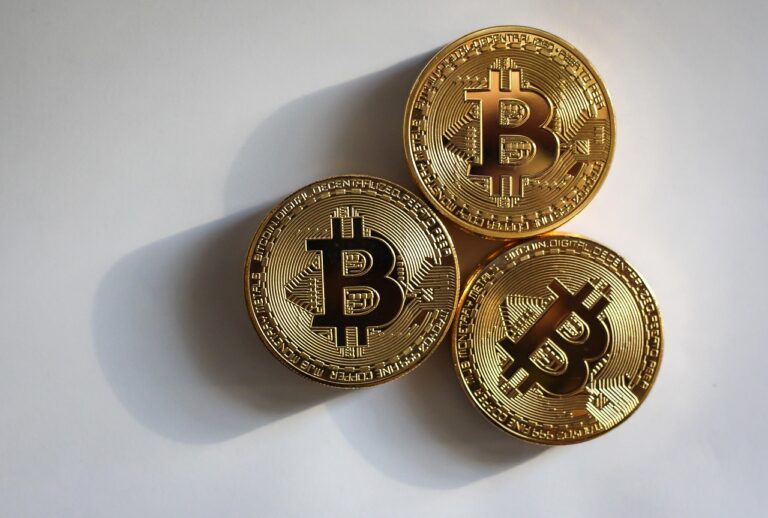
Bitcoin Halving Explained: What Happens to Price and Miners
Introduction: The Scheduled Cut in Bitcoin’s New Supply
Roughly every four years, something unusual happens in Bitcoin: the reward paid to the miners who process transactions is cut in half, automatically, by the code. No committee votes on it. No central bank announces it. Nobody can postpone it, lobby against it, or reverse it, because the schedule was written into the protocol at the start and is enforced by every computer running the software. The event is called the halving, and it is the mechanism that makes Bitcoin’s supply predictable and shrinking over time.
Beginners hear about the halving for a less mechanical reason: every past halving has eventually been followed by a large rise in price, and an entire folklore has grown up around that pattern. Content built on the folklore tends to skip the machinery entirely and jump straight to the prediction.
This article takes the honest order. First the mechanics – what the reward is, how the schedule works, and why the supply cap exists. Then what genuinely changes for the miners whose revenue is halved overnight. Finally, the price question, treated with the skepticism a sample of a handful of events deserves.
The halving also draws attention from well outside crypto, for a reason worth understanding before the mechanics. Ordinary money systems adjust supply by decision: a central bank meets, deliberates, and changes policy in response to events. Bitcoin’s supply adjusts by timetable, indifferent to events. Supporters treat that indifference as the entire point – a monetary policy that cannot be lobbied, panicked, or quietly revised. Critics treat the same rigidity as a flaw, since a supply that cannot respond also cannot help in a crisis. You do not have to settle that argument to understand the halving, but knowing it exists explains why a simple change in a reward number gets argued about like a constitutional amendment.
The Mechanics: A Reward That Halves on Schedule
Bitcoin transactions are bundled into blocks, and miners compete to be the one who adds each block to the chain. The winner is paid in two parts: the transaction fees attached to the block’s transactions, and a block reward of brand-new bitcoin created on the spot. That reward is how all bitcoin enters existence. There is no other source, no mint, and no discretion anywhere in the system.
The halving is written into that reward. After every 210,000 blocks – and since a block arrives roughly every ten minutes, that works out to about four years – the reward is cut in half. Halving follows halving until the reward shrinks to nothing, at which point the total supply stops growing just short of the protocol’s designed cap of 21 million coins, an endpoint the schedule reaches somewhere around the year 2140. Miners after that point earn transaction fees only.
The design point is worth stating plainly: new supply arrives more and more slowly over time, on a timetable anyone can calculate, regardless of demand, price, or headlines. Whether that scarcity makes the asset valuable is a separate question about demand – the schedule itself only guarantees the supply side. If the underlying picture of what Bitcoin is and how the network runs is still fuzzy, start with our beginner’s guide to what Bitcoin is and come back; the halving makes little sense without the mining layer beneath it.
One supporting mechanism keeps the schedule honest in calendar terms. “Every 210,000 blocks” is the real rule; “about four years” is its translation, and the translation holds because the network retunes itself. Every two weeks or so, the protocol measures how fast blocks actually arrived and adjusts the difficulty of the mining puzzle up or down, pulling the average back toward ten minutes per block no matter how much computing power joins or leaves. That is why the halving dates drift slightly but never collapse or stretch beyond recognition: the four-year rhythm is engineered, not hoped for. It is also why the halvings already in history arrived close to their predicted dates despite mining growing from hobbyist laptops to an industry – the difficulty adjustment absorbed all of it.
Notice, finally, what the schedule does to the meaning of “new supply” over time. In the network’s early years, the block reward was the dominant source of coins entering circulation, and each halving was a major event for the supply side. As the total stock grows and the reward shrinks, each successive halving removes a smaller share of the whole – the mechanism’s drama fades arithmetically even as its mythology grows. The endpoint is a supply that effectively stops expanding, maintained by fees alone: a monetary experiment with its conclusion scheduled, in code, more than a century out.
That squeeze only makes sense with the full picture in view, and crypto mining explained: the work, the cost and the payoff explains what miners actually do between one halving and the next.
What Happens to Miners: Half the Revenue, Same Bills
For miners, halving day is brutally simple arithmetic. The bitcoin-denominated part of their revenue halves overnight. Their costs do not: electricity bills, hardware loans, rent and staff are all denominated in ordinary money and arrive on the same schedule as before. A business that was comfortably profitable at the old reward can be underwater at the new one without anything else changing.
The adjustment that follows is predictable in shape. The least efficient miners – old machines burning expensive power – become unprofitable first and switch off. When enough computing power leaves, blocks temporarily arrive more slowly, until the network’s built-in difficulty adjustment lowers the difficulty of the puzzle and restores the roughly ten-minute rhythm. The surviving miners, running newer hardware on cheaper power, absorb the departed miners’ share of a smaller pie. Transaction fees, the other part of miner income, become proportionally more important with every halving, which is the long-term design: the network gradually transitions from paying for its security with new coins to paying for it with fees.
Two things are worth noticing about this process. It is a stress test the system was designed to pass, and the machinery has kept producing blocks through every halving so far – that is a statement about the protocol’s engineering, not about its price. And the squeeze falls unevenly: mining consolidates toward industrial scale and cheap energy after each cut, which is a real and debated consequence for how decentralized the network’s security truly is.
There is one more miner effect, and it connects this section to the price debate in the next. Miners are forced sellers by construction: their costs are in ordinary currency, so a large share of every block reward is sold into the market to pay for power and hardware. That makes miners one of the market’s most consistent sources of new-coin supply. A halving cuts that flow in half along with the revenue, which is the strongest honest version of the price argument – not that the halving magically creates buyers, but that it permanently reduces one structural source of selling. Hold that thought at its proper size, though: the flow is real, it shrinks on schedule, and it remains small next to the daily turnover of the existing supply changing hands between traders.
The halving is one scheduled event in a much wider story, and the future of cryptocurrency: the trends actually worth watching separates durable shifts from the noise around them.
What Happens to Price: A Pattern Too Small to Trust
Now the claim everyone actually cares about. It is true that after each past halving, the price of bitcoin eventually rose a great deal, and “the halving causes a bull run” has hardened into standard crypto folklore. The claim deserves a fair hearing and then a careful dismantling, because several separate problems hide inside it.
First, the sample. There have only been a handful of halvings in history, which means the famous pattern rests on a few data points – far too few to establish that one event causes the other. Second, the company the halvings kept: each coincided with other powerful forces, including waves of new adoption, new investment products, and long stretches of cheap money in the wider economy, and there is no way to separate the halving’s contribution from theirs. Third, the event is known years in advance, down to an approximate date anyone can look up. Markets are not perfect, but an effect that everyone can see coming, on a schedule published a decade ahead, should largely be reflected in the price before it happens – not delivered as a surprise afterward.
Fourth, scale: the new supply the halving cuts is a small flow compared with the existing stock of coins changing hands every day, so the direct mechanical effect on the market is modest. What can honestly be said is narrower. The halving guarantees slower issuance. Demand will do whatever it does against that slower-growing supply, and that interaction – not a calendar prophecy – is the whole real mechanism. As our guide to crypto market cycles, booms and busts shows, booms and busts have always had more drivers than one scheduled event. For the official groundwork on evaluating any investment claim, see Investor.gov, the SEC’s introduction to investing.
A useful test for any halving claim is to ask what evidence would settle it. To prove the halving itself moves prices, you would want many halvings, in different economic climates, with other forces held still – and history offers a handful, all tangled together, with no control group. That evidence does not exist and cannot be manufactured; the honest analyst is stuck with a plausible mechanism, a tiny sample, and a confident crowd. Claims built on that foundation should be sized accordingly: interesting enough to understand, nowhere near solid enough to bet savings on. The investors who come through these cycles intact tend to be the ones who treated the folklore as entertainment and the supply schedule as the only fact in the room.
A Hypothetical Example: The Issuance Arithmetic, With Invented Numbers
To see what a halving does mechanically, use invented round numbers – deliberately not Bitcoin’s actual figures, because the shape of the arithmetic is the lesson. Imagine a network that issues 1,000 new coins a day to its miners. Over a year, that is 365,000 new coins entering circulation. A halving cuts the daily issuance to 500, so the following year’s new supply becomes 182,500. A second halving cuts it again, to 250 a day, or 91,250 a year.
Notice what the arithmetic does and does not contain. The supply of new coins shrinks on schedule whether anyone wants the coins or not – demand does not appear anywhere in the calculation. That is exactly why the halving is a fact about supply and only a speculation about price. Anyone who quotes you an exact future price derived from this schedule has quietly added the demand side of the equation themselves, and that part is a guess wearing the costume of mathematics.
Complete the thought experiment by shrinking the other side of the market. Suppose that in the same year issuance halves, the number of willing buyers also halves – a recession, a scandal, a better story elsewhere. The supply schedule did exactly what it promised, and the price can still fall, because price is set where the shrinking supply meets whatever demand shows up. A supply timetable, however elegant and however certain, is only ever half of a price. The halving writes its half in code years in advance. The other half is written by strangers, on the day, for reasons nobody schedules.
The Bottom Line
The halving is a supply fact wearing a price legend. What it guarantees is mechanical: new bitcoin will be issued more slowly, miners will earn half the block reward for the same work, inefficient miners will be squeezed, and the network’s difficulty adjustment will keep the blocks coming. What it does not guarantee is the part everyone repeats – a rising price on a schedule.
With only a handful of halvings in history, each tangled up with adoption waves and cheap-money eras, the honest position is that the sample is too small to trade on. If you own bitcoin, own it for reasons that survive the halving being a non-event; if the folklore alone is the reason, the position is a bet on a pattern of three or four data points – and the market charges full price for bets like that.
Disclaimer: This article is for educational purposes only and is not financial, tax, or legal advice. Investing involves risk, including the possible loss of principal. Examples are hypothetical and do not represent actual or future returns. Consider speaking with a qualified financial or tax professional about your own situation.