How to Improve Your Credit Score Fast (and What Actually Moves It)
Introduction: “Fast” Has Honest Limits
Let’s start with the part most articles skip: there is no legitimate way to rebuild a credit score overnight. If someone offers to erase your history, add you as an authorized user on a stranger’s account for a fee, or promise a specific number by a specific date, treat it as a scam and walk away. Scores are built from recorded behavior, and behavior takes time to record.
What is real is this: a handful of moves can show up within a billing cycle or two, because they change what your lenders report rather than rewriting your history. Everything else is steady habit, and the habits are what keep early gains from sliding back.
Before the tactics, it helps to know what you are actually working with. A credit score is a number a scoring company calculates from the information in your credit reports. The main ingredients are whether you pay on time, how much of your available credit you are using, how long your accounts have been open, how often you apply for new credit, and the mix of account types you carry. The companies that build these scores set the ranges and decide how much weight each ingredient gets, and those details can change over time, so treat any single rule of thumb as a rough guide rather than a fixed law.
What This Section Covers
- What a score is made of — the handful of ingredients scoring models look at, and why payment history usually carries the most weight.
- The fastest legitimate levers — the few changes that can register quickly, such as paying down balances before your statement closes or correcting a genuine error on your report.
- The slow habits that hold the gains — autopay, low reported balances, and simply leaving well-behaved accounts alone.
One note on numbers: any dollar figure in this article is a hypothetical illustration using round numbers, not a prediction about your situation. Hypothetically, a $2,000 balance on a $5,000 limit works out to 40% utilization; paying it down to $1,000 brings that to 20% on the same account with the same history.
None of this comes with a promised score or a guaranteed timeline, and results vary from person to person. What follows is a map of which levers move the number, which ones move it quickly, and which habits keep it there.
If you are starting with no file at all, how to build credit from zero, step by step covers the secured cards, builder loans and timelines that create a score in the first place.
What Actually Moves a Score: The Ingredients
A credit score is not a single number sitting in your file waiting to be read. It is produced by a scoring model, and while the companies behind those models keep their exact math private, the ingredients they work with are well documented and remarkably consistent from one model to the next.
Paying on Time
Payment history carries the most weight of anything here. It answers the question a lender cares about most: have you repaid what you agreed to, when you agreed to repay it? One late payment can leave a mark that lingers for a long stretch, while a steady record of on-time payments works in your favor gradually. This is why setting up automatic payments for at least the minimum due is one of the most useful habits a beginner can build, and why it belongs at the top of any list of things worth fixing first.
How Much of Your Available Credit You Are Using
Coming in second is utilization, which is simply the balance you carry measured against your credit limits. If a card has a $2,000 limit and you owe $1,000, you are using half of it — hypothetical round numbers, offered only to show the arithmetic. Lower usage generally reads better to a scoring model. Because issuers usually report balances once a month, where your balance happens to sit on the reporting date matters more than where it sits on your due date.
The Remaining Ingredients
After those two, the other pieces tend to have a smaller but still real influence:
- Length of credit history — how long your accounts have been open, the age of your oldest account, and how recently each one has been used.
- Recent applications for new credit — each application can create a hard inquiry, and several in a short window can read as urgency.
- Mix of account types — a blend of revolving accounts, such as cards, and installment accounts, such as a loan, shows you can handle different kinds of borrowing.
Why This Is Not a Formula
Here is the part beginners most often miss: the weights are not fixed. Different scoring models emphasize these ingredients differently, and different lenders may pull different models or set their own bar for what they consider acceptable. That is why this article teaches levers rather than a formula you can plug numbers into. You cannot choose which model a lender uses, but you can control the underlying behavior that every model is reading.
If you want the primary-source explanation of what appears in a credit report and how scores are assembled, the Consumer Financial Protection Bureau’s credit reports and scores resources are worth reading directly. Treat any specific thresholds or rules you encounter as values set by the relevant authority, and expect those details to be revised over time.
The fastest move on the list is not a trick at all: checking your credit report for free and fixing errors removes damage you never caused.
The Fastest Legitimate Moves
Some parts of a credit score respond to what you do this week. Others move slowly no matter how carefully you plan. This section covers the first group — the steps that can show up on your reports within a billing cycle or two, assuming the information your creditors send is accurate and arrives on schedule.
Pay card balances down, and time it well
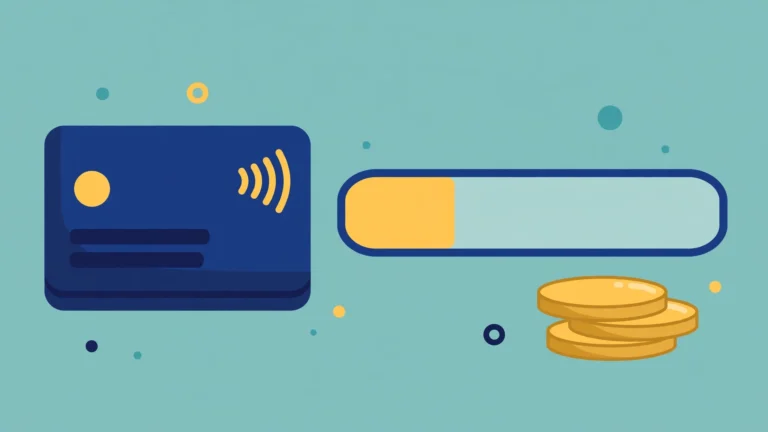
Credit card balances carry a lot of weight because they feed the share of your available credit that you are using. Lowering that share is often the single quickest lever you control. If you carry balances on more than one card, throwing extra money at the card with the highest utilization can help, though the card with the highest interest cost usually deserves attention too.
Here is the timing detail most people miss. Your issuer typically reports your balance to the credit bureaus around the end of your statement period, not on the due date. So paying after the statement closes may not change what gets reported that month. If your issuer allows it, making a payment before the statement closing date means the lower balance is the one that lands on your report. Ask your issuer when it reports, or check your online account for the statement closing date, and plan around that instead of the due date.
Ask for a higher limit
You can request a credit limit increase on a card you already have. No new account, and in many cases no new inquiry. If your limit goes up and your spending stays the same, the share of your credit you are using drops. The catch: this only helps if you resist the urge to spend the new room. Some issuers do run a hard inquiry for these requests, so ask before you apply.
Dispute errors on your reports
Mistakes are common, and you have a legal right to dispute them for free. Pull your reports from each bureau, look for accounts that are not yours, balances that are wrong, duplicate collections, or late payments you actually made on time, then file a dispute with the bureau and with the company that reported the item. Correcting a genuine error is one of the few changes that can move a score quickly. Paying a company to remove accurate negative information is not — nobody can legally do that, and anyone promising otherwise is selling you nothing.
Authorized users: helpful, with a catch
Being added as an authorized user on a family member’s well-aged card can add positive history to your file. But the account’s behavior becomes part of your record. If they miss payments or run the balance up, that lands on you too. Only take this route with someone whose habits you trust, and who agrees to keep the card out of your hands.
Keep the goal in view. A score is a tool for getting something you actually want — a mortgage at a workable rate, an apartment, a card that fits how you spend. Chasing the number for its own sake tends to lead to expensive decisions. If you are not sure what you are building toward, it helps to start with how to set financial goals you will actually reach and work backward from there.
The Slow Habits That Hold the Gains
A jump in your score is only half the job. The other half is not giving it back. Balances drift upward, a new card gets opened on a whim, a due date slips during a busy month. The habits below are unglamorous, and that is exactly why they hold up.
Protect the due date above everything else
Payment history carries the most weight in every major scoring model, so one missed due date can undo months of careful work. Two layers of protection help. First, set up autopay for at least the minimum payment, which works as a safety net rather than a strategy: it keeps the account current through a rough week while you pay the rest by hand. Second, keep your own reminder a few days ahead of the due date, which catches the card you have stopped using and forgotten about. Apps that track your utilization and payment dates in one place can do the watching for you, and if you want help choosing one, our guide to AI for personal finance: budgeting with a brain walks through what these tools actually do.
Keep old accounts, space out new ones
Length of credit history rewards patience. Closing your oldest card shortens the average age of your accounts and removes available credit at the same time, which can push your utilization up as a side effect. If no annual fee is nudging you to close it, leaving it open with a small recurring charge is usually the simpler path. When a fee is the real problem, ask the issuer about switching to a no-fee version of the card instead of closing it outright.
New applications work the same way. Each one generally adds a hard inquiry, and a cluster of them inside a short window reads as risk to a lender. Spacing applications out by several months costs you nothing and keeps the overall picture calm.
Let time do the quiet part
Nothing you do this month erases a past mistake instantly. Negative marks lose influence as they age, and the law sets how long they may remain on your reports at all. Those timeframes are determined by the governing authority and are revised over time, so check the current rules rather than trusting a number you half-remember.
Here is the reframe worth keeping: your score is a by-product, not a project. You do not raise it directly. You raise it by living inside a set of habits and letting the number follow. Say, purely as a hypothetical illustration with round numbers, that someone carries $2,000 on a card with a $5,000 limit. That is 40 percent utilization. Paying the balance down to $500 moves them to 10 percent. Nothing clever happened there. The balance changed, and the scoring model responded to it.
None of this is exciting, and none of it expires. That is the point. The people whose scores stay high are not running a monthly optimisation routine; they are the ones who set up autopay once, stopped closing old cards, and let the calendar do most of the work.
That example is really a utilization story, and credit utilization explained: the 30% rule and what matters more unpacks the ratio behind both reported numbers.
A Hypothetical Example: One Balance, Two Reported Numbers
Let’s walk through a hypothetical example. The figures are invented, and the arithmetic is shown so you can see the mechanic.
Imagine you have one credit card with a $2,000 limit. Your current balance is $1,400. That means you are using 70% of the limit: $1,400 ÷ $2,000 = 0.70, or 70%. This is the utilization figure that might be reported if your balance is sent to the credit bureaus before you make a payment.
Now imagine the same card, in the same month, but you pay $800 before the statement closing date. The balance that gets reported becomes $600. That is 30% of the same $2,000 limit: $600 ÷ $2,000 = 0.30, or 30%.
Same card. Same month. Two very different reported numbers: 70% versus 30%. The difference is not a new card, a new limit, or a change in your spending habits. It is simply the balance that appears in the report at the time it is reported.
This matters because credit scoring models often look at how much of your available credit you are using. Different scoring models may weigh this information differently, and there is no specific score change promised or modeled in this example. The point is to show the mechanic only: the number that gets reported can change based on when you pay and when the statement closes.
The key is timing. If your goal is to have a lower utilization figure reported, paying before the statement closes can make the reported balance smaller. You do not need to carry a balance to do this, and the example does not imply that any particular payment amount will produce a particular score.
If you want to see this in your own situation, check your statement closing date, your reported balance, and your credit limit. Then compare the percentage before and after a payment. Remember, the example uses round, hypothetical numbers, and your actual results will depend on your accounts and the scoring model being used.
The Bottom Line
A credit score moves for a short list of reasons: you pay on time, you use a modest share of your available credit, your accounts age, and your file stays free of errors and surprises. The fastest legitimate improvements come from that list – paying balances down before they are reported, correcting mistakes, and giving a higher limit room to lower your utilisation – not from any service promising to rewrite an accurate history.
Treat “fast” as one or two billing cycles for the quick levers, and months of quiet habit for everything else. Check your reports, automate at least the minimum payment on every account, and let the score become what it is designed to be: a by-product of boring, documented reliability.
Disclaimer: This article is for educational purposes only and is not financial, tax, or legal advice. Investing involves risk, including the possible loss of principal. Examples are hypothetical and do not represent actual or future returns. Consider speaking with a qualified financial or tax professional about your own situation.