What Is a Target-Date Fund and Should You Use One?
Introduction: The Fund With a Year in Its Name
Walk into the investment section of a workplace retirement plan and you will spot funds with names like “Retirement 2055 Fund” or “Target Retirement 2040 Portfolio.” The year in the name is a rough guess at when you plan to stop working and start drawing on the money. That single detail is the whole idea behind a target-date fund.
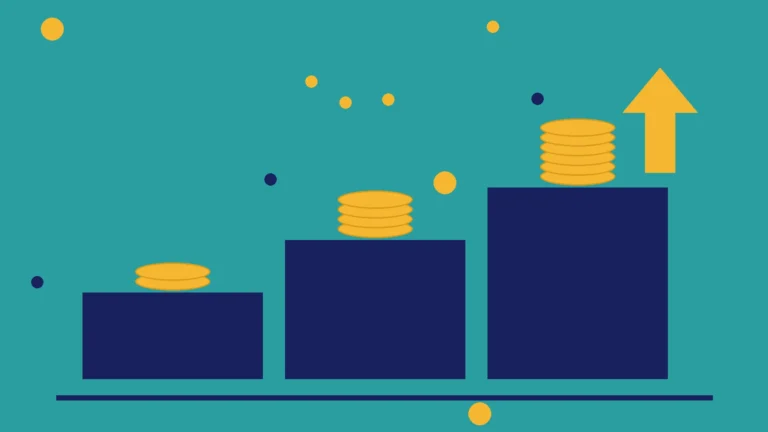
A target-date fund is one fund that holds a diversified mix of many other funds — typically broad baskets of US stocks, international stocks, and bonds. You buy one thing, and you own hundreds or thousands of underlying holdings. The mix is not static, though. Early on, when retirement is decades away, the fund leans heavily toward stocks. As the target year approaches, it automatically shifts toward bonds and more stable holdings. That gradual shift is called the glide path.
The glide path is the mechanism that makes these funds feel like autopilot. You do not have to rebalance, sell anything, or decide when to get more cautious. The fund’s managers do it on a schedule, and the fund’s name tells you which schedule you are on. The year is a label, not a deadline — nothing forces you to stop working or sell the fund when it arrives.
Here is what this article covers:
- How the glide path works — why the stock and bond mix changes, and why two funds with the same year can still look quite different under the hood.
- The genuine strengths — simplicity, automatic diversification and rebalancing, and a set-it-and-forget-it structure that suits many beginners.
- The honest catches — one-size-fits-all assumptions, fees that vary from fund to fund, overlap if you hold several dated funds at once, and the fact that no mix removes market risk.
- A decision framework — a few questions to ask yourself about your timeline, your comfort with ups and downs, and where the money is held before you pick a year.
None of this is a recommendation to buy or avoid any particular fund. It is a plain-language map of how these funds are built, what they do well, where they fall short, and how to think about whether one fits your situation. Read on, and the year in the name will start to make sense.
Target-date funds are the default inside many workplace plans, so it pays to understand 401(k) contribution limits, matching and mistakes to avoid before you let the default run.
How a Target-Date Fund Works: The Glide Path
The “target date” in a target-date fund’s name is usually a year — 2045, 2055, 2065 — that roughly matches when you expect to retire or begin drawing on the money. What makes the fund interesting is not the date itself but what happens as that date approaches. Fund companies call the path a portfolio takes over time its glide path, and it is the core design idea behind the whole category.
Decades out from the target year, a typical glide path holds a heavy majority in stocks. The logic is straightforward: with a long runway, the portfolio’s main job is growth, and stocks have historically served as the growth engine of a diversified mix. Short-term swings matter less when you do not plan to spend the money for many years.
As the target year draws closer, the fund gradually reduces its stock exposure and adds bonds and cash-like holdings. This is a slow, automatic process rather than a single switch flipped on a particular day. The aim is to reduce the portfolio’s sensitivity to market swings as the point when you may need the money gets nearer. Many providers keep shifting the mix for several years after the target year, so the fund does not suddenly turn conservative the moment the calendar turns.
What the fund actually holds
Most target-date funds are built largely from underlying index funds — broad funds that track a market benchmark rather than trying to pick individual winners. Because of that structure, a single target-date fund can spread your money across thousands of underlying stocks and bonds, both domestic and international. If the mechanics are new to you, it helps to read about what an index fund is and how it works before comparing providers, since the building blocks inside the wrapper are typically index funds even when the fund itself has a friendly name and a date attached.
The date is a marker, not a deadline
One of the most common misunderstandings is treating the target year as a mandatory exit. It is a planning marker — a rough estimate of when you might start withdrawals — not a deadline by which you must sell. If you retire at 67 instead of 65, or keep working part-time into your seventies, you can simply keep holding the fund. Some investors later switch to a fund with a later date to maintain a more growth-oriented mix; others stay where they are. Nothing about the fund forces a sale.
As a hypothetical illustration, imagine two investors with round-number timelines: one expecting to retire around 2040 might use a 2040 fund, while another expecting to retire around 2060 might use a 2060 fund. These figures are illustrative only, and your own timeline should drive the choice.
Glide paths differ meaningfully from one provider to the next — how much stock remains at the target date, how quickly it declines, and how many years the decline stretches. It is worth reviewing the specific fund’s glide path rather than assuming that all funds sharing a year are alike.
The Strengths – and the Catches Nobody Puts on the Label
A target-date fund is easy to describe and harder to judge. The pitch is simple: pick the year closest to when you expect to retire, and the fund handles the rest. That simplicity is genuinely useful, but the label leaves out a few things worth knowing before you commit.
Where these funds earn their keep
- One holding replaces a whole checklist. Instead of choosing a stock fund, a bond fund, and something international, then deciding what percentage of each to own, you own a single fund that already spreads your money across many underlying investments. For a beginner, that removes the most common early mistake, which is owning too much of one thing without realizing it.
- Rebalancing happens without you. Markets drift. A mix that started at, say, 90 percent stocks and 10 percent bonds will not stay there, because whichever side rises faster takes up more of the pie. The fund buys and sells inside itself to bring the mix back to its intended shape. You never have to remember to do it, and you are not tempted to time the decision.
- The glide path is built by professionals. The glide path is the plan for how the mix changes over the years, generally becoming more conservative as the target year approaches. A fund company’s investment team sets that path, adjusts it on a schedule, and applies it consistently. You are borrowing their process rather than inventing your own.
What the label doesn’t tell you
Fees are not the same everywhere. Expense ratios differ from one provider to another, and they also differ between share classes of the same fund, so the version available in your workplace plan may not match the one sold elsewhere. The only reliable move is to look up the current expense ratio in the fund’s prospectus or fee disclosure and compare it against alternatives. Small annual differences compound over decades, which is exactly why the number deserves a look.
The year in the name is not a risk rating. Two funds both labeled 2050, offered by different companies, can hold noticeably different mixes on the same day. One might be far heavier in stocks, hold different bond types, or include assets the other skips entirely. The date tells you about the intended retirement window and very little about how bumpy the ride will be. Read the actual holdings if the level of risk matters to you.
A glide path is generic on purpose. It is built for a hypothetical average investor, so it cannot account for a pension or other income you already expect, your health, whether you plan to work part time into your seventies, or money you are saving toward a house. Someone with substantial other income may find the default path more cautious than they need, while someone retiring early may find it not cautious enough.
None of this makes target-date funds a bad choice. It does mean the decision is not finished once you pick a year. Knowing what you own, what you pay, and where your situation departs from the average is what turns a convenient default into an informed one.
If you would rather keep control of the mix than hand it to a single fund, learning how to build a three-fund portfolio yourself shows the manual version of the same idea.
Should You Use One? A Simple Decision Framework
There is no universal answer. The honest test is less about the fund itself and more about how you actually behave as an investor, and a few plain questions usually settle it.
Three Questions Worth Answering Honestly
- Do you want investing to be a single holding you can ignore for months? A target-date fund bundles a broad mix of stocks and bonds into one ticker, so there is nothing to rebalance by hand. If checking a dozen positions every quarter sounds like a chore, that simplicity is the main draw.
- Is the fund inside a workplace retirement plan? Many employers use a target-date fund as the default for people who are enrolled but never picked investments. If that describes you, you may already own one without realizing it, and it is worth confirming.
- Would you otherwise leave cash uninvested or tinker constantly? Money parked in savings waiting for the right moment and money traded every time headlines shift tend to share one flaw: decisions get made on emotion instead of a plan. A fund that adjusts on a set schedule removes both temptations.
If You Answered Yes
A target-date fund is a reasonable tool for someone who wants a hands-off approach. It shifts the mix as the target year approaches, which is the step most beginners find hardest to repeat consistently. As a hypothetical illustration only, an investor with $10,000 in one fund does not have to decide how much belongs in stocks versus bonds; the managers handle the allocation and change it gradually. That does not make results predictable, and the value will still rise and fall with markets.
These funds are not a substitute for understanding the basics. Read the prospectus first, and look closely at the glide path, the costs, and how the target year is chosen. The the SEC Investor.gov guide to mutual funds and ETFs explains how these products work and what to ask before buying. Contribution limits and tax rules for retirement accounts are set by government authorities and change over time, so check current figures rather than relying on an old number.
If You Answered No
Investors who enjoy managing a mix may prefer building their own from a few broad index funds. That route offers more control over costs and holdings, but it asks for steady attention and the discipline to hold a plan when markets turn rough. Neither path is inherently better; the better one is the one you will actually maintain. If you lean toward doing it yourself, our collection of long-term investment strategies that actually work covers habits that matter more than fund selection.
Either way, the choice is reversible. You can change approaches later, though account rules, taxes, and transaction costs may affect the timing. Pick what fits your temperament now, review it once a year, and let time do most of the work.
A Hypothetical Example: Two Savers, Same Contributions, Different Dates
Hypothetical illustration. The following example is made up for teaching purposes. It uses round numbers and compares only the mix of investments each saver holds. No ending account balances are modeled, because showing one would require inventing returns, and nobody can know what markets will do next.
Meet two savers. Both are contributing the same amount on the same schedule: $200 a month, or $2,400 a year. They differ in one choice — the date on the fund they pick.
Saver A: A Date Decades Away
Saver A is in their thirties and plans to retire in roughly 30 years. They pick a target-date fund with a date far in the future. A fund that far out typically holds a large share of stocks and a small share of bonds, because there is a long stretch of time before the money is needed.
Saver B: A Date a Few Years Away
Saver B is close to retirement and expects to need the money in about three years. They pick a target-date fund with a nearby date. A fund that close typically holds mostly bonds and shorter-term investments, with a smaller slice in stocks, because the emphasis shifts toward stability rather than growth.
What the comparison shows:
- Same dollars going in: $2,400 each per year.
- Same basic idea: one fund that adjusts the mix automatically as the date approaches.
- Different starting mix: mostly stocks for the far date, mostly bonds for the near date.
The point is not that one saver is ahead of the other. The point is that the date on the fund does most of the work in setting the stock-to-bond mix, and that mix keeps changing on its own over time. Both savers are doing the same simple thing: putting a fixed amount away every month and letting the fund handle the shifting. Actual results will vary, and neither mix is right for everyone — it depends on your timeline and how much market ups and downs you can tolerate.
The Bottom Line
A target-date fund trades control for simplicity: one holding, a professionally set glide path, and automatic rebalancing from your first contribution to your retirement year and beyond. For investors who would otherwise leave money sitting in cash or tinker with a mix they do not enjoy managing, that trade is often worth it.
Before you settle, read the fund’s prospectus for the two things the name does not tell you: the current fee, and how aggressive its glide path actually is compared with rival funds carrying the same year. If the answers suit you, the remaining job is the familiar one – contribute steadily and leave the fund alone.
Disclaimer: This article is for educational purposes only and is not financial, tax, or legal advice. Investing involves risk, including the possible loss of principal. Examples are hypothetical and do not represent actual or future returns. Consider speaking with a qualified financial or tax professional about your own situation.