Buying your first cryptocurrency can feel like stepping into a foreign country where everyone speaks a language you half-understand. The good news is that the basic process is simpler than it looks: choose a reputable platform, verify your identity, add funds, place an order, and store what you bought safely. The risky part is not the buying itself — it is the scams, mistakes, and bad habits that catch beginners off guard. This step-by-step guide explains how to buy cryptocurrency in a careful, methodical way, so your first purchase is boring in the best possible sense.
Before You Buy: Get the Ground Rules Straight
A little preparation prevents most beginner disasters. Before any money moves, settle these points honestly.
Only Use Money You Can Afford to Lose
Cryptocurrency is volatile and high-risk. Prices can fall 20 percent or more in a short period, and some coins never recover. This article is educational, not financial advice, and the first rule of buying crypto is that it should be money whose total loss would be annoying — not devastating. Rent money, emergency savings, and borrowed money have no place here. If you are still building your financial foundations, start with the principles in our guide to investing for beginners and treat crypto as a small, speculative corner of a broader plan.
Decide What You Are Buying and Why
Beginners are usually best served by starting with the largest, most established assets — Bitcoin and Ethereum — rather than obscure coins promoted on social media. Whatever you choose, be able to explain in one sentence what it is and why you are buying it. “Someone said it will explode” is not a reason; it is a warning sign.
Prepare Your Security Basics
Create a dedicated, strong password you use nowhere else, and have an authenticator app ready for two-factor authentication (2FA). Avoid SMS-based 2FA where possible, because phone numbers can be hijacked through SIM-swap attacks. Good security habits matter more in crypto than almost anywhere else, because transactions cannot be reversed and there is no bank to call.
Step 1: Choose a Reputable Exchange
A cryptocurrency exchange is a platform where you trade regular money for crypto. Choosing one is the most important decision in this guide. Look for:
- Regulation and reputation. Prefer well-known platforms that are licensed or registered in your country and have operated for years without major scandals.
- Security track record. Check whether the exchange has been hacked, how it responded, and whether it keeps most customer funds in cold storage.
- Transparent fees. Compare trading fees, deposit and withdrawal fees, and the spread between buy and sell prices. Cheap headline fees can hide expensive spreads.
- Payment methods you can use. Bank transfers are usually cheapest; cards are faster but typically cost more and may be treated as cash advances by your bank.
- Availability in your country. Not every exchange serves every region. Using a platform that does not officially support your country can leave your funds stranded.
Avoid any platform that promises guaranteed returns, pressures you to deposit quickly, or was introduced to you by a stranger online. Legitimate exchanges sell a service; they do not recruit through social media messages.
It is also wise to check how an exchange handles customer funds. Platforms that publish proof-of-reserves reports, keep the majority of assets in cold storage, and separate company money from customer money are showing the right instincts — though none of these guarantees safety completely. A long operating history through at least one full market downturn says more about an exchange’s resilience than any advertisement.
Step 2: Create and Verify Your Account
Signing up usually requires your email, a strong password, and identity verification known as KYC (“know your customer”). You will typically upload a government ID and sometimes a selfie. This can feel intrusive, but it is a legal requirement for regulated exchanges and a good sign: anonymous platforms that skip verification entirely are often the ones that disappear with customer funds.
As soon as your account exists, enable two-factor authentication with an authenticator app before depositing anything. Write down your backup codes and store them somewhere offline and safe. Also consider enabling withdrawal address allow-listing if the exchange offers it, so funds can only be sent to addresses you have approved in advance.
Step 3: Deposit Funds
Most beginners deposit through a bank transfer, which may take from a few minutes to a couple of business days depending on your country and bank. Card deposits are usually instant but more expensive. Start with a small test deposit — an amount you are fully comfortable with — so you can learn the platform’s interface and confirm everything works before committing more.
Be aware that some banks block or question crypto-related transfers. If a deposit fails, contact your bank calmly; do not route money through third parties or other people’s accounts, which can trigger fraud reviews and account closures.
Step 4: Place Your First Order
Inside the exchange, find the trading pair for what you want — for example, BTC paired with your local currency. You will usually see two basic order types:
- Market order. Buys immediately at the best available price. Simple and fine for small beginner purchases, though the final price can differ slightly from the one displayed.
- Limit order. Lets you set the maximum price you are willing to pay. The order only executes if the market reaches your price — and may never execute at all.
Enter the amount in your local currency rather than trying to calculate coin fractions. Review the total, the fees, and the estimated amount of crypto you will receive, then confirm. Within moments, the balance should appear in your exchange account. Congratulations — the mechanical part is done. The next step is the one beginners most often skip.
Understanding the Real Cost of Buying
The price you see on a chart is not always the price you pay. Beginners are often surprised by how much of a small purchase disappears into costs, so it pays to understand the three places money leaks. First is the trading fee, a percentage the exchange charges per transaction — typically a fraction of a percent on large platforms, but sometimes several percent inside simplified “instant buy” interfaces, which trade convenience for price. Second is the spread: the gap between the price at which you can buy and the price at which you can immediately sell. On illiquid or obscure coins, the spread alone can cost several percent. Third are deposit and withdrawal fees, which vary by payment method and network; withdrawing to your own wallet during busy periods can be surprisingly expensive on some networks.
None of this makes buying crypto a bad idea — it makes informed buying essential. Before confirming any order, find the screen that shows the total cost and the exact amount of crypto you will receive, and compare it against the market price. If the difference looks unreasonable, a proper trading interface with a market or limit order is usually far cheaper than the one-tap option.
Step 5: Store Your Crypto Safely
Leaving coins on an exchange is convenient but means trusting that platform with your money. Exchanges have failed, frozen withdrawals, and been hacked. For small learning amounts, a reputable exchange may be acceptable. As amounts grow, consider moving your crypto to a wallet you control:
- Software (hot) wallets are apps on your phone or computer — convenient for everyday use and smaller amounts.
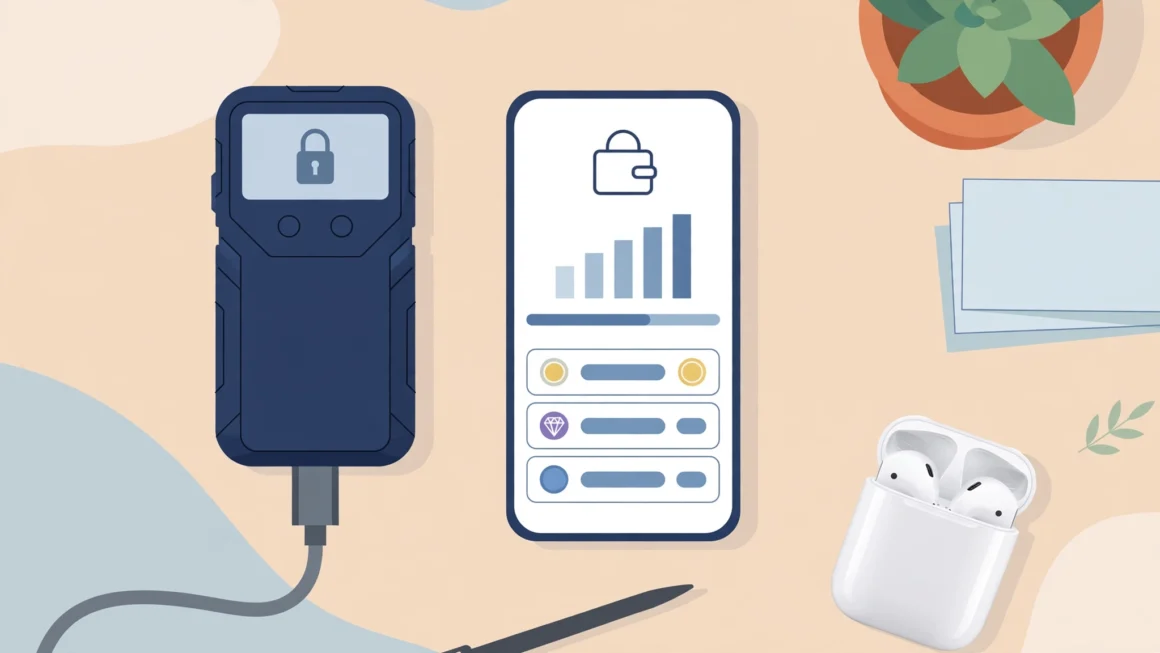
- Hardware (cold) wallets are physical devices that keep your keys offline — the standard choice for larger, long-term holdings.
Whichever you choose, you will be given a recovery phrase of 12–24 words. Write it on paper, store it somewhere secure and private, and never type it into a website, share it, or photograph it. Anyone with that phrase controls your money, and no legitimate company will ever ask for it. When transferring, always send a small test amount first and double-check the address and network — a correct-looking transfer to the wrong network or address is usually gone forever.
After You Buy: A Simple Safety Routine
Your responsibilities do not end at purchase. In your first weeks as an owner, build these habits. Check that you can still log in to your exchange and wallet, and that your two-factor authentication works — discovering a broken login during a crisis is miserable. Save your transaction confirmations and record the date, amount, and price of every purchase in a simple spreadsheet; this takes minutes now and saves hours at tax time. Revisit your recovery phrase storage once, calmly, and confirm it is written correctly, legible, and somewhere only you can access.
Then practice the most underrated skill in crypto: doing nothing. New owners tend to check prices obsessively and react to every movement. Set a review rhythm — weekly or monthly is plenty for a long-term holder — and decide in advance what, if anything, would make you buy more or sell. Finally, tell no one unnecessary details about your holdings. Publicly advertising that you own crypto, and how much, makes you a target for scams and worse. Quiet, methodical, and boring is exactly what safe ownership looks like.
Common Beginner Mistakes to Avoid
- Buying because of hype. If a coin is trending because of celebrity posts or viral videos, you are likely late, not early.
- Skipping the test transfer. The cheapest lesson in crypto is a small one. Learn the mechanics with tiny amounts.
- Ignoring fees and taxes. Track every purchase. In many countries, selling or swapping crypto is a taxable event, and your future self will thank you for clean records.
- Falling for “support” scams. Fake customer-support accounts swarm social media. Only use contact channels from the exchange’s official website.
- Panic decisions. Prices will swing the day after you buy — that is normal. A plan made calmly in advance beats reactions made in fear or euphoria.
Frequently Asked Questions
How much money do I need to start?
Most exchanges let you start with the equivalent of $10–$50, and you can buy a fraction of a coin. Starting small while you learn is a feature, not a limitation.
Is it safe to leave my crypto on the exchange?
For small amounts and short periods on a reputable exchange, the risk is relatively contained, but it is never zero. For larger or long-term holdings, a wallet you control — especially a hardware wallet — is the safer standard.
Can I buy crypto with a credit card?
Usually yes, but it is often the most expensive route: platforms charge higher fees for card purchases, and your card issuer may treat the transaction as a cash advance with immediate interest. A bank transfer is slower but normally much cheaper. And never borrow money in any form to buy cryptocurrency.
What happens if I send crypto to the wrong address?
Usually, it is lost permanently. Blockchain transactions cannot be reversed, which is why test transfers and careful address checking are essential habits from day one.
The Bottom Line
Buying cryptocurrency safely is mostly about process, not prediction: prepare your security, choose a reputable exchange, verify your account, start with a small deposit, place a simple order, and store your purchase properly. Move slowly, distrust urgency, and remember that in crypto you are your own bank — with all the responsibility that implies. Master these mechanics with small amounts first, and you will avoid the mistakes that cost beginners the most.