There is a force in finance so powerful that it turns modest, regular saving into genuine wealth — and it asks almost nothing of you except time. That force is compound interest: the process by which your money earns returns, and then those returns start earning returns of their own.
Compound interest is the reason long-term investors can end up with far more than they ever contributed, and why starting a few years earlier often matters more than investing larger amounts later. This guide explains how it works, shows the numbers honestly, and lays out how to put it to work in your own life.
Simple Interest vs Compound Interest
With simple interest, you earn returns only on your original deposit. Put 1,000 away at 5 percent simple interest, and you earn 50 every year — the same 50, forever. After 20 years you would have 2,000.
With compound interest, each year’s earnings are added to your balance, and the next year’s interest is calculated on the bigger total. That same 1,000 at 5 percent compounded annually grows to about 1,276 in five years, 1,629 in ten, and roughly 2,653 in twenty — not 2,000. The extra 653 is interest earned on interest, and the gap widens dramatically the longer you wait.
Why Compounding Accelerates Over Time
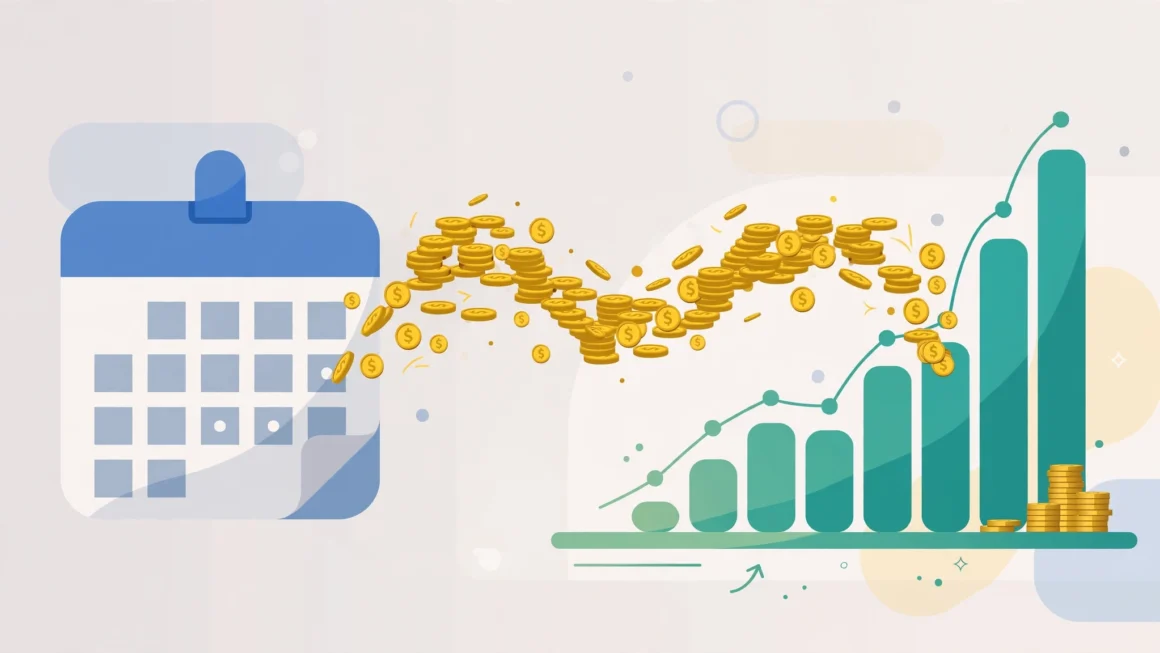
Compounding growth is exponential, not linear, and exponential curves look deceptively flat at the beginning. In the early years, the growth seems disappointing — your balance grows mostly because of what you put in, not what it earns. But the curve bends upward relentlessly. Eventually, the annual earnings on a mature portfolio can exceed the annual contributions that built it.
This is the single most important chart in personal finance, even if you only picture it: a line that creeps for years, then climbs steeply. Everyone who benefits from compounding passes through the boring flat part first. The people who quit during it never reach the steep part.
The Three Ingredients of Compound Growth
1. Principal — what you put in
Your contributions are the raw material. Regular monthly deposits feed the machine far more reliably than occasional large ones, because they keep new money arriving in all market conditions.
2. Rate of return — how fast it grows
Higher returns compound faster, but chasing unrealistic returns usually ends in losses. Historically, diversified stock portfolios have grown faster than savings accounts or bonds over long periods, with more ups and downs along the way. The return you actually keep is what matters — which is why fees and taxes, discussed below, deserve attention.
3. Time — the ingredient you cannot buy back
Time is the exponent in the formula, which makes it the most powerful ingredient of all. Doubling your contribution doubles the outcome; doubling your time can multiply it several times over. This is why financial educators repeat one sentence so often: the best time to start was years ago, and the second-best time is today.
A Tale of Two Savers
Consider two people who each save 200 a month into an investment growing at a steady illustrative rate. The first starts at age 25 and stops contributing at 35 — ten years of deposits, then leaves the money untouched. The second starts at 35 and contributes every single month until 65 — thirty years of deposits, three times as much money paid in.
Counter-intuitively, the early starter can finish ahead. Their money enjoyed a full decade of compounding before the second saver even began, and every contribution had up to forty years to grow. The late starter’s larger total contributions never quite close the gap. Real markets do not grow in straight lines, so treat this as an illustration of the principle rather than a promise — but the principle itself never changes: early money is disproportionately valuable.
The Rule of 72: A Quick Mental Shortcut
Want to know how long your money takes to double? Divide 72 by your annual return. At 6 percent, money doubles roughly every 12 years. At 8 percent, every 9 years. At 3 percent — closer to a typical savings account — every 24 years.
The same rule exposes the cost of waiting. Delay starting by one doubling period and you do not lose a little — you roughly halve the final result. It also explains why inflation matters: at 3 percent inflation, cash under the mattress loses half its buying power in about 24 years. Money must compound at least as fast as prices rise just to stand still.
Compounding Works Against You Too: Debt
Compound interest is neutral — it amplifies whatever it is applied to. Credit card balances compound against the borrower, which is why a modest balance can grow stubbornly even while you make payments. A card charging around 20 percent annually doubles an unpaid balance in under four years.
This is why the standard order of operations puts expensive debt first: eliminating a 20 percent interest charge is a guaranteed 20 percent “return” that no investment can promise. Only after high-interest debt is gone does investing’s positive compounding get a fair chance to outrun it.
How to Put Compound Interest to Work
- Start now, start small: a modest amount invested today is worth more than a larger amount invested “someday.”
- Automate contributions: scheduled monthly investing keeps the principal growing without relying on motivation. As our investing for beginners guide shows, automation is the habit that makes everything else work.
- Reinvest everything: dividends and interest should be reinvested automatically, so they join the principal and start compounding too.
- Keep fees low: a fund charging 1 percent a year versus 0.1 percent sounds trivial, but over thirty years the expensive fund can consume a quarter or more of your potential growth. Fees compound too — against you.
- Use tax-advantaged accounts: retirement accounts shelter growth from annual taxes, letting the full amount keep compounding.
- Do not interrupt it: panic-selling during downturns and withdrawing for lifestyle spending both reset the curve. Protect the process.
How Starting Age Changes the Ending
To see the time effect concretely, imagine a single deposit of 5,000 growing at an illustrative 7 percent a year, with nothing added. Left alone for 10 years, it becomes about 9,800. For 20 years, about 19,300. For 30 years, about 38,000. For 40 years, roughly 74,900 — fifteen times the original deposit, from growth alone.
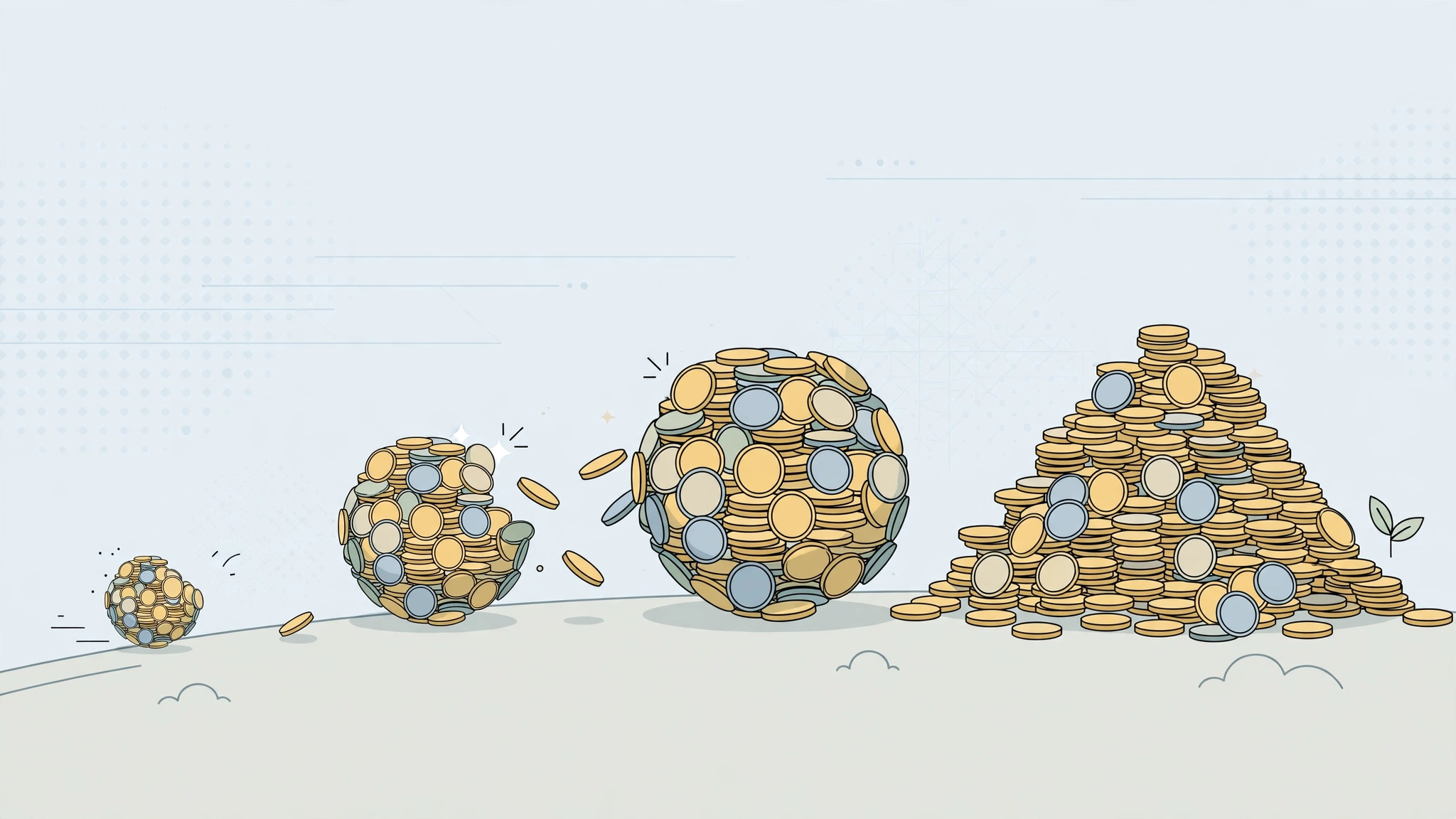
Now notice the pattern: each decade roughly doubles the money, but the later doublings are worth far more in absolute terms. The jump from year 30 to year 40 adds about 36,900 — more than the first three decades combined added before it. That is the steep part of the curve, and only people who started early (or stay invested long) ever reach it. A saver who begins at 45 instead of 25 does not just lose twenty years of growth; they lose the two largest doublings of all.
Small Increases Have Outsized Effects
The mathematics of compounding rewards modest improvements surprisingly generously. Saving 250 a month instead of 200 — one modest lifestyle adjustment — adds 25 percent more contributions, but because every extra deposit also compounds for decades, the final difference can be far larger than people expect. The same applies to returns: reducing fund fees from 1 percent to 0.1 percent does not sound dramatic, yet over a 30- to 40-year horizon it can leave you with tens of thousands more, purely by stopping the slow leak.
Even time works this way at the margins. Contributing at the start of each month rather than the end, choosing the account with slightly better tax treatment, reinvesting a dividend instead of spending it — each is trivial alone, but compounding is a machine for turning trivial advantages into meaningful ones.
Protecting the Process from Yourself
The biggest threat to compounding is rarely mathematics; it is interruption. Every withdrawal for a non-emergency, every panic sale during a crash, every year of “waiting for the right moment” cuts the curve and pushes the steep section further away. Investors who benefit most from compounding tend to share unglamorous habits: they automate contributions so willpower is not required, they keep a separate emergency fund so investments are never raided, they check balances rarely, and they treat market downturns as weather — unpleasant, temporary, and no reason to dismantle the house.
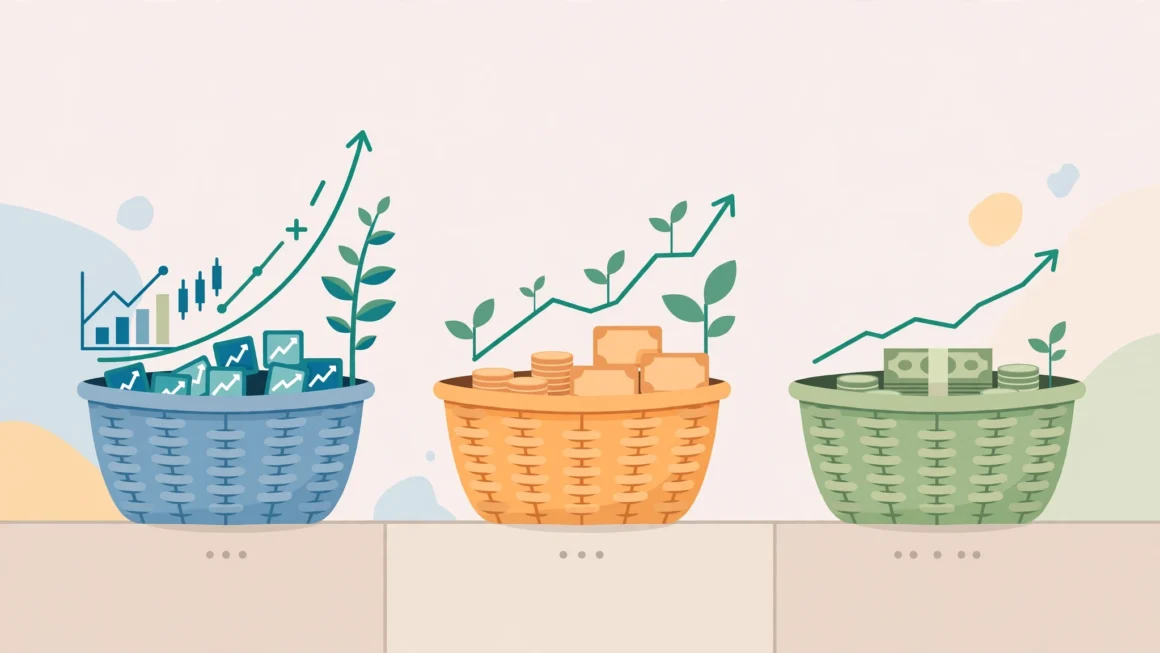
It also helps to separate accounts by purpose. Money compounding for retirement in twenty years should live apart from money needed for next year’s expenses, because mixing them invites spending the future during a moment of present enthusiasm. Labels and separate accounts are simple fences, but fences are what long processes need.
Compounding in Everyday Life Beyond Investing
Once you see compounding, you notice it everywhere. A savings habit of even one percent of income, raised slightly each year, snowballs into a serious rate by mid-career. Skills compound too: an hour of deliberate practice a day becomes expertise over a decade, because each new layer builds on everything beneath it. Even reputation works this way — small acts of reliability accumulate into trust that opens doors no single effort could.
The reverse is equally true, which is the sobering half of the lesson. Small debts left to grow, small expenses repeated daily, and small delays in starting all compound quietly in the wrong direction. Nobody drifts into serious financial trouble or serious wealth by accident; both are usually the visible end of invisible daily arithmetic. Understanding compound interest is really about learning to ask one question about any repeated behavior: if this continues and compounds for ten years, where does it take me?
Setting Your First Compounding Goal
Abstract principles become real when attached to a number. Pick a first milestone — perhaps an emergency fund, or the first 10,000 invested — and calculate backwards: what monthly contribution, over what period, at a conservative assumed return, reaches it? Online compound interest calculators make this a two-minute exercise, and most people find the required monthly amount surprisingly achievable once time is allowed to do its share of the work.
Then automate that contribution the same day. Compounding rewards the people who set the machine running and protect it, not the people who admire the mathematics. Your future balance will not remember how clever your plan was; it will only reflect how early you started and how rarely you interrupted it.
Frequently Asked Questions
How often should interest compound?
More frequent compounding (monthly or daily rather than annually) grows money slightly faster, but the difference is small compared with the effects of your contribution rate, your return, and especially your time horizon.
Is compound interest guaranteed in investments?
No. Bank deposit interest is contractual, but investment returns vary — some years are negative. Compounding in investing describes how gains build on gains over long periods on average, not a guaranteed annual rate.
What is a realistic rate of return to assume?
For planning, many people use conservative long-term assumptions in the range of 5 to 7 percent annually for a diversified portfolio, acknowledging real results will vary. Using modest assumptions leads to more robust plans than optimistic ones.
The Bottom Line
Compound interest is simple to describe and life-changing to use: your money earns returns, those returns earn returns, and time turns that cycle into serious growth. Feed it regularly, keep its costs low, defend it from expensive debt and panic, and above all give it years. In wealth building, time is the one ingredient no amount of money can buy later — which makes starting today the smartest move available to you.
This article is educational content, not personalized financial advice. Consider your own goals and circumstances, and consult a qualified financial professional before making investment decisions.