Most small businesses spend most of their marketing budget chasing new customers, yet real, steady growth often comes from people who have already bought from you once. That is why practical customer retention strategies deserve just as much attention as advertising, social media, or search rankings. Keeping a customer is not about tricks or pressure. It is about giving people a clear reason to come back, making it easy for them to do so, and reminding them at the right moment that you can help them again.
If you run a shop, a service business, an online store, or a freelance practice, you already know how hard the first sale can be. You have to earn attention, build trust, answer questions, and convince someone to take a chance on you. When that same person returns, almost all of that work is already done. They know your quality, they know how you work, and they need far less convincing. This guide walks through simple, proven ways to turn more first-time buyers into repeat customers, without a large budget or a complicated system.
Why Retention Is Cheaper and More Profitable
Acquiring a new customer usually costs far more than keeping an existing one. You pay for ads, content, discounts for first orders, and the time it takes to answer pre-sale questions. With a returning customer, those costs largely disappear. Even a small improvement in retention can have a big effect on profit, because repeat customers tend to buy more often, spend a little more each time, and recommend you to others.
The real cost of losing a customer
When a customer quietly leaves, you lose more than one sale. You lose every future purchase they might have made, plus the referrals they might have sent your way. For example, a local coffee shop that loses a regular who spent $20 a week does not lose $20. It loses more than $1,000 over a year. Looking at lifetime value, not just the next transaction, changes how you think about service, follow-up, and small gestures of appreciation.
Repeat customers buy with more confidence
Trust reduces friction. A returning customer does not need to compare five competitors, read every review, or worry about whether you will deliver. That confidence often leads to larger orders and faster decisions. It also makes them more forgiving when something small goes wrong, as long as you handle it well. In short, retention does not just save money. It makes revenue more predictable, which helps you plan stock, staffing, and cash flow with far less stress.
- Lower marketing cost: You spend less to earn each repeat sale.
- Higher lifetime value: Loyal customers buy more over time.
- Free referrals: Happy regulars recommend you without being paid to do so.
- Useful feedback: Long-term customers tell you what to improve.
Understand Why Customers Leave and Why They Stay
You cannot fix retention if you do not know why people stop buying. In most cases, customers do not leave because of one dramatic failure. They drift away because they forgot about you, found a slightly easier option, felt unappreciated, or had a small problem that nobody resolved. The good news is that most of these reasons are within your control.
Ask, listen, and track the answers
Start by asking simple questions. Add a short survey after a purchase, ask one question in a follow-up email, or talk to regulars in person. Useful questions include: What almost stopped you from buying? What would make you buy again sooner? And what do we do better than alternatives? Keep the answers in a spreadsheet or customer record so patterns become visible. If several people mention slow replies, confusing checkout, or unclear pricing, you have found a retention problem worth fixing first.
You should also watch basic numbers. Track how many customers buy a second time within 30, 60, or 90 days, depending on your business. Note which products bring people back and which are usually one-time purchases. You do not need advanced software to start. A simple monthly review of repeat purchase rate and average order value will tell you whether your efforts are working.
Segment customers by behaviour, not just demographics
Not all customers need the same message. Someone who bought last week needs a thank-you and helpful tips for using their purchase. Someone who has not bought in six months needs a gentle reminder and perhaps a reason to return. Group customers by recency and frequency: new customers, active regulars, and at-risk customers who have gone quiet. Tailoring your follow-up to each group makes your communication feel relevant instead of generic, and relevance is what keeps people engaged.
Deliver an Experience Worth Coming Back For
No loyalty program can save a poor experience. Retention starts with the basics: a good product, honest pricing, clear communication, and reliable delivery. Once those basics are solid, small details make the experience memorable and worth repeating.
Make every step easy and predictable
Review the journey a customer takes, from first contact to after the sale. Is it easy to find prices, book, pay, or reorder? Do you confirm orders quickly and give clear timelines? Do you let people know if there is a delay before they have to ask? Predictability builds trust. For service businesses, a simple checklist helps: confirm the appointment, explain what will happen, deliver on time, and follow up the next day to check everything is fine. For online stores, clear shipping information, simple returns, and a reorder button can remove most of the friction that stops a second purchase.
Add small moments of care
People remember how you made them feel. A handwritten thank-you note in a parcel, remembering a regular customer’s name and usual order, or sending a useful tip a week after purchase all cost very little. What matters is consistency. Choose two or three small touches you can deliver every time, rather than grand gestures you can only manage occasionally. Over time, those touches become part of your reputation and a reason customers choose you over a cheaper competitor.
Consistency also applies when things go wrong. Mistakes will happen in any business. How you respond decides whether a customer leaves or becomes more loyal. A practical approach is to listen without interrupting, apologise clearly, fix the problem quickly, and add a small goodwill gesture when it is appropriate. Then check in later to confirm the customer is satisfied. Handled well, a complaint can actually strengthen the relationship because it proves you take people seriously.
Stay Connected With Smart, Helpful Communication
Many customers do not leave because they are unhappy. They leave because they forget. Regular, helpful communication keeps your business in mind without annoying people. The key is to be useful first and promotional second.
Use email and messages with a clear purpose
Every message you send should answer a simple question for the customer: why does this matter to me now? Good retention messages include order updates, restock alerts for items they bought before, seasonal reminders linked to their past purchases, and short guides that help them get more from what they already own.
Timing matters as much as content. Send a thank-you message within a day of purchase, a helpful tip within the first week, and a reorder reminder based on how long the product normally lasts. If you sell consumables that last about a month, a polite reminder at day 25 is a service, not spam. Always make it easy to unsubscribe or change preferences, and respect those choices immediately.
Automate the routine, keep the personal touch
As your customer list grows, doing all of this manually becomes difficult. This is where AI automation for small businesses can help with welcome emails, reminders, review requests, and win-back messages, while you still handle personal replies and problem cases yourself. Start with just two automated flows: a post-purchase thank-you sequence and a reminder for customers who have not bought in a while. Review the results monthly, improve the wording, and only add more automation when the basics are working well.
- Welcome: Thank new customers and set clear expectations.
- Post-purchase: Share tips that help them succeed with the product.
- Reminder: Prompt a reorder or rebooking at the natural time.
- Win-back: Reach out to quiet customers with a friendly, low-pressure offer.
Reward Loyalty and Win Back Lost Customers
Once your experience and communication are in place, a simple reward system can give customers an extra reason to return to you rather than a competitor. The best programs are easy to understand, easy to use, and valuable enough to notice.
Design a loyalty offer people actually value
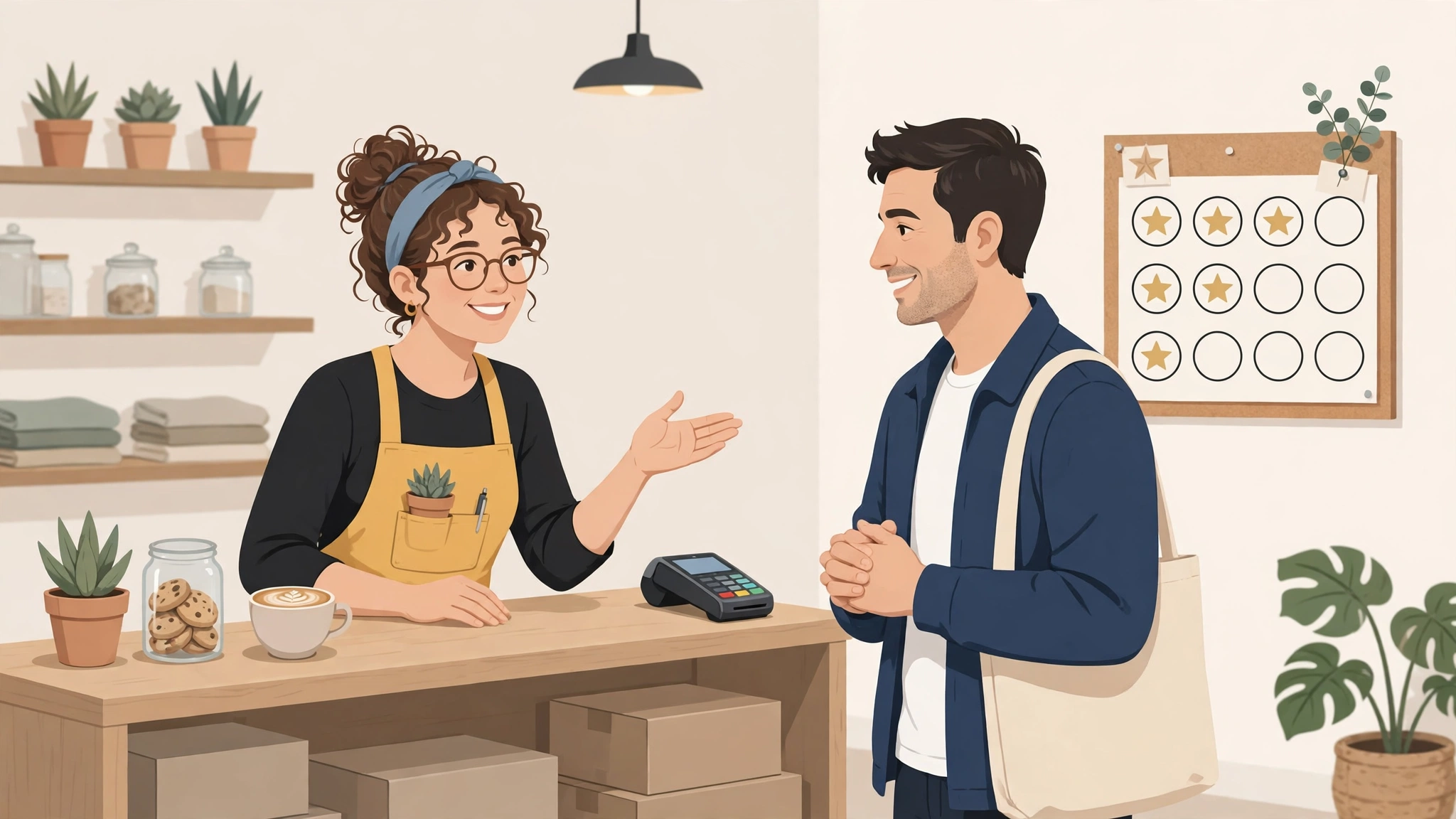
You do not need points, tiers, and complicated rules. For many small businesses, a straightforward offer works best: buy five, get the sixth free; spend a set amount and receive a credit; or get early access to new products and priority booking. Test one idea, explain it in one sentence, and make sure staff can apply it without confusion. If customers need a long explanation, the program is too complex.
Recognition can matter as much as discounts. Featuring a loyal customer in your newsletter with their permission, sending a birthday greeting, or offering regulars a free upgrade on a quiet day all build goodwill without cutting your prices for everyone. This approach protects your margins while still making repeat customers feel valued.
Win back customers who have gone quiet
Some customers will still drift away, and that is normal. A calm win-back effort can recover a useful share of them. Identify customers who have not bought within your usual cycle, then send a short message: acknowledge the gap, remind them of what they bought before, and offer one clear next step. Sometimes a small incentive helps, but often a new product, an improved service, or simply being remembered is enough.
Also learn from those who do not return. If a win-back reply says your prices rose, your location changed, or a competitor was faster, record that reason. A pattern in those replies is valuable market research you did not have to pay for, and acting on it improves retention for everyone else.
Frequently Asked Questions
How much cheaper is retention than acquisition?
It varies by industry, but acquiring a new customer commonly costs several times more than keeping an existing one, because advertising, introductory discounts, and onboarding time add up. The exact ratio matters less than the direction: repeat sales are almost always more profitable, so even modest retention improvements usually pay for themselves quickly.
What is the first retention strategy a small business should try?
Start with a reliable post-purchase follow-up. Thank the customer, help them get value from what they bought, and remind them at the right time to buy or book again. This single habit fixes the most common cause of lost customers, which is simply being forgotten, and it costs almost nothing to implement.
How do I measure whether my retention efforts are working?
Track three simple numbers each month: repeat purchase rate, which is the share of customers who buy more than once; customer lifetime value, which is average spend multiplied by how long customers stay; and churn or lapse rate, which is how many regulars stop buying. If repeat rate and lifetime value rise over several months, your strategy is working.
The Bottom Line
Customer retention is not a single tactic. It is a habit built from understanding why people leave, delivering a reliable and caring experience, staying in touch with helpful messages, and rewarding people who choose you again. None of this requires a big budget. It requires attention, consistency, and a willingness to look at your business from the customer’s side.
Start small this week. Pick one step from this guide, such as a thank-you follow-up, a reorder reminder, or a simple loyalty offer, and put it into practice. Measure the result for a month, then add the next step. Over time, those small improvements compound into a loyal customer base that buys more often, costs less to serve, and recommends you to others. That is cheaper than constant acquisition, and it is smarter too, because it builds a business that grows on trust rather than on endless advertising spend.