Artificial intelligence now helps decide who gets a job interview, whose loan is approved, which news you see, and what a self-driving car does in an emergency. Those are moral decisions, whether or not anyone intended them to be. That is why ai ethics has moved from philosophy seminars into boardrooms, courtrooms, and parliaments. This guide explains the three questions at the heart of the field — bias, privacy, and control — in plain language, and shows what governments, companies, and ordinary people can each do about them.
Why AI Ethics Matters Now
Ethics used to be a slow conversation. AI made it urgent for three reasons. First, scale: a biased human manager harms dozens of people; a biased algorithm can harm millions before anyone notices. Second, speed: automated systems act in milliseconds, with no pause for a person to say “wait, that seems wrong.” Third, opacity: modern AI systems, especially deep learning models, often cannot explain their own decisions in terms a human can inspect. When a system is fast, vast, and hard to question, the values built into it — deliberately or by accident — matter enormously.
Bias: When AI Learns Our Worst Habits
AI systems learn from data, and data is a record of the world as it has been — including its unfairness. If a company historically hired mostly men for technical roles, a model trained on its past decisions may learn to favor male applicants, even if nobody programs it to. This is not hypothetical: a major retailer famously scrapped an experimental hiring tool after discovering it penalized résumés containing the word “women’s,” as in “women’s chess club.”
Where Bias Enters the System
- Training data: unrepresentative or historically skewed examples teach skewed lessons.
- Labels: if humans labeled the data inconsistently or prejudicially, the model absorbs it.
- Proxies: even when protected traits like race are removed, other variables — postal code, name, school — can act as stand-ins.
- Feedback loops: a system that predicts crime in over-policed neighborhoods sends more patrols there, generating more arrests there, “confirming” its own prediction.
What Can Be Done About Bias
The fixes are partly technical and partly organizational. Teams can audit training data for representation, test models on outcomes across demographic groups before launch, and monitor them after launch for drift. Just as important is who builds the system: diverse teams notice failure modes that homogeneous teams miss. And some decisions — a growing number of ethicists argue — should simply not be automated at all, because no dataset can make them fair.
Privacy: Your Data Is the Fuel
AI runs on data, and the most valuable data is personal: your photos, voice, location, purchases, messages, and health details. Every convenience AI offers — the eerily good recommendation, the assistant that knows your calendar — is purchased with information about you.
The Core Privacy Problems
Collection without real consent. Few people read privacy policies, and “agree or leave” is not a meaningful choice when a service is essential. Secondary use. Data given for one purpose — unlocking your phone with your face — can quietly train unrelated systems. Re-identification. Supposedly anonymous datasets have repeatedly been shown to reveal individuals when combined with other data. Permanence. Once your data is baked into a trained model, deleting it is technically difficult; models do not have a simple “forget this person” button, though researchers are working on machine unlearning.
Regulation Is Catching Up
Laws like Europe’s GDPR give people rights to access, correct, and erase personal data, and the EU’s AI Act adds risk-based rules specifically for AI systems, banning some uses outright — such as untargeted scraping of faces to build recognition databases — and imposing strict duties on high-risk applications. Other countries are moving in similar directions at different speeds. The direction of travel is consistent: collecting everything and apologizing later is becoming legally expensive.
Control: Who Is in Charge, and Who Is to Blame?
The third pillar of AI ethics is control — keeping humans meaningfully in charge of systems that act in the world.
The Accountability Gap
When a human employee discriminates, crashes, or defrauds, responsibility is clear. When an AI system does harm, responsibility smears across the data collectors, the model builders, the company that deployed it, and the operator who trusted it. Victims can find that everyone involved points at someone else — or at the algorithm itself, which cannot be punished or sued. Ethicists call the lazy version of this “the computer says no” defense, and closing the accountability gap means insisting that a named organization is always answerable for its system’s behavior.
Keeping Humans in the Loop
For high-stakes decisions — medical, legal, financial, military — the emerging standard is meaningful human oversight: a person with the authority, competence, and time to overrule the machine. A rubber-stamp reviewer who approves a hundred automated decisions an hour is oversight in name only. This matters in everyday business tools too. As we describe in our guide to AI automation for small businesses, the healthiest pattern is automation with a human checkpoint: the AI drafts, routes, and recommends, but a person approves anything that affects customers, money, or rights.
The Longer-Term Control Question
Beyond today’s systems sits a debated question: as AI grows more capable and autonomous, how do we ensure its goals remain aligned with human values? Researchers disagree about timelines and risk levels, but most agree the prudent path is investment in safety research, transparent evaluation, and systems that remain corrigible — able to be corrected, retrained, or shut down — rather than treating control as a problem for later.
Deepfakes and Synthetic Media: The Trust Problem
One ethical front has arrived faster than the rules: AI can now generate convincing fake images, audio, and video of real people. The harms are concrete — fraudulent calls imitating a family member’s voice, fabricated videos of public figures, and non-consensual imagery of private individuals. Each incident erodes something societies run on: the assumption that seeing and hearing is evidence.
How the Fightback Works
Responses are developing on three levels. Technology: detection tools and content credentials that cryptographically sign genuine media at the moment of capture, so authenticity can be verified rather than guessed. Platforms: labeling requirements for AI-generated content and rapid removal channels for impersonation. Law: new statutes in many jurisdictions specifically criminalizing deceptive deepfakes and non-consensual synthetic imagery. None of these is sufficient alone; together, they aim to keep the cost of deception high and the value of verified media intact. The practical advice for individuals is old-fashioned: verify surprising claims through a second channel, especially when money or urgency is involved.
Ethics in Practice: Audits, Standards, and Red Lines
Principles are easy to publish and hard to practice, so the field has been building machinery to make ethics operational.
From Principles to Checklists
Serious organizations now run impact assessments before launching AI systems: Who could this harm? What data does it need? How will we know if it misbehaves? Independent audits — modeled on financial auditing — are emerging as a profession, with third parties testing models for bias, security, and truthful behavior before and after deployment. Documentation practices like model cards and dataset datasheets record what a system is, what it was trained on, and where it should not be used, so downstream users are not guessing.
Red Lines Worth Naming
Across frameworks, a consensus set of prohibitions is forming: no social scoring of citizens, no manipulative systems aimed at children, no autonomous weapons that select and engage targets without human judgment, and no covert mass surveillance using biometric identification. You may disagree about where exactly the lines sit, but the existence of lines — debated publicly and enforced legally — is what separates ethics from marketing. When a company announces its AI principles, the useful question is not whether the words sound noble; it is which uses the company has actually refused, and who inside it can say no.
What Each of Us Can Do
If You Build or Buy AI
Ask vendors hard questions: What data trained this? How was it tested for bias? Can it explain its decisions? What happens when it is wrong? Prefer tools with audit trails, and keep a human appeal path for anyone affected by an automated decision.
If You Use AI as an Individual
Read the privacy toggles, not the whole policy — most major services let you limit data retention and opt out of training. Be thoughtful about what you paste into chatbots, especially health, financial, and workplace information. And when an automated decision harms you, contest it: appeal mechanisms exist more often than companies advertise, and every challenge improves the system.
If You Vote
AI rules are being written now, in legislatures and standards bodies, and public pressure demonstrably shapes them. Supporting transparency requirements and funding for independent auditing is civic participation in the technology that will mediate much of daily life.
AI Ethics Around the World
Different societies are answering these questions differently, and the contrast is instructive. The European Union has chosen comprehensive, risk-based regulation: the AI Act sorts applications into risk tiers, bans the most dangerous outright, and loads high-risk systems with documentation, testing, and human-oversight duties. The United States has relied more on sector rules and voluntary frameworks, with states beginning to legislate on specific harms like deepfake impersonation and automated hiring decisions. China has moved quickly on targeted rules — requiring labels on synthetic content and approval for certain recommendation algorithms — within a framework that emphasizes state oversight.
Why the Differences Matter to You
These regimes affect which products reach your market, what disclosures you see, and what rights you can invoke. They also create a natural experiment: within a few years, we will have real evidence about which approach best balances innovation with protection. For companies operating globally, the strictest major regime tends to become the default standard, which is why European rules already shape products used far beyond Europe’s borders.
Frequently Asked Questions
What is AI ethics in simple terms?
AI ethics is the study and practice of building and using artificial intelligence in ways that are fair, respectful of privacy, transparent, and accountable to humans. It asks not just “can we build this?” but “should we, and under what safeguards?”
Can AI bias be completely eliminated?
Probably not entirely, because data comes from an imperfect world and every definition of fairness involves trade-offs. But bias can be measured, reduced, disclosed, and monitored — and the worst harms usually come from systems nobody bothered to test. The realistic goal is managed, accountable imperfection, not a claim of perfect neutrality.
Who is responsible when an AI system makes a harmful decision?
Legally and ethically, responsibility rests with the humans and organizations that designed, sold, and deployed the system — not with the software itself. Laws differ by country and are evolving, but “the algorithm did it” is increasingly rejected by courts, regulators, and the public as an excuse.
The Bottom Line
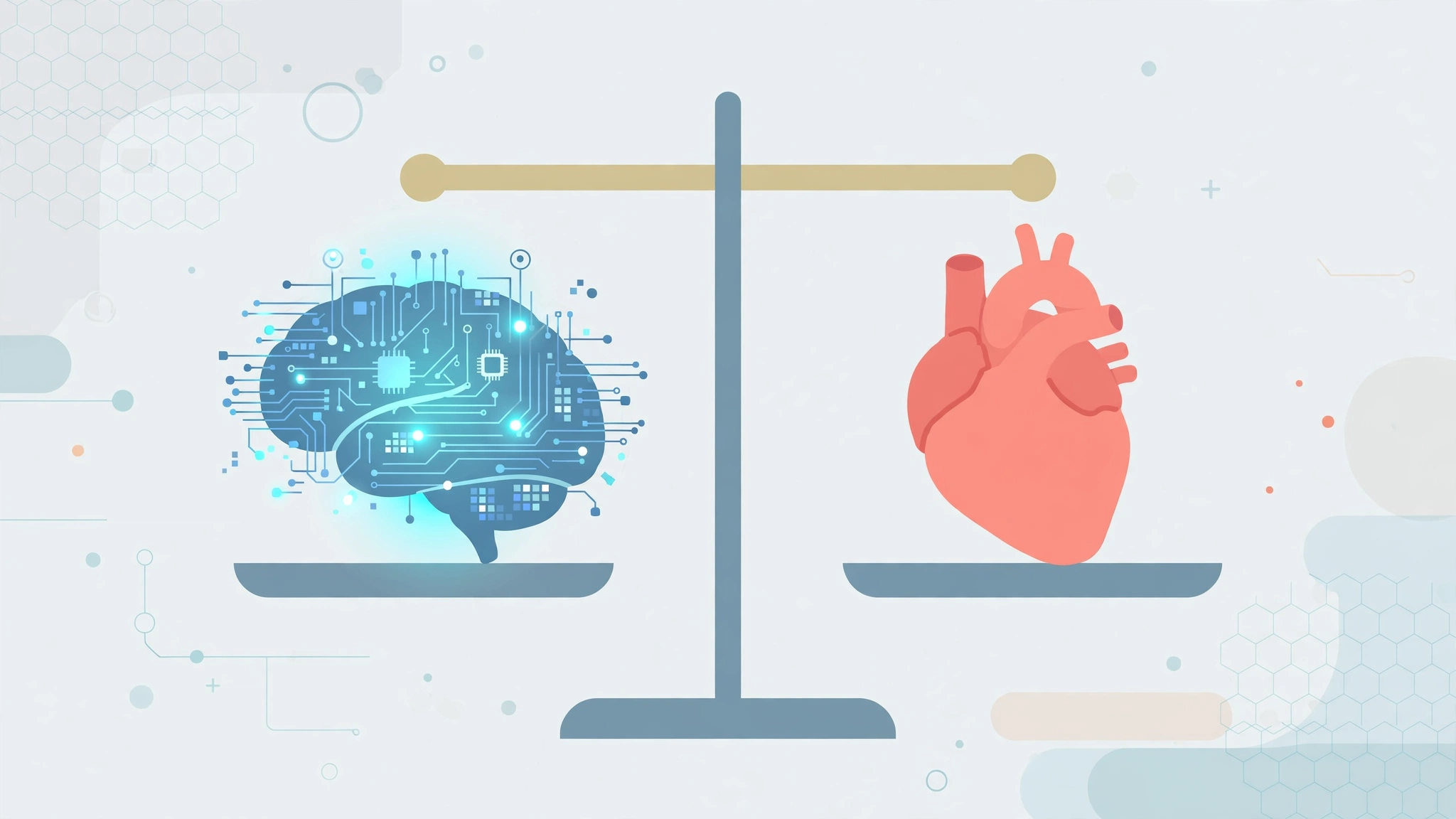
AI ethics comes down to three commitments: fight bias by testing systems against the people they affect, protect privacy by treating personal data as borrowed rather than owned, and preserve control by keeping humans answerable for machine decisions. None of this requires slowing innovation to a crawl — it requires building with the same care we expect in medicine, aviation, or any other field where errors hurt people. The technology is powerful precisely because it acts on the world; ethics is how we make sure it acts for us.