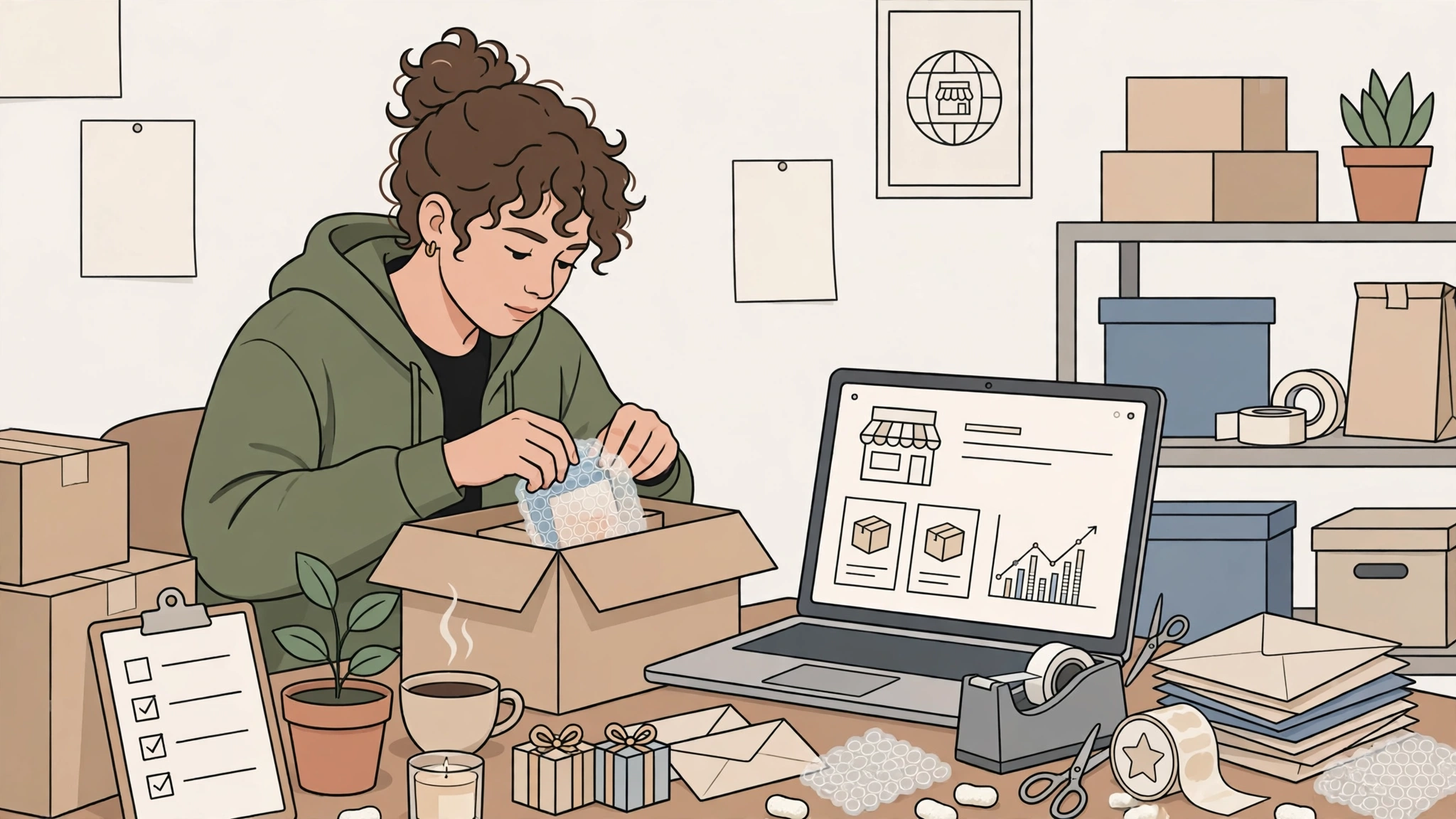
Selling online sounds technical, but the core idea is simple: you offer a product, a customer pays through the internet, and you deliver what they bought. This guide to ecommerce for beginners walks you through each step in plain language, from choosing what to sell to getting your first order. You do not need a big budget, a warehouse, or a computer science degree. You need a clear product, a trustworthy store, and the patience to improve one small thing at a time.
What E-commerce Actually Is
E-commerce, short for electronic commerce, is any business transaction that happens online. When someone buys shoes from a website, books a course, downloads an app, or orders groceries through a phone, that is e-commerce. For a small seller, it usually means a website or marketplace page where customers can browse products, pay securely, and arrange delivery.
There are a few common models. You can sell physical products you make or buy in advance. You can use print-on-demand, where items are produced only after an order arrives. You can dropship, where a supplier ships directly to your customer. You can also sell digital products such as ebooks, templates, music, or online courses, which have no shipping cost at all. Each model has trade-offs in profit, control, and workload, and beginners usually do best with the simplest one they understand.
Why Beginners Start Online
An online store can open with far less money than a physical shop. There is no rent for a storefront, and you can reach customers in other cities or countries. Your store is open all day and night, and you can test a product idea quickly before spending heavily. The trade-off is competition: customers can compare you with dozens of sellers in seconds, so clarity and trust matter enormously.
Step 1: Choose a Niche You Understand
A niche is a focused group of customers with a specific need. “Fitness products” is broad; “resistance bands and guides for people exercising in small apartments” is a niche. A narrow focus makes everything easier: your product choice, your words, your photos, and your advertising all speak to one clear person.
Start with problems you know. List hobbies, jobs, frustrations, and communities you already understand. Then ask three questions about each idea. Do people already spend money on this? Can I explain the benefit in one sentence? Can I reach these customers somewhere online, such as a forum, group, or search term? If the answer is yes three times, you have a candidate worth testing.
Check Demand Without Guessing
Search your idea on marketplaces and note how many sellers offer similar products and whether listings have reviews. Read the one-star and three-star reviews carefully; complaints reveal what buyers wish existed. Type your product words into a search engine and see what questions people ask. You are not looking for a market with no competition, because that often means no demand. You are looking for a busy market where you can be clearer, kinder, faster, or more specialized than average.
Step 2: Pick Products With Healthy Margins
Your price must cover far more than the product cost. It must also cover packaging, shipping subsidies, payment fees, platform fees, returns, and your time. A simple beginner rule is to aim for a selling price at least three times your total product cost, then adjust after real data arrives. Cheap products with tiny margins are hard to sell profitably because advertising and shipping eat the profit.
Good beginner products are usually light, durable, easy to photograph, and simple to explain. Fragile, oversized, or heavily regulated items create expensive problems. Start with a small range, perhaps three to ten related products, rather than a huge catalogue. A focused store looks more trustworthy and is easier to manage, and you can expand once you know what actually sells.
Source Products Responsibly
Compare at least three suppliers. Order samples and inspect them as a customer would: packaging, smell, finish, instructions, and delivery time. Check minimum order quantities, return policies for defective goods, and how the supplier handles delays. Keep records of costs in a simple spreadsheet from day one. Many new stores fail not because nobody wanted the product, but because the owner never knew the true cost of each sale.
Step 3: Choose Where to Sell
You have two main routes. Marketplaces such as Amazon, eBay, or Etsy bring built-in traffic and trust, but charge fees and limit your control. Your own store, built on a platform such as Shopify, WooCommerce, or Wix, gives you your own brand and customer data, but you must bring visitors yourself. Many beginners start on a marketplace to learn, then build their own store once sales are steady. Others start with their own store to build a brand from the beginning. Neither is wrong; choose based on your product and skills.
Whichever route you pick, tools can remove repetitive work. Order confirmations, abandoned-cart reminders, inventory counts, and customer messages can be partly automated. Learning from resources on AI automation for small businesses can help you save hours each week, even as a one-person shop.
Set Up the Essentials
Every store needs the same foundations. Register a short, memorable name and matching domain. Write an “About” page explaining who you are and why you sell this. Create clear policies for shipping times, returns, and refunds before your first sale, not after your first complaint. Add a contact method you actually check. These boring pages build the trust that turns visitors into buyers.
Step 4: Build Product Pages That Sell
A product page has one job: answer the visitor’s questions so completely that buying feels safe. Start with a clear title that says what the item is and who it is for. Use bright photos from several angles, including one photo showing the size in a real setting. If you can, add a short video of the product being used; motion answers questions that text cannot.
Write descriptions in two layers. First, a short paragraph about the benefit: what improves in the customer’s life. Second, a simple list of features and specifications: size, material, weight, compatibility, and what is in the box. Finish with delivery time, return terms, and a clear price with no surprises at checkout. Hidden fees are one of the top reasons people abandon a purchase.
Price With Intention
Do not copy a competitor’s price blindly; their costs are not your costs. Calculate your full cost per order, add the profit you need, and compare the result with the market. If your price is higher, your page must explain why: better material, faster delivery, a guarantee, or superior support. Small tests help. Change one thing at a time, such as the main photo or the headline, and watch results for at least a week before judging.
Step 5: Accept Payments and Arrange Delivery
Customers expect familiar, secure payment options: cards, and where popular, digital wallets or cash on delivery. Use a recognized payment provider rather than handling card details yourself; the provider manages security and compliance for a small fee per sale. Test the full checkout with a real small purchase before announcing your store. Ask a friend to buy something and report every moment of confusion.
For delivery, decide your shipping areas, costs, and timeframes, and display them before checkout. Package products so they survive a bad day in a delivery van. Include a small thank-you note and clear instructions for returns. Send tracking information automatically when you ship. Most customer anxiety comes from silence, so simple updates at “order received”, “shipped”, and “delivered” prevent most complaints.
Step 6: Get Your First Visitors
A beautiful store with no visitors sells nothing, so plan traffic from the start. Begin with free methods. Write helpful posts answering questions your customers search for. Share useful tips, not just product links, in communities where your customers gather. Ask early buyers for honest reviews and permission to share their photos. Set up your store so search engines can find it: descriptive titles, clear product names, and pages that load quickly on phones.
Paid advertising can work later, but start tiny. Promote one proven product to one narrow audience with a small daily budget, and judge by profit, not clicks. If an advert does not produce profitable sales after a fair test, stop it and improve the product page instead. Advertising amplifies what already works; it rarely fixes a weak offer.
Step 7: Serve Customers and Improve Weekly
Answer messages quickly and kindly, even when the customer is frustrated. Most problems are simple: a late parcel, a wrong size, a confusing instruction. Solve the problem first and analyze blame later. Keep a list of every question customers ask; each repeated question is a missing sentence on your product page or a missing step in your process.
Review simple numbers each week: visitors, how many added a product to the cart, how many bought, and your average order value. Improve the weakest step first. If many visit but few add to cart, your photos, price, or description need work. If many add but few buy, your checkout, shipping cost, or trust signals need work. Small, steady improvements beat occasional redesigns.
Common Beginner Mistakes to Avoid
The most common mistake is ordering large stock before proving demand. A product that friends praise may still not sell to strangers, so test with samples and small quantities first. The second mistake is copying big brands. Their prices, shipping deals, and advertising budgets are not yours, and imitation usually hides what makes your store special. The third mistake is neglecting the mobile experience. Most visitors will meet your store on a phone, so check every page on a small screen: text should be readable, buttons easy to tap, and checkout short.
Beginners also underestimate returns and customer service time. A cheap product with a high return rate can lose more money than an expensive product that rarely comes back. Finally, many new sellers quit during the quiet weeks before the first sales. Those weeks are normal. Use them to improve photos, write helpful content, and collect feedback from the few visitors you have. A store improves fastest when its owner treats slow periods as data, not as failure.
Frequently Asked Questions
How much money do I need to start?
You can start lean with a marketplace account or a basic store plan, samples of a few products, and simple packaging. Many beginners start with the cost of a few hundred dollars or less, then reinvest early profits. The essential rule is to test small before ordering large stock.
Do I need to register a business first?
Rules differ by country and by how much you sell. Many places let you start as an individual seller, but you may need registration, tax numbers, or licenses as you grow or for certain products. Check your local small-business authority early so growth never creates a legal surprise.
How long until I make my first sale?
It varies widely. A store with a clear niche, trustworthy pages, and active promotion may sell within days; others take weeks of adjustment. Focus on the process: one clear product, one clear audience, honest pages, and weekly improvements. Sales follow clarity and persistence more than luck.
The Bottom Line
E-commerce rewards beginners who keep things simple and finish each step properly. Choose a niche you understand, pick a few products with healthy margins, set up a trustworthy store, make buying and delivery painless, and improve one weak point every week. You do not need to be perfect to start; you need to start to learn what your customers actually want. Your first sale is not the finish line. It is the first real lesson, and every order after it teaches you how to build a business that lasts.