From busy emergency departments to small family clinics, ai in healthcare is quietly changing how care is delivered. It helps doctors read scans faster, reduces paperwork, supports earlier diagnosis, and gives patients better ways to monitor their health at home. At the same time, it raises important questions about accuracy, privacy, and fairness that cannot be ignored.
This guide explains, in plain language, what artificial intelligence is actually doing in medicine today. We will look at medical imaging, diagnostics support, administrative automation, drug discovery, and patient monitoring, along with the main benefits, the real risks, and what is likely to come next. The goal is not hype. It is a clear, balanced picture you can trust.
What AI in Healthcare Actually Means
AI in healthcare simply means using computer systems that can learn patterns from large amounts of medical data. These systems are trained on examples, such as thousands of labelled scans or anonymised patient records, and they learn to recognise patterns that help with a specific task. They do not think like doctors, and they do not understand a patient the way a clinician does.
Most medical AI tools are narrow. A tool designed to flag possible lung nodules on a chest scan cannot diagnose diabetes or decide on a treatment plan. Each system is built, tested, and approved for one defined job. That narrow focus is a strength, because it makes the tool easier to test carefully before it is used with real patients.
Support for clinicians, not a replacement
It is important to be clear from the start: AI supports clinicians rather than replacing them. A doctor or nurse remains responsible for diagnosis, treatment decisions, and care. AI can highlight something worth a second look, summarise information, or handle repetitive tasks, but it does not take responsibility for a patient, explain choices with empathy, or notice the many small details that matter in a real consultation.
Think of it like a very fast, very well-read assistant. It can process far more data than a person could in a day, and it never gets tired. But it can also be wrong, sometimes in ways that are not obvious. That is why human oversight, proper training, and clear rules are part of every responsible use of this technology.
Medical Imaging and Diagnostics Support
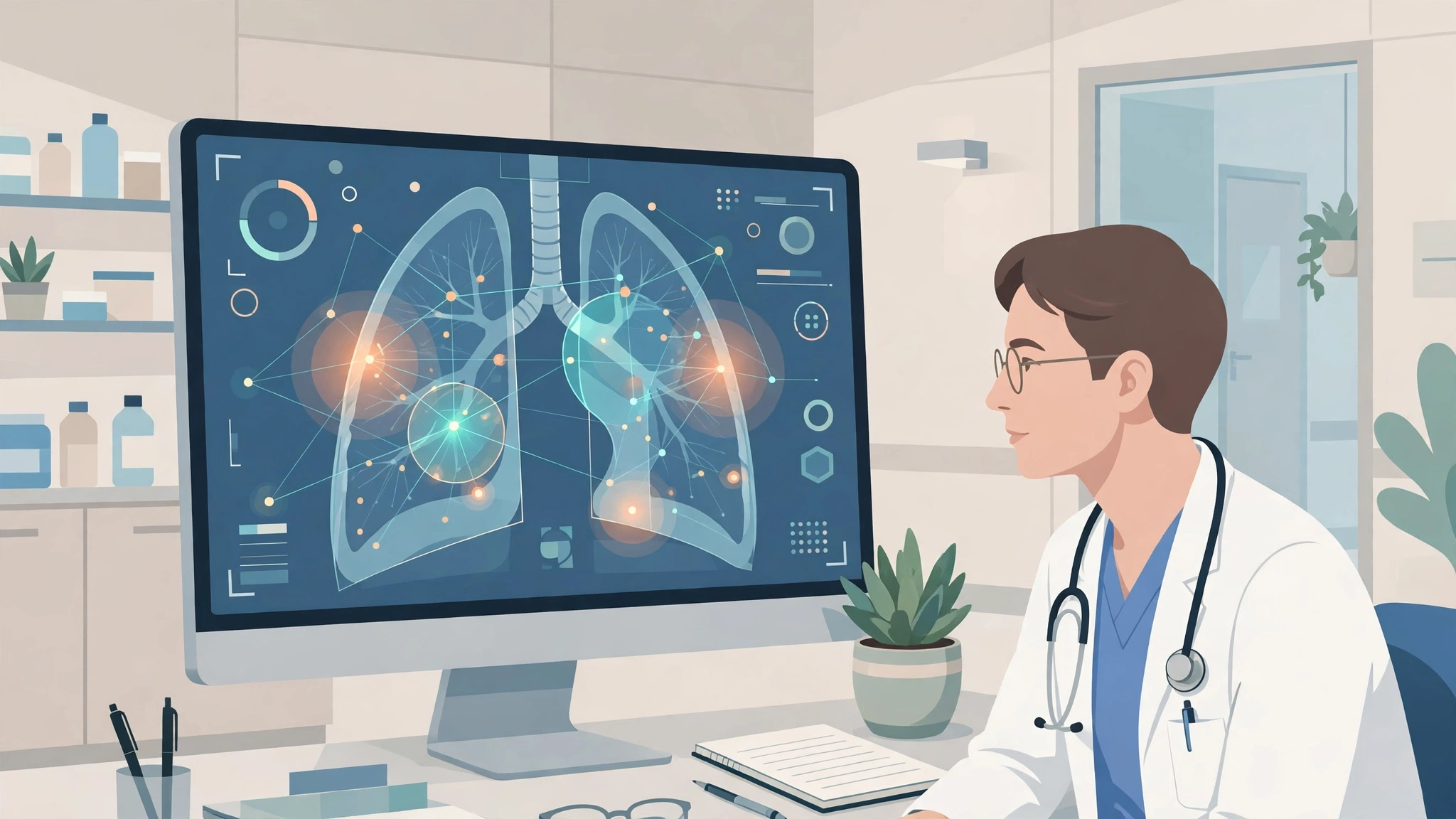
Medical imaging is one of the most established uses of AI in medicine. Radiologists and other specialists review huge numbers of X-rays, CT scans, MRIs, mammograms, and retinal images. AI tools can scan these images quickly, mark areas that look unusual, and help teams prioritise the most urgent cases first.
Where imaging AI helps most
In practice, imaging AI is often used to:
- Triage urgent cases: flagging scans that may show bleeding, a stroke, or a fracture so they are reviewed sooner.
- Spot subtle patterns: highlighting small nodules, lesions, or changes between an old scan and a new one.
- Reduce missed findings: acting as a second pair of eyes, especially during long or busy shifts.
- Measure consistently: tracking the size of a tumour or the volume of tissue over time in a standardised way.
Studies in several imaging areas have shown that AI assistance can improve detection rates and speed up reporting, particularly when it is combined with an experienced clinician. The best results usually come from the combination, not from the software alone. A radiologist still checks the finding, considers the patient’s history, and decides what it means.
Diagnostics beyond imaging
Diagnostics support goes beyond pictures. AI systems can help analyse blood test patterns, ECG readings, pathology slides, and combinations of symptoms and risk factors. For example, an algorithm might flag a patient whose results suggest a higher risk of sepsis or heart disease, prompting earlier review. These tools do not give a final diagnosis. They raise an alert, and a clinician investigates. Used well, that earlier warning can save valuable time. Used poorly, too many false alerts can cause alarm fatigue, which is why hospitals test and tune these systems carefully before relying on them.
Less Paperwork: Administrative Automation
Not all valuable AI in healthcare is clinical. Clinicians spend a surprising share of their day on administration: writing notes, coding records, scheduling appointments, processing referrals, and handling insurance forms. That time takes them away from patients, and it is a major cause of burnout.
Automation tools can transcribe consultations into draft notes for the clinician to check and sign, sort incoming messages, fill in routine forms, and help schedule appointments more efficiently. Hospitals also use AI to predict demand, manage beds, and reduce waiting times. The same principles that make AI automation for small businesses useful, such as removing repetitive manual work, apply in healthcare too, although the standards for accuracy and safety are much higher.
The benefit sounds simple, but it matters. If a doctor saves an hour a day on paperwork, that hour can go back to seeing patients, following up results, or simply finishing on time. Patients benefit as well through faster replies, shorter waits, and clearer communication. Even here, though, privacy matters, because these systems often process sensitive conversations and records.
Drug Discovery and Patient Monitoring
Finding new medicines faster
Developing a new drug traditionally takes many years and costs a great deal of money, and most candidate medicines fail along the way. AI can speed up the early stages by analysing chemical structures, predicting how a molecule might behave, and identifying promising compounds from enormous libraries that no human team could review manually.
AI also helps researchers find new uses for existing medicines, design better clinical trials, and identify which patients might be suitable for a study. This does not remove the need for laboratory testing, animal studies where required, human trials, and regulatory approval. Those steps remain essential for safety. AI mainly helps scientists decide where to look first, which can save time and resources without cutting corners on evidence.
Monitoring patients in hospital and at home
Patient monitoring is another fast-growing area. In hospitals, AI systems can watch streams of data such as heart rate, blood pressure, oxygen levels, and temperature, and alert staff when a pattern suggests a patient may be deteriorating. A single nurse cannot watch every number continuously, so an early warning can make a real difference.
At home, wearable devices and remote monitoring tools can track activity, sleep, heart rhythm, and blood sugar for people managing long-term conditions. The data can help care teams spot trends and intervene earlier, sometimes through a simple check-in rather than an emergency visit. This can be especially helpful for older patients and people who live far from a hospital. However, home monitoring should support regular care, not replace it, and any concerning symptoms should always be discussed promptly with a qualified health professional.
Benefits, Risks, and Challenges
The potential benefits are clear: faster and sometimes more accurate detection, more time for clinicians to spend with patients, more personalised care based on an individual’s data, and research that moves more quickly. For health systems under pressure from ageing populations and staff shortages, these gains could help care reach more people.
Those benefits will only be realised if the risks are handled honestly. Three concerns come up again and again.
Bias and fairness
An AI system learns from its training data. If that data mainly comes from one age group, ethnic group, sex, or type of hospital, the system may perform less well for everyone else. In medicine, that can mean missed diagnoses or unequal care. Developers and hospitals need to test tools across diverse patient groups, publish how they perform, and keep checking after launch, because performance can drift over time.
Privacy and security
Health data is among the most sensitive information there is. AI systems need large datasets to train and operate, which creates risks if data is shared too widely, stored insecurely, or used for purposes patients did not agree to. Strong encryption, strict access controls, anonymisation where possible, and clear consent are essential. Patients should know how their data is used, and organisations must comply with health privacy laws in their country.
Regulation and accountability
Medical AI is increasingly regulated as a medical device. Regulators such as the FDA in the United States and authorities in Europe require evidence that a tool is safe and effective for its intended use. Questions of accountability also matter: if an AI tool contributes to a wrong decision, who is responsible, the clinician, the hospital, or the developer? Clear rules, transparent reporting of errors, and ongoing monitoring are needed so that trust is earned rather than assumed. Cost is a further challenge, since the newest tools may first reach well-funded hospitals, widening gaps if access is not planned fairly.
What Comes Next
Over the next few years, expect steady, practical progress rather than sudden transformation. Imaging and triage tools will become more common in routine care. Voice tools that draft clinical notes will improve and spread. Hospitals will connect monitoring data more intelligently, so alerts become fewer, more accurate, and easier to act on.
Generative AI will also play a larger role, for example by summarising long patient records, drafting patient-friendly explanations of results, and helping researchers search medical literature. These uses need particular care, because generative systems can produce confident but incorrect text. In healthcare, every important output needs checking by a professional before it affects care.
Personalised medicine may advance as AI combines genetic information, lifestyle data, and medical history to help tailor prevention and treatment. That promise is real but gradual. Progress will depend less on impressive demonstrations and more on solid clinical trials, good data, staff training, and listening to patients about what they actually want from technology in their care.
Getting these tools into everyday practice will take more than good software. Hospitals will need reliable data systems, staff who are trained and confident in using the technology, and time to redesign workflows so AI fits how teams actually work. Small clinics and rural services will need affordable options and proper support, not just products designed for large hospitals. Patients will also need a voice in these decisions. When implementation is thoughtful and inclusive, adoption is more likely to succeed and to benefit everyone, not only the best-resourced providers.
Frequently Asked Questions
Will AI replace doctors and nurses?
No. AI is best at narrow, data-heavy tasks such as scanning images, spotting patterns, and handling paperwork. Diagnosis, treatment decisions, physical examination, empathy, and responsibility for care remain human work. The most likely future is clinicians working with AI tools, not being replaced by them.
Is AI diagnosis accurate and safe?
Some AI tools perform very well on the specific task they were tested for, but no system is perfect, and performance varies by tool, hospital, and patient group. That is why approved tools are tested before use, monitored afterwards, and always used with clinician oversight. AI output should be treated as support for a medical decision, never as a guarantee.
Is my health data private when AI is used?
It should be. Healthcare organisations are required to protect patient data, and responsible AI use involves encryption, limited access, and clear rules about consent and sharing. If you are unsure, you can ask your provider how your data is used, whether it is used to train AI systems, and what choices you have.
The Bottom Line
AI in healthcare is neither a miracle nor a threat on its own. It is a set of powerful tools that can help detect disease earlier, reduce paperwork, speed up research, and monitor patients more closely. Its value depends on how carefully it is built, tested, regulated, and used in real clinics.
The balanced view is the right one. Welcome the benefits, insist on evidence, protect privacy, and keep experienced clinicians at the centre of care. If health systems do that, AI can help deliver care that is faster, fairer, and more personal, while keeping the human judgement and compassion that medicine has always depended on.