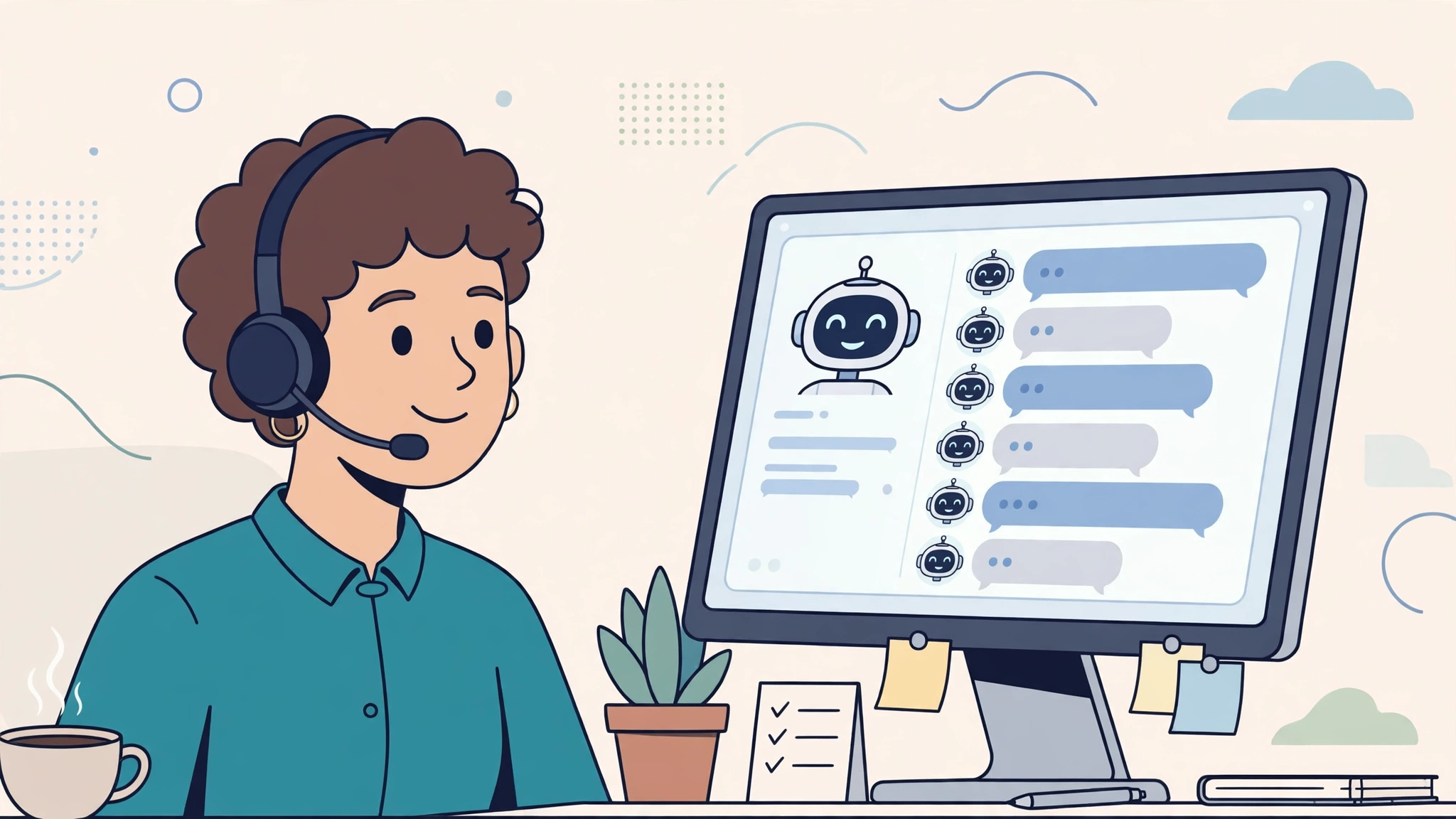
Not long ago, getting help from a company often meant waiting on hold, repeating your account number three times, and hoping you reached the right department. Today, that experience is changing fast. Modern ai customer service tools can answer common questions in seconds, route requests to the right person, and help support agents find useful information while they talk to you. The result is not a world without people. It is a world where routine work is handled more quickly, so people can focus on the conversations that really need judgment, empathy, and creativity.
For customers, the change is easy to notice. Instead of searching through a long help page, you can type a plain question and get a direct answer. Instead of waiting until Monday morning, you can often solve a simple problem late at night. For businesses, especially small teams, these tools can reduce repetitive work and make good service possible without hiring a large support department. At the same time, AI is not magic, and it is not always right. Understanding what it does well, where it falls short, and how to use it responsibly is the key to getting real value from it.
This guide explains, in simple terms, how AI is reshaping customer service. We will look at chatbots and virtual agents, ticket triage, sentiment analysis, agent-assist tools, and personalization. We will also cover the benefits, the limits, and the practical steps a small team can take right now, without a big budget or a technical background.
What AI Customer Service Looks Like Today
AI customer service is a broad term for software that uses artificial intelligence to help answer, organise, and improve support conversations. It does not refer to a single product. It can mean a chatbot on a website, a tool that sorts incoming emails, a system that suggests replies to an agent, or a dashboard that highlights unhappy customers who need urgent attention. Most companies use a mix of these tools rather than one all-powerful system.
Chatbots That Handle the Basics
The most familiar form is the chatbot. Early chatbots followed rigid scripts. If your question did not match a keyword, they were stuck. Modern chatbots are much more flexible. They can understand questions written in natural language, search a company’s help articles, and answer with relevant information. They are especially good at frequent, predictable requests, such as checking an order status, resetting a password, explaining a return policy, booking an appointment, or confirming opening hours.
A good chatbot knows its limits. When a question is too complex, too sensitive, or simply unclear, it should hand the conversation to a human agent smoothly, passing along what the customer has already said. That handover matters. Customers do not mind starting with a bot if it saves time, but they quickly become frustrated if they have to repeat everything when a person joins.
Virtual Agents That Can Take Action
Virtual agents go one step further than basic chatbots. Connected to other business systems, they can do more than provide information. They can look up a delivery, change a booking, update an address, or start a refund process, following rules the business has set. Think of a chatbot as someone who can answer questions from a handbook, and a virtual agent as someone who can also use the till, the calendar, and the order system, within clear limits.
Smarter Ticket Triage and Sentiment Analysis
Much of customer service happens out of sight, in inboxes and ticket queues. Every message has to be read, understood, prioritised, and sent to someone who can help. AI is quietly transforming this backstage work, often with bigger benefits than the chat window customers see.
Ticket Triage and Routing
Ticket triage means sorting incoming requests. AI can read a new email, chat, or support ticket and instantly classify it. Is it a billing question, a technical problem, or a delivery issue? Is it urgent or routine? Does it contain an order number or account detail that identifies the customer? Based on that reading, the system can assign the ticket to the right team, set a priority level, and attach helpful labels automatically.
For a busy team, this saves hours of manual sorting each week. More importantly, it speeds up help for the people who need it most. A message saying a payment was taken twice can be flagged as urgent, while a general question about opening hours can wait its turn or be answered automatically. Good triage also reduces mistakes, because requests are less likely to sit in the wrong queue unnoticed.
Reading the Mood of a Conversation
Sentiment analysis is the ability to detect the emotional tone of a message. The software looks for signals in word choice and phrasing to judge whether a customer sounds satisfied, neutral, confused, or angry. One frustrated message might be handled normally, but a pattern matters. If many customers suddenly sound unhappy after a product update, that is an early warning a business should not miss.
Helping Agents, Not Replacing Them
One of the most valuable uses of AI is also the least visible to customers: helping human agents do their jobs better. These agent-assist tools work in the background during a call or chat, offering support in real time without speaking directly to the customer.
Answers at the Agent’s Fingertips
Instead of searching through manuals and old tickets, an agent can receive suggested articles, product details, and policy wording exactly when they need them. If a customer asks about a warranty, the relevant terms appear on screen. If a technical problem matches a known issue, the proven fix is shown. This reduces errors and helps new team members perform confidently much sooner, because the knowledge of experienced colleagues is built into the tools they use every day.
Summaries, Notes, and Follow-Ups
After every conversation, agents usually write notes, tag the issue, and sometimes schedule a follow-up. AI can summarise a long chat or call automatically, highlight what was agreed, and create a tidy record for the next person who helps that customer. It can transcribe calls, pull out key details such as dates and reference numbers, and remind the team when a promised callback is due.
These small savings add up. Less time on paperwork means more time listening to customers. It also means better records, so customers do not have to explain their history again next time. For many businesses exploring broader changes, these support tools fit naturally alongside AI automation for small businesses in other areas such as invoicing, scheduling, and marketing.
More Personal Support at Scale
Customers like to feel recognised. They appreciate it when a company remembers their previous purchase, their preferred language, or the problem they reported last month. Doing that for ten customers is easy. Doing it for ten thousand used to require a huge team. AI makes personalization more realistic by organising customer information and using it at the right moment.
When a returning customer gets in touch, AI can surface a short, relevant summary for the agent: recent orders, open issues, and preferences, all in one place. The conversation can start with understanding instead of questions the customer has already answered. In automated messages, personalization might mean recommending a helpful article based on the product someone owns, or sending a delivery update in the customer’s own language.
- Faster first responses: Customers get an answer or acknowledgement in seconds, even outside office hours.
- Consistent information: Approved answers come from the same source, reducing conflicting advice.
- Better use of human time: Agents spend less time on repetitive tasks and more time on complex problems.
- Useful insights: Patterns in questions and sentiment reveal what to fix in products and help pages.
Benefits, Limits, and Keeping the Human Touch
The benefits described above are real, but a balanced view matters. AI can improve speed, availability, and consistency, and it can lower the cost of handling routine enquiries. It can support customers in several languages and through several channels at once, from chat and email to social media and voice. For growing businesses, that flexibility can be the difference between keeping up and falling behind.
Where AI Still Falls Short
AI systems can misunderstand questions, especially when language is vague, sarcastic, or highly technical. Sometimes they produce confident answers that are wrong, a problem often called hallucination. That is why accuracy checks, clear sources, and human review are essential, particularly for topics involving money, health, safety, or legal rights. AI also lacks genuine understanding of a customer’s situation. It can recognise words that signal frustration, but it does not truly feel concern, and customers can tell the difference.
Keeping the Human Touch
The best service strategies treat AI and people as partners. Use AI for speed, sorting, searching, and routine answers. Use people for empathy, negotiation, complex problem-solving, and sensitive situations such as bereavement, complaints, or vulnerability. Always make it easy to reach a person. Hiding the contact option to force customers through a bot may cut costs briefly, but it damages loyalty.
What Small Teams Can Adopt Now
You do not need an enterprise budget to begin. Most modern help desk and website platforms now include AI features in ordinary plans, and small steps can deliver quick wins. The secret is to start with one clear problem, measure the result, and expand only when the first step is working well.
- Start with your top ten questions. List the questions customers ask most often and make sure your help articles answer them clearly. A chatbot is only as good as the content behind it.
- Add a simple website chatbot. Let it handle opening hours, delivery information, returns, and order lookups, with an obvious option to talk to a person.
- Turn on automatic ticket tagging. Even basic sorting by topic and urgency will save time and highlight your busiest issues.
- Try reply drafts and summaries. Agent-assist features are low risk because a human still approves everything that is sent.
- Review conversations weekly. Check a sample of bot chats, correct wrong answers, and add missing information. Small, regular fixes keep quality high.
- Measure what matters. Track response time, resolution time, customer satisfaction, and how often people ask for a human. Speed alone is not success if customers leave unhappy.
Frequently Asked Questions
Will AI replace customer service agents?
For routine and repetitive tasks, AI will handle more of the work, and some roles will change. But customers still need people for complex, emotional, and unusual problems. In most businesses, AI is shifting agents toward higher-value work such as problem-solving, relationship building, and handling complaints, rather than removing the need for agents altogether.
Is AI customer service expensive for a small business?
It does not have to be. Many help desk, e-commerce, and website platforms include basic chatbots, ticket sorting, and reply suggestions in affordable plans. Costs rise with conversation volume and advanced features, so start small, use free trials, and compare the time saved against the monthly price before committing.
How can I make sure an AI chatbot gives correct answers?
Base it on your own approved help content, limit it to topics you have prepared, and test it with real customer questions before launch. Review conversations regularly, correct mistakes quickly, and set it to hand over to a human whenever it is unsure. Clear boundaries and ongoing checks are far more effective than launching and hoping for the best.
The Bottom Line
AI is changing customer service forever, not by making it less human, but by changing where human effort goes. Chatbots and virtual agents handle simple requests instantly. Triage and sentiment analysis make sure urgent and unhappy customers are noticed sooner. Agent-assist tools give staff better information with less searching, and personalization helps every conversation start with context instead of repetition.
The businesses that benefit most will be the ones that stay balanced. They will automate thoughtfully, protect customer trust, keep people easy to reach, and keep improving based on real feedback. Whether you run a small shop or a growing support team, you can start today with one helpful change. Pick your most common question, answer it brilliantly with AI support, and build from there. Good service has always been about respecting people’s time and treating them well. AI, used wisely, simply helps you do both more often.